Showing posts with label party of tomorrow. Show all posts

Monday, June 22, 2009

Ayman Nour is a brave man, and as a democrat and opposition leader in Egypt he needs to be

National Review, June 22, 2009

Ayman Nour is a brave man, and as a democrat and opposition leader in Egypt he needs to be. A lawyer, and the founder and head of the al-Ghad (Tomorrow) party, he ran in the 2005 election against Hosni Mubarak, who has been running Egypt by emergency decree for over 20 years. In the circumstances, Nour's bid was hardly more than a symbolic gesture, but Mubarak made sure to send him to prison for four years.

Released this February, Nour has petitioned Mubarak to lift restrictions on his civil and political rights. Then he declared that he would run for president again in 2011. The very next day, someone on a motorbike rode up to him in the street, identified him by name, and fired an improvised flame-thrower. Nour's forehead, the side of his face, and much of his hair were burned. The attack was probably timed to coincide with President Obama's much-heralded June visit to Cairo. "In an authoritarian regime like ours you cannot know the reasons why things like this happen," says Nour, giving proof that his courage has not been even lightly singed.

Friday, March 20, 2009

"I Won't Wait for the Regime to Give Me Its Blessings!"

Interview with Ayman Nour : "I Won't Wait for the Regime to Give Me Its Blessings!"


Ayman Nour, the chairman of Egypt's liberal El-Ghad party, talked to Arian Fariborz and Mahmoud Tawfik about his party's perspectives for the future and his plan to run for office again in the next presidential elections


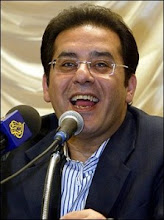
Ayman Nour (photo: AP)
Ayman Nour was released from prison in February 2009 after three years – for health reasons, was the official explanation on the part of the judiciary

Ayman Nour is one of the most prominent politicians in Egypt's liberal opposition. Many in the Arab world and the West see Nour, 44, as a liberal standard-bearer and a democratic alternative to Mubarak's authoritarian National Democratic Party and the Islamist opposition in the form of the Muslim Brotherhood.

2005 saw his arrest in the wake of the presidential election, on the pretext of electoral manipulation after his liberal El-Ghad party had gained 13 percent of votes.

According to political observers, Nour's sudden release last February was largely down to pressure from the Obama administration. Washington had categorised his arrest as an abuse of justice.

Although the state excluded Ayman Nour from political activities for five years after his release, he had announced he would be standing again in the next presidential elections in 2011.

* * *

According to many journalists and political observers, your release was a consequence of US pressure on the Egyptian government. Do you share this view?

Ayman Nour: The American pressure was certainly a factor, but I simply don't know enough details to either confirm or reject that interpretation. But I'm sure, of course, that many countries appealed on my behalf.

I'm particularly pleased on this point that the German parliament was one of the first to intercede on my behalf, by protesting against my arrest with a declaration to the Inter-Parliamentary Union (IPU).

So how do you explain your release at this particular time?

Nour: That's just what I'm wondering! To be quite honest I don't even know myself why I was released from prison now of all times. I can only assume that the regime may have been trying to polish up its image – albeit rather late, as I only had four months left to serve of my regular prison sentence...

photo: AP
A phoenix rising from the ashes? Ayman Nour viewing the burnt-out El-Ghad party headquarters in Cairo after his release


What is the situation for Egypt's liberal opposition at the moment? Particularly after its defeat in the presidential and parliamentary elections in 2005 and the decline of the extra-parliamentary opposition?

Nour: The first thing you have to realise is that the liberal opposition wasn't suppressed simply because it was liberal, but to prevent it from offering a "third way" in Egypt – as an alternative to the choice between the authoritarian regime and the Muslim Brotherhood.

I believe we can pick up this idea again now that I've been released. But to do so, we have to be prepared to enter into a hard and long battle.

What alternatives do you want to offer the Egyptians as a "third way"?

Nour: Our main goal is a constitutional state. We want to offer simple, clear and pragmatic solutions and we are prepared to put these into practice immediately – if we get the chance. If the current regime were ready to give up its power at eight o'clock tomorrow morning, we'd be capable of filling the vacuum by five past eight at the latest, and taking over the business of the state in an orderly way.

We have a very clear, detailed political agenda – the longest manifesto an Egyptian party has ever had at over 1200 pages, with solutions suitable for everyday practice that don't scare people off. One thing you have to know is that the Egyptians tend to be rather suspicious of change.


Gamila Ismail (photo: AP)
Nour had announced from his prison cell that he would run for office in the next presidential election. His wife and fellow political activist Gamila Ismail passed on his statements beyond the prison walls

Apart from that, we have a public profile as a "young people's party" for 20 to 30-year-olds. I myself may be 44, much older than that, but that still makes me only half the age of the old guard of over-80-year-olds.

Egyptian opposition parties – and the Muslim Brotherhood is no exception here – are often accused of restricting their demands to political reforms, whereas they have no clear ideas on the economy. Does the same apply to the El-Ghad party?

Nour: We have our very own ideas of a "third way" as Gerhard Schröder, Tony Blair and many others took with their social liberal reform agenda. But that mustn't keep us from our most important objective. Above all we want to fight corruption – and that can't be done via economic approaches, but only by means of political reforms, through checks and balances and by strengthening the judiciary.

What political role can you take on at all for your party in the coming years? After all, you are subject to certain state conditions that make it impossible to exercise political office freely, particularly forbidding you from running for the coming presidential elections.

Nour: Never mind the conditions – we have means of getting around them. And I'd like to say very clearly to all those who interceded for my release: what you should do now is intercede to defend my rights! My arrest was not about me personally, after all, but about curtailing my rights.
photo: AP
Solidarity with Ayman Nour: hundreds of supporters demonstrated for the 44-year-old politician's release at the start of the court case against him

I am free again now as an individual but at the same time I can't exercise my rights freely, and the impression is that the state is still following a repressive logic by politically immobilising certain individuals – a negative picture that does huge damage to Egypt's image. I for one do not allow myself to be swayed by the feeling that I'm banned from doing anything, and I will run for office in the coming presidential election. I will simply ignore this type of conditions, as I don't source my legitimacy from the state anyway. I won't wait for the regime to give me its blessings!

How does the future look for your party? There was allegedly a split after your arrest, meaning El-Ghad almost disappeared into obscurity after having been one of the most important parties of the new opposition.

Nour: The party did not split in the actual sense. What happened was that a number of members were expelled for giving in to pressure to support Mubarak in the presidential elections.

The state had tried to use them as a Trojan horse to undermine El-Ghad from within. Two weeks before my release, a judgement was passed in our favour, ruling that the party is allowed to reconstitute itself. It's true that the party almost collapsed during my time in prison, but the reason wasn't a genuine division but this state intervention.

There are some critics, however, who say the El-Ghad party revolves solely around yourself…

Nour: That's not the case at all. I am an important part of the party, that's true, as parties in Egypt are essentially not strong as quasi "impersonal organisations". One of the great faults in Egypt's party politics is just that, that the focus on certain individuals plays such an important role here.

But perhaps that's neither unusual nor a bad thing – there's plenty of evidence that that's the case in many countries all around the globe. The best counter-evidence in any case is the fact that I was in prison for four years but the party still exists and has even renewed itself. There are many new young people in the party leadership now.

But as the party's founder I naturally play a role, as it was me who put the manifesto together, provided ideas and gave them a political form. But that's the way it is in Egypt – people can identify more with individuals than with posters and pamphlets.

Interview: Arian Fariborz and Mahmoud Tawfik

© Qantara.de 2009

Monday, January 5, 2009

Egypt's Ayman Nour takes HR chief to court

Ayman Nour, opposition leader of Ghad Party sues NCHR for neglecting his plight

CAIRO (Marwa Awad)

After four years of filing complaints of prison torture, jailed opposition leader
Ayman Nour has filed suit against Boutros Boutros Ghali demanding one
million pounds ($181,750) and accusing the former chairman of the National
Council for Human Rights of failing to perform his duties.

"Nour's condition worsens daily behind the walls of Egypt's Tora prison,"
activist Jameela Ismail, Ayman Nour's wife, told AlArabiya.net.


Real motives behind arrest

Democracy activists believe Ayman Nour was jailed for running up against Mubarak in 2005

Nour was sentenced during the 2005 Egyptian presidential elections to five
years in prison on charges of forging many signatures that his opposition
Ghad party needed to get legal recognition, charges vehemently denied by Nour.

Human rights organizations and democracy advocates however believe the real causes of arrest were Nour's decision to run against President Hosni Mubarak in the September 2005 elections, in which Nour secured 13 percent of the votes, according to independent surveys.

“Ayman Nur’s trial, like the violence against voters in the parliamentary elections, is a terrible advertisement for President Mubarak’s supposed reform agenda, and for Egypt’s judiciary,” Joe Stork, deputy director of Human Rights Watch’s Middle East division said in a 2005 HRW report.

Since his arrest, Nour has repeatedly filed complaints to the council detailing the physical and emotional abuse he says he faces daily at the hands of Tora prison guards. The council responded by setting up a committee of inquiry into Nour's situation.

"What we have seen from the council was one single visit in 2005 followed by promises to look into Ayman's case. Four days after Ayman was beaten up by Egyptian police officers as he was being transferred to the Giza court for a hearing," Ismail recalled.


Prison torture

Jameela Ismail, permitted to visit her husband once every two weeks, says Nour suffers daily

Ismail, who is allowed to visit her husband once every two weeks, believes the beating came in defiance of the committee's visit.

"The police and guards beat him in a clear sign to the committee that what NCHR does means nothing and will achieve nothing," she said.

HRW has condemned Egypt's record of human rights abuses in its 2007 report on the country's human rights violations.

“Egypt has for too long committed serious and systematic abuses at home while consistently undermining UN mechanisms to defend rights,” Joe Stork was quoted in the report.


Ghali's response

" I have not received any official papers about a lawsuit and until then, these claims are just rumors. "
Boutros Boutros Ghali, NCHR chief

NCHR chief Boutros Boutros Ghali said he had no knowledge of any lawsuit filed against him.

"I have not received any official papers about a lawsuit and until then, these claims are just rumors," he told AlArabiya.net.

He claimed that NCHR has sufficiently addressed Nour's complaints, adding that the Egyptian Judiciary has the final say on Nour's plight.

Wednesday, June 20, 2007

Al Ahram weekly : Case continues

The fate of imprisoned opposition leader Ayman Nour is still unsettled, reports Mona El-Nahhas

The Administrative Court announced on Tuesday that any decision on whether Al-Ghad Party leader Ayman Nour will be released must wait until 26 June, when official medical reports into the opposition leader's state of health -- asked for on 22 May -- are due to be issued. Meanwhile, the court ruled that Nour's defence counsel -- who had complained of procrastination in preparing the official report -- could present evidence from independent medical specialists regarding their client's health.

The court ruling means that if the official report, prepared by the Forensic Medicine Department, is not presented within two weeks then the court will rely on independent assessments of Nour's health in delivering its ruling, raising hopes among supporters of the 43-year-old Nour that his 18 months behind bars might soon come to an end.

The judge presiding over the appeal for Nour's release stressed the court would not swayed by national or international calls for Nour's release, and the decision would be based entirely on the state of Nour's health. The former presidential election candidate suffers from diabetes, heart problems and hypertension and last year underwent heart surgery while in prison.

Nour's lawyer, Amir Salem, said the court's decision was a "historical ruling", adding it represented "a severe blow to administrative bodies used to ignoring court requests".

Nour's wife Gamila Ismail told reporters she had never expected the medical report to be made available to the court panel, which was why she was treating the court ruling as a victory.

But while Salem sounded upbeat, saying any ruling in Nour's favour must be implemented immediately, Ismail sounded a more cautious note, saying she feared US pressure for her husband's release could make the regime more stubborn about the case.

Legal sources say there is a possibility the Interior Ministry will ignore any ruling in Nour's favour, using the struggle between several legal bodies, including Prosecutor-General Abdel-Meguid Mahmoud's office, over who has the right to judge the case. While some observers worry about the negative consequences of US pressure for Nour's release, others point to the case of academic and pro-democracy activist Saadeddin Ibrahim. Sentenced by a state security court in 2001 to seven years in prison for receiving foreign funds without government permission, Ibrahim was released in 2003 following enormous US pressure.

Ahead of Tuesday's hearing session international calls for Nour's release increased.

During a short visit to Egypt this week a delegation from the Alliance of Liberals and Democrats for Europe talked with Egyptian officials about Nour's health.

"We are following Nour's case, and we are waiting for the court verdict, expected to be passed on Tuesday," said Sarah Ludford, a member of the European parliament.

During a conference on democracy held in the Czech Republic last week US President George W Bush called directly for Nour's release. "I look forward to the day when conferences like this one include... Ayman Nour of Egypt," Bush said.

The point was subsequently underlined by the US State Department.

"We believe that Nour should be released. We hope this could be achieved. We'll leave it to the Egyptian government to define the way by which it expresses its reactions," said Tom Cass, deputy spokesman of the US State Department.

"What Bush said concerning Egypt is an unacceptable intervention in our internal affairs," insisted Foreign Minister Ahmed Abul-Gheit following Bush's speech.

The National Council for Human Rights (NCHR) also weighed in with its disapproval. "Bush's statements concerning Nour's case place Egypt under no obligation," said NCHR Secretary-General Mokhles Qotb. "The law defines the legal channels that are pursued in this and similar cases."

Following a meeting of the Al-Ghad Party's higher committee a statement was released on Friday condemning Bush's statements and any external intervention in the case.

Tuesday, March 8, 2005

Jailed Nour tests Egypt's democracy

By Malcolm Brabant
BBC News, Cairo

Ayman Nour
Ayman Nour has been held in an Egyptian jail since January
Supporters of Egypt's newest political party are calling on the government to free their leader, Ayman Nour, who is currently being detained on what they claim are trumped up charges.

Party of Tomorrow leader Mr Nour is regarded as a potential presidential candidate.

But his continued imprisonment is damaging his chances of running against President Hosni Mubarak later in 2005.

Mr Nour has been held in custody since the end of January.

He was arrested on allegations that he forged documents used to secure legal status for his Party of Tomorrow which was formed last autumn.

His wife Gamila Ismail believes the Egyptian authorities are trying to frame him.

Accusing him of forging petitions, this is just crazy, it is nonsense. He didn't have any reason to do this
Gamila Ismail, Nour's wife

"If these allegations stick, this is going to end his political career," she says.

Ms Ismail says that when security officers checked their penthouse in the expensive district of Zamalek, they were particularly interested in his tobacco boxes and medication.

"The lawyers explained to me later on that they were trying to find something illegal such as drugs."

International concern

The United States, which is trying to force the Arab world to become more democratic, has expressed deep concern about Mr Nour's continued detention.

Secretary of State Condoleezza Rice has told her Egyptian counterpart that she hopes "the issue is resolved soon".

Egyptian officials resent what they perceive as American interference in what they insist is a legal, not political matter.

Ayman Nour supporters holding a protest in Cairo
Nour supporters' main demand is greater democracy

Ibrahim Rafeir, a member of parliament with the ruling National Democratic Party says: "The case of Ayman Nour is in the hands of the Egyptian judicial system and the judicial system is just.

"Each and every one of us resists any foreign interference."

Last October the Nours and their supporters were celebrating the inauguration of their liberal, secular party.

Stagnation

The Party of Tomorrow's most important demand is for greater democracy.

Ayman Nour told me in October: "We love and appreciate President Mubarak, but we love this nation as well and would like it to develop like other countries."

Ayman Nour is really a very clever political animal. He might get 20% or 30% of the vote
Mustafa Kamel al-Sayed
Political scientist

Following a wave of angry demonstrations by pro-democracy campaigners defying a ban on street protests, as well as increasing pressure from the US, Mr Mubarak has agreed to allow challengers to contest the presidential election.

But 25 years of political stagnation have left the Egyptian opposition struggling to find a candidate of sufficient stature and charisma to stand against Mr Mubarak.

Some analysts believe that Ayman Nour, a former journalist, lawyer and publisher, possesses the necessary profile to make substantial inroads against the president.

Mustafa Kamel al-Sayed, a Professor of Political Science at Cairo University, says: "Ayman Nour is really a very clever political animal.

"He might get 20% or 30% of the vote. But it is this perception that he might be capable of getting a large number of votes that would get the government to try to deprive him of this opportunity of running as a presidential candidate."

Discredited

Rumours surface daily in Cairo that Mr Nour is going to be released soon.

Ayman Nour campaigner makes V-sign from a Cairo balcony
Could this signal the end of Egypt's 25 years of political stagnation?

And that he is being visited in jail by senior officials who keep demanding to know if he is going to declare his intention to run.

Ms Ibrahim fears that even if her husband is freed, he will be charged so that a trial hangs over his head and discredits him at election time.

"Accusing him of forging petitions, this is just crazy, it is nonsense. He didn't have any reason to do this," she says.

The case of Ayman Nour is being seen by many analysts as a true test of President Mubarak's commitment to greater democracy.

The challenge for Egypt is to protect its stability, while easing what Mr Mubarak's critics regard as some of the country's more authoritarian tendencies.


http://news.bbc.co.uk/2/hi/4328353.stm

Tuesday, February 1, 2005

Watson calls on Egypt to release Ayman Nour

11.21.14am GMT Tue 1st Feb 2005

On hearing of the arrest yesterday of Ayman Nour, member of the Egyptian parliament and leader of the liberal opposition party al-Ghad ("Tomorrow"), Graham Watson, leader of the European Liberal Democrat Group in the European Parliament called upon President Mubarak and the Egyptian authorities to respect both the letter and the spirit of the EU-Mediterranean Agreement.

"2005 marks the 10th anniversary of the Barcelona process and represents an opportunity for a new stimulus to EU-Mediterranean relations. This kind of politically-motivated arrest of the leader of the only real opposition movement in a country dominated by a single ruling party sends all the wrong signals - that Egypt still has far to go on the road to democracy," he said.

"Political legitimacy derives precisely from a free choice of the electorate from a range of political viewpoints and not from imposing one view on everyone. Approaching the end of his fourth term of office, Mubarak should seize the opportunity of going down in history for supporting constitutional reform and a multi-party democracy. The EU should not stand idly by in the face of blatant disregard for the rule of law in its relations with privileged partner states. If Ayman Nour is not released promptly, collective EU action should be considered. Parliament should address this matter in its next 'urgency debate' on Human Rights on the 24th February if the matter has not been resolved, " Mr. Watson added.