Showing posts with label opposition. Show all posts

Sunday, January 31, 2010

Nour plans to run for president

By Amr Emam
Saturday, January 30, 2010


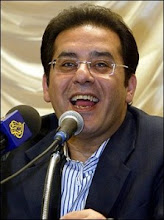
Opposition activist Ayman Nour announced yesterday his desire to run for president in Egypt’s next presidential polls, downplaying the effect of what he called the “legal stumbling blocks” the Government allegedly puts on the opposition’s way to presidency.


Nour said he felt obliged to run in the next elections, which are slated for 2011, so that Egypt could be “put” on track yet again.
“It’s necessary for everyone of us to act now to rescue the future of this country,” Nour said.

“Egypt’s future is in danger and a quick action is required if this country is to continue to hold,” he told The Gazette in an interview.

Nour, the founder of the opposition el-Ghad (Tomorrow) Party, called for the formation of a new constitution and a transitional cabinet to be headed by former International Atomic Energy Agency chief Mohamed el-Baradie to prepare Egypt for what he called “fair” elections.

Nour came a distant second to Egypt’s incumbent President Hosni Mubarak in the country’s first contested presidential elections in 2005.

Some people say, Nour, who was previously convicted and sent to five years in jail for fabricating party documents, has many legal hindrances ahead if he wants to run for president.

He, however, says he had loaded his guns with the necessary legal arguments and documents to sort this legal problem out.

“If my party chooses to field me as a candidate in the elections, I would seek ways to find a solution to this problem,” Nour said.

“My party would ratchet up the necessary internal and external pressure to make this possible,” he added, without elaboration.

Members from Nour’s party are due to meet on Friday to agree whether they will pick him as
the party‘s presidential candidate.

Despite this, he has already started his campaign by touring more than 20 Egyptian cities to meet ordinary citizens and talk to them about his programme.

Nour, in his mid forties and a lawyer by profession, says he had found support everywhere he went, making him encouraged even more to run for president.

Mubarak, who has been ni power swince 1981, has not said yet wheite he will run for a 6th six-year term in office.

But in a recent interview with the Police Magazine, the President said he would welcome candidates who would “serve” the people.

Heartened by this, Nour is optimistic about his prospects in the elections. “I found support everywhere and this gives me hope,” Nour said.

“People’s feelings to my campaign are more than encouraging,” he added.

Monday, December 7, 2009

Ayman Nour: Thank you Baradei for keeping my chasers occupied


In Egypt, when you oppose the regime, you will be labeled as either ignorant, a fool, or a hypocrite! If you introduced yourself as an alternative to the head of the regime, you will be labeled as either a criminal or a murderer! Opposing gods would bring their curse and anger upon you. But opposing the regime would shed your blood, lead you to death, and make you an example to scare whoever dares to do what you have done. Opposing the regime is disliked, but competing as an alternative is a big deal that shakes the seven heavens.
When Dr. Mohamed Elbaradei released a statement on his “faraway intentions” to run for presidency seat, the heat came up higher. The pro-regime journalists and media started an immediate urgent campaign of moral assassination of Elbaradie. They started only a few hours after the statement was released. They were referring to him as a reason of pride to the country, they are laughing at him with claim that he is a stranger who spent 28 years outside Egypt. They even accused him of being a spy for the United States of America and its regional ally. Then, they started looking for the other nationalities that Elbaradei might have; some claimed American and some others claimed Swedish!
In less than a minute, the Egyptian citizen, Mohamed Elbaradei turned into half citizen, or quarter of a citizen, or a few remains of a citizen. They made him a foolish student of Botrous Ghali, untalented employee who lacks experience on internal problems of Egypt, and above all a spy to other countries abroad!
I will not commit the foolishness of the pro-regime press. I will not listen to the intense statements of state officials and regime men against Elbaradie. I can understand this horrible process of mental assassination. I have been there before!
In 2000, I announced my intention to run for presidency during a TV interviewed with my late colleague and friend Magdi Mehanna. Before that date, the state-run media outlets used to interview me, almost daily, as a patriotic opposition figure. They used me as a proof of the understanding of the regime, who would accept those who say “no” sometimes; except for gods of course!
I won 168 votes (more than one third of votes) at the internal elections of parliament in 2000, and subsequently fulfilled the provision of article 76 of the Egyptian constitution, which was amended later in 2005. As soon as I won the votes, I found myself in hell. The first burn came from El-Wafd Party which, all of a sudden, cancelled my membership and removed me from my work as a journalist in El-Wafd newspaper.
When my wife ran in the elections of the Shura Council in 2001 against the leader, the details of the new era had been already established. We faced the widest process of forgery and violence, upon the demands of the big boss, as we were told!
Suddenly, they turned me from a good citizen and a patriotic Member of Parliament for ten years into an unpatriotic person with a wealth from unsuspected sources. I wonder where this wealth they are talking about is.
In the presidential elections of 2005, the regime fabricated a naïve and funny legal case against me. The official wing of the supreme authority was directly involved, while other authority tools were busy with assassinating me in cold blood. They are not done yet!
The fools of the regime are not ashamed of spreading rumors and lies about me. They claimed that my father is not my father! They said that I escaped military service, although I am a single child. Some had great ability for imagination. They claimed that I was a soldier in the US army during Vietnam War, although I was born in 1964.
Many thanks for Dr. Elbaradei for keeping the authorities, who were chasing me for years, busy!

Tuesday, December 1, 2009

Amr Hamzawy : Egypt's Opposition Misled by Fixation with Mubarak’s Son

Amr Hamzawy
The National
,
1 December 2009
Tuesday


Political opposition in Egypt has been stirred by a recent campaign against Gamal Mubarak, the son of the president Hosni Mubarak, becoming Egypt’s new president in 2011. In particular, Ayman Nour, a key opposition figure and a presidential candidate in 2005, has mobilised a wide spectrum of political groups to present a united front in upcoming legislative and presidential elections in 2010 and 2011, respectively.

Upon closer look, however, Mr Nour’s rallying cry is troubling. In gearing up for elections, the opposition has demonstrated a near complete inability to prioritise the issues essential to its political future, and has squandered its efforts trying to prevent Gamal Mubarak’s succession.

Egypt’s opposition groups, including both legal parties and the Muslim Brotherhood, have been in disarray since the regime introduced stifling constitutional amendments in 2007. These measures limit the oversight powers of the judiciary in elections, fail to set term limits on the presidential mandate, and ban religiously affiliated political activities.

While opposition forces have been exclusively focused on the one issue – Gamal Mubarak’s possible ascendancy – the Egyptian regime has been carefully creating an environment which will sustain its rule. The ruling elite is no newcomer to this game. They have consistently manipulated the political process by preventing the opposition from registering candidates in elections, obstructing the campaign process, and fomenting violence on election day.

In contrast to the ruling elite’s clear direction, the opposition has no guiding compass and is left wandering through the challenges posed by the political agenda in Egypt. Their failure cannot be solely attributed to the regime’s repressive measures – a great part of the responsibility belongs to the opposition parties themselves.

Since 2005, parties including the liberal Wafd party, Ayman Nour’s Ghad party and the Democratic Front, as well as the Muslim Brotherhood (which is banned but has de facto representation in parliament) have all failed in two major tasks: formulating an elections platform and clear vision for Egypt’s political development, and applying sufficient pressure on the regime for political and economic reform.

Despite its acquisition of an unprecedented 88 parliamentary seats in the 2005 elections, the Muslim Brotherhood has yet to push for serious reform of the political system. Several concerns also remain unresolved in Egyptian and international public opinion regarding the Brotherhood’s positions on equal citizenship rights for Copts and Muslims, women’s participation in politics and freedom of expression.

The opposition parties urgently need to tackle several issues to position themselves for the 2010 and 2011 elections. First, groups have to clarify their stance on the question of domestic and international monitoring of elections. Especially with regard to the latter, the opposition remains divided.

Second, they have to prioritise calls for the abolition of the emergency law in effect in Egypt since 1981. Finally, parties should be more attuned to new political opportunities, expanding grassroots activities to capitalise on growing protest sentiment among wide segments of the population who are suffering from deteriorating social and economic conditions.

With Egypt’s declining GDP growth, the unemployment rate reaching 10.3 per cent, a poverty rate of 20 per cent, and an alarming level of debt – 76 per cent of GDP – citizens are in desperate need of competent political parties.

The implications of the upcoming elections will, of course, extend beyond Egypt’s borders. In light of the regime’s recent political manoeuvring and the opposition’s stagnation, the 2010 and 2011 elections in Egypt will test the Obama administration’s stance on democracy in the Middle East. Its position will either demonstrate a commitment to the incumbent regime of the Mubaraks as a strategic ally in a turbulent region regardless of its domestic behaviour, or signal pressure to create better conditions for democratic reform and political competition in Egypt.

The first signals from the Obama administration are not encouraging; the administration has so far put the promotion of democracy low on its list of priorities. Washington has only raised the issue of reform in the context of concessions that Mr Mubarak has already made. The Obama administration has also cut aid to numerous actors and organisations in civil society.

The campaign organised by Mr Nour is a step in the right direction for the opposition in Egypt, but he and other activists would be wise to adjust their agenda. Only by letting go of their obsession with Gamal Mubarak’s succession and addressing other issues at the core of the upcoming elections can opposition groups counter the regime’s hegemony.

Sunday, November 8, 2009

Ayman Nour: Egypt opposition versus the government


Egypt is the land of wonders. The first anniversary of the burning the headquarters of the el-Ghad Party coincides with the fifth anniversary of establishing it. I am astonished by the ability of those involved in burning my office to keep their self respect! I wonder how they dare to look right into the eyes of their children, spouses, and the whole of Egyptian society. I dare them to look into my eyes. No matter how mean and liars they are, they cannot stand long.
Some of the criminals, who committed the attack and the burning, claimed that they were in a “nonviolent” protest on Emergency Law. Others claimed that the purpose of the “nonviolent” rally was to condemn the allies of the US and the agents of Israel. Ironically, the leaders of the rally are mentioned on the CIA website. Some Egyptian newspapers – including the al-Wafd daily – condemned this already. At the same moment, this so-called “unbeatable fighter” who claims that his rally is against Israel was mentioned in Israeli media as an expected visitor after signing a business agreement with an Israeli agriculture company. One of the experts from this Israeli agriculture company is working at his office.
Egypt is the only country in the world where the ruling party selects its opposition groups and assigns its rivals. If they like an opposition activist, they will give him a license to launch an “opposition” party. If they dislike him later, they throw him in prison for years; sometimes for the same license they previously gave to him!
When Mostafa Kamal Helmy became the director of the Parties’ Affairs Committee, he infected it with some of his characteristics as a former teacher. PAC now applies the rule: good manners are preferred to intellectuality. I doubt that, one day, we might find a sub-line on the banner of the PAC reading: “discipline, pruning, and reform!” Currently, Pac director is the Secretary General of the ruling National Democratic Party. The members of PAC are the pro-regime officials from the ministries of Interior, Justice, etc. In case this committee rejected your request, you can yearn to the “Court of Parties,” which is run by judges, NDP members, and high profile governmental officials. If the PAC does not notify you with its decision, they have the right to put you in jail at any minute. Simply, the materials you submit are usually used as proof of you violating the law, in case they refused your request. If the committee chooses not notify you or send you to prison, they can plant thorns in your head. They send you someone who barely knows something about efforts you made for establishing your party and let him claim that he is a “partner” and even worse drag you down into a conflict of the leadership of your own party! Then, you find yourself obliged to prove owning a right of your own. This is the most successful strategy the government uses to exhaust you and sometimes cripple you, if you wanted to practice real opposition politics.
The judiciary cannot be of any help. If you file a claim, you have to wait for many years. If you wait and respect the rules until you finally have a verdict, the PAC still keeps the right to validate this verdict or not, and you have to wait for another supporting verdict to the first verdict. You can hold as many public conferences as you can, and the committee still keeps the right to pay attention or disregard you at all. This happens all the time in Egypt.
Egyptian political parties are either unauthorized, banned, or terrified from losing their license. The El-Ghad Party is a living example to this horrible disorder. Only 89 days after establishing the El-Ghad party, the PAC decided to solve the situation by imprisoning its leader and founder.
However, this did not lead to the results they were looking for, as we ranked second in the presidential election. Thus, the committee decided to shake us! One week after the presidential elections, they started the shaking game, but we stood strong in the face of the earthquake. Hence, the regime and its PAC decided to apply a new strategy: genocide. They arrested young members, besieged our activities, banned the party newspaper, and burnt its headquarters.
When will the regime and the so-called Parties Affairs Committee realize that political parties are not born by governmental decisions or killed by anonymous fires?

Thursday, November 5, 2009

EGYPT: Activist Ayman Nour blasts authorities for travel ban

EGYPT: Activist Ayman Nour blasts authorities for travel ban

latimes.com
November 5, 2009 | 6:45 am

ALeqM5hSeESUv_EiGZSEEdYZSjGC92zA2Q

Opposition leader Ayman Nour has attacked the ruling regime after he was barred from traveling to the United States, where he was invited to speak about Egypt's political climate at the Carnegie Endowment for International Peace in Washington.

Nour and a number of Egyptian politicians, including Gamal Mubarak -- a top official in the ruling National Democratic Party and the son of President Hosni Mubarak -- were invited to the Carnegie event. Nour said he is convinced that his travel ban was intended to prevent anti-government figures from spoiling Gamal Mubarak's trip.

"Mubarak's son wants the lion's share of the Egyptian political sphere, whether that is inside or outside the country," Nour said. "But I will not give him such pleasure, and I will take part in the Carnegie seminar through video conferences."

The founder and former head of El Ghad opposition party, who was also planning to take part in a number of conferences organized by the Egyptian community in the U.S., previously said that the Egyptian public prosecutor had issued an administrative decision preventing him from going to the U.S. and other nations in the Middle East and Europe.

Gamal Mubarak is being groomed to succeed his father, a scenario resented by many Egyptians who have suffered under the government's economic programs and repressive human-rights policies and don’t want a Mubarak dynasty. Nour and fellow opposition activists and parties recently formed a coalition under the slogan Mayehkomsh ("You don't have the right to rule"), rejecting any succession plan.

After losing to Hosni Mubarak in Egypt's first contested elections in 2005, Nour was sentenced to five years in prison on what are widely regarded as trumped-up charges of forging signatures in order to establish El Ghad party. He was released on health grounds in February and since then has only been allowed to leave the country to receive healthcare abroad.

Nour, who has been touring Egyptian cities to interact with citizens and demonstrate his political vision over the last few months, can't run in the 2011 presidential elections because of his earlier conviction.

-- Amro Hassan in Cairo

Friday, February 20, 2009

Egypt Frees a Dissident: A Gesture for Obama? By Scott MacLeod / Cairo


Former Egyptian opposition leader Ayman Nour, right, greets supporters as he arrivesl at his party's headquarters, in Cairo, Egypt, Nouri was unexpectedly released from prison on Wednesday after serving more than three years.
Amr Nabil / AP

___________________________________________________________

Ayman Nour was released from prison on Wednesday, but not even his wife knew that he was coming home. Egyptian authorities jailed the opposition leader in 2006 on charges of electoral fraud, but his imprisonment was widely seen as an effort to silence President Hosni Mubarak's most outspoken critic. Nour's wife Gamila Ismail, who organized "Free Ayman Nour" protests, often despaired that her husband, who suffers from diabetes and other ailments, would remain in prison until the end of his five-year sentence in Cairo's notorious Tora prison. And so, when Nour finally arrived at his apartment as a free man, he didn't have keys and nobody answered the door.

Egypt's attorney general cited "medical reasons" for Nour's release even though Egyptian courts had repeatedly denied Nour's request for a pardon on those grounds. Many see politics behind the decision. Mubarak, 80, wants to improve relations with the new Obama administration, following eight years of cold relations with the Bush administration that were frosty in part due to Nour's imprisonment. "Does Mubarak want to risk another four years of bad relations with the United States? I don't think so," says Hesham Kassem, former deputy leader of Nour's liberal, secular al-Ghad party. "If [Nour's imprisonment] had gone on into the Obama administration, then we were not talking about a Mubarak-Bush problem anymore, but an Egyptian-American problem." (See pictures of people around the world watching Obama's Inauguration.)

Cairo-Washington relations have been chilly over numerous issues, including U.S. handling of the Israeli-Palestinian conflict and the American invasion of Iraq as well as disagreements over domestic reform in Egypt. The U.S. froze negotiations on a free trade agreement with Egypt after Nour was handed his prison sentence; Mubarak, in turn, halted his regular visits to Washington. In contrast, Mubarak appears elated by Obama's decision to plunge immediately into Arab-Israeli peacemaking, and gave a warm welcome last month to George Mitchell when the new U.S. special envoy made Cairo the first stop of his first Middle East tour. Last week in Washington, Egyptian Foreign Minister Ahmed Abul-Gheit, who bitterly sparred with former Secretary of State Condeleezza Rice over Nour, became the first Arab counterpart to meet with Obama's top diplomat, Hillary Clinton.

The freeing of Nour, 44, not even a month after Obama assumed office, is also being seen partly as a final snub of President Bush, whose administration repeatedly and publicly pressured Mubarak to free Nour. "Bush was gone Jan. 20," says Kassem. "They had it out together, and Mubarak had his way. Mubarak came out on top. When is the perfect timing to release Ayman Nour? Within a few weeks of Obama coming in." (See pictures of George W. Bush in the Middle East.)

Yet it's far from certain that Nour's release heralds an easing of the regime's pressure on opponents and critics. Within the last two weeks, for example, Egyptian state security agents reportedly detained and held without charge for four days an Egyptian-German blogger, Philip Rizk, who had protested what he saw as the regime's inadequate support of Paletinians during the recent Gaza conflict with Israel. Human Rights Watch has denounced Egypt's "appalling domestic rights record," citing alleged "torture in police stations, arbitrary arrests of non-violent dissidents and crippling restrictions on civil society organizations." Rights groups have also criticized Egypt's state of emergency, which has remained in force throughout Mubarak's five terms as President.

A better indication of the regime's intentions will be seen in how it deals with Nour following his release. Within hours of tasting freedom, Nour told reporters that he intends to re-enter politics despite the ban imposed on political activity imposed by his conviction. In the 2005 election, Nour was runnerup, winning 7% of the vote to Mubarak's 88%, but government pressure, possibly including fires that damaged al-Ghad's offices, has decimated Nour's party. In its court prosecution of Nour, the government charged that he had forged signatures on documents required for registering al-Ghad to become a political party. Regime critics have speculated that the regime sought to silence Nour because he posed a threat to the prospects of Mubarak's son, Gamal, 45, to become Egypt's next president.

Nour has a long way to go to rebuild his political career. Though he gained respect for defying Mubarak and enduring a prison sentence, few Egyptians see the freed prisoner as a local Nelson Mandela. Many value Mubarak's National Democratic Party for bringing stability, while large numbers of government opponents support the banned Muslim Brotherhood group. Nonetheless, some observers believe that Nour's release may be an indication of greater freedom to come for all opposition parties. "This is a positive sign," says Hala Mustafa, editor of the Egyptian journal Democracy. "In the end, the regime showed a relative tolerance toward one of its fierce opponents. It is a sign that maybe the regime is willing to compromise. Before, the regime [used to shut] the door for any compromise. Political openness is a must, and it is very difficult to turn back."


Friday, May 20, 2005

BBC News - Winds of change blow through Egypt politics

Winds of change blow through Egypt politics

BBC


Among all the opposition protests have been pro-Mubarak rallies

"Political congestion" is the phrase Egyptians are using to describe a deepening stand-off between the opposition and the government.

The opposition is not strong enough to bring down the government. But the government - wary of a possible international outcry - cannot quash the opposition by force.

Two snapshots of what is happening on the streets of Cairo illustrate the situation quite dramatically.

On the day parliament approved a change to the constitution to allow Egyptians to choose their president in a direct vote for the first time in their history, the opposition movement, Kifaya, called a news conference to denounce the proposed amendment.

Kifaya says the change puts insurmountable hurdles in the path of anyone wanting to challenge President Hosni Mubarak, who has led Egypt for 24 years and may still run for another six-year term in elections in September.

We believe in democracy and political pluralism. What we want is civilian rule within an Islamic framework. There should be no contradiction between democracy and Sharia
Mohammad al-Sayyed Habeeb
Muslim Brotherhood

Shortly before the opposition news conference was due to start, the ruling National Democratic Party bussed its "supporters" - a crowd of poor women from the countryside - to the venue, carrying banners and chanting slogans in support of Mr Mubarak.

One woman I spoke to did not appear to know why she was there. "It seems that there is an election," she added, oblivious to the man trying to stop her talking to the media.

Demonstrations everywhere

As the pro-Mubarak chanting continued, members of the Kifaya movement were forced to retreat and held a chaotic news conference inside the building.

Outside, the riot police threw a cordon around the entire area, turning the political stand-off into a real traffic jam.

The second "snapshot" incident occured a few hours later, when the interior ministry deployed 10 armoured trucks full of soldiers in riot gear and dozens of plain-clothed policemen to prevent another demonstration in a different part of town.

A group of engineers had called a protest outside their union, which has been under government control for the past 10 years. The engineers want to hold elections for a new board.

Riot police and demonstrators in Cairo
Riot police have been out in force and hundreds of protesters arrested

The sight of so many anti-riot police ranged against a handful of men was a sign of the regime's growing nervousness in the face of mounting frustration and resentment among Egypt's relatively small, but increasingly bold, political class.

In recent months, protesters have taken to the streets in a way not seen in Egypt for decades.

Men and women calling for Mr Mubarak to step down dare to make their demands in public demonstrations. Many protesters have been arrested, because under emergency law, the right to demonstrate is severely restricted.

The change in mood came last year with the emergence of the Kifaya movement, an umbrella organisation that brings together secularists and Islamists.

Kifaya, which means "enough" in Arabic, is a short and pithy way of expressing the resentment and desire for change its members feel, but it is not yet the political mass movement it aspires to be.

Tough restrictions

Under the constitutional amendment allowing multi-candidate elections, only a political party that has been registered for five years and holds 5% of seats in parliament can nominate a candidate.

Existing party leaders will be exempted from this restriction for September's election. But independent candidates must be endorsed by 250 elected members of parliament and local councils.

These conditions, the opposition says, are absurd because they will make a nominee dependent on the support of his political rivals to run for the presidency.

If the elections were not rigged, I would be happy with a requirement of 50% backing in parliament
Ayman Nour
Opposition leader

But the government says constraints on presidential candidacy are quite common in other parts of the world.

Parliamentary speaker Dr Ahmad Fathi Serour - a stalwart of the ruling NDP - points to the French constitution, which stipulates that the candidate must have 500 signatures of elected politicians; and to the constitution of Indonesia, which requires that parties have 15% of seats in the parliament to nominate a presidential candidate.

The problem is not the 5%, says Ayman Nour, the articulate and ambitious leader of the new al-Ghad party (Tomorrow).

"Everyone in Egypt knows that the parliament elections in Egypt are rigged," he says. "If the elections were not rigged, I would be happy with a requirement of 50% backing in parliament."

Biggest party banned

Under the new constitutional amendment, the country's largest and most popular group will also be effectively barred from nominating a candidate. The Muslim Brotherhood is outlawed as the Egyptian constitution bans religious political parties.

The group itself says there can never be true democracy without its involvement.

Al-Ghad rally in Cairo
Ayman Nour addresses supporters at a chaotic rally

Deputy leader Mohammad al-Sayyed Habeeb denies any contradiction between democracy and the application of Islamic Sharia law, which the group is calling for.

"We believe in democracy and political pluralism," Mr Habeeb tells me at the group's office in Cairo.

"What we want is civilian rule within an Islamic framework. Just as there is civilian rule within a liberal, or capitalist or socialist framework, there can also be civilian rule within an Islamic framework.

"There should be no contradiction between democracy and Sharia, which has to be implemented, but only with the full backing of the people and never to be imposed upon them."

Some analysts believe the ban on the Muslim Brotherhood has only added to its popularity. Imad el-Din Shahin of the American University in Cairo says there may be some exaggeration of the power and popularity of the Muslim Brotherhood.

Dr Shahin says that the Egyptians sympathise with the underdog and "the Muslim Brothers have been denied their legitimate rights".

Cut off from politics

But despite the current intense activity on the political scene in Egypt, the majority of Egypt's 70 million people remain cut off from politics and more significantly from the agenda of the opposition.

"We are farmers, we don't understand politics," said a ferryman who transports farmers and their fresh produce from a small island in the Nile to the urban districts of Cairo.

Some of the passengers laughed and giggled when I asked them whether they would vote again for Mr Mubarak in the forthcoming presidential election. They all said yes.

Perhaps it is not surprising that they feel the way they do about Mr Mubarak.

Many of them have grown up with him, and they continue to be fed a diet by the state media of Mr Mubarak as a great hero, almost a national symbol.

And as long as political activity is so severely restricted, and the government keeps its stranglehold on television and radio, then the opposition will continue to find it difficult to reach out to the wider public.

Friday, February 11, 2005

"TOMORROW" IN LIMBO

"TOMORROW" IN LIMBO


Al-Ahram Weekly

The future looks far less certain for Al-Ghad Party in light of its leader Ayman Nour's continuing detention, reports Mona El-Nahhas

"Don't allow them to destroy our dream," jailed Al-Ghad (Tomorrow) Party Chairman Ayman Nour wrote his colleagues from his Tora prison cell. "Keep on the lookout for any attempts to split the party. Stand as one, because the situation is very critical."

Nour, a prominent opposition member of parliament, was arrested on 29 January on charges of forging 1433 of his party's membership applications, which were used during the official registering of the party last October.

Al-Ghad leaders, shocked by the sudden turn of events, said the case was politically motivated. "They imprisoned him as an example of [what could happen] to any other opposing voice that dares to call for reform," said Wael Nawara, the party chairman's assistant. "The ruling National Democratic Party (NDP) does not allow any other party to threaten it." Nawara said the NDP -- worried about Al-Ghad's potential to be a serious rival -- "started to fabricate a case to get rid of the party".

In an interview at Nour's Zamalek residence, the party chairman's wife, TV broadcaster Gamila Ismail, who also serves as Al-Ghad's assistant secretary-general, told Al-Ahram Weekly that Nour's case was "politically motivated", and that Nour himself was "afraid he would remain in detention until parliamentary elections take place".

Ismail said she was also worried about plans aimed at weakening and splitting the party. She said "security bodies" had made "contact with leading founders [to] convince them to run in elections for Nour's post. They also planted seeds of strife, by infiltrating the party ranks."
Party members have indeed begun to criticise the way the party's elections were staged.

"Leading posts were seized by businessmen and family acquaintances," said a party member who spoke on condition of anonymity. "People with extensive political experience were excluded."

The US's reaction to Nour's arrest has also rankled the party. The US State Department issued a statement "deploring [Nour's] arrest and calling on the government to re-examine the issue". A Washington Post editorial described him as being "the sort of future leader capable of winning broad support". According to the newspaper, it was "that, and not forgery, [which] landed him in jail".

Several leading party members reacted to the US stance by publicly voicing their rejection of any external interference in Nour's case. Forty party members from Al-Qalyubiya were provoked into submitting their resignations last Thursday. In a statement bearing their signatures, they criticised "Nour's dealings with the US at a time when he [himself] harshly criticised anyone who deals with the US".

One of the party's senior founders, Sherif Esmat Abdel-Meguid, son of the former Arab League secretary-general, also submitted his resignation.

The party's connection to the US became a hot topic of debate last December, when US ambassador to Cairo David Welch visited Nour at his residence. "As a liberal party, calling for an open relationship with the West and the US," Ismail said, "it was very natural to meet the US ambassador." She said it was Welch who asked to meet Nour to congratulate him on the formation of the party and find out more about its programme. "As a precautionary measure, Nour decided to notify Shura Council speaker Safwat El- Sherif about the Welch meeting in accordance with the political parties law," Ismail said.

Two days before his arrest, Nour met former US Secretary of State Madeline Albright. The meeting took place "at a reception to which we were invited along with several top state officials including presidential political adviser Osama El- Baz and senior NDP members. Nour talked with Albright for less than two minutes. They just shook hands," Ismail said. She said her husband's patriotism was above suspicion.

Meanwhile, the case against Nour does not look to have much legal ground on which to stand, according to Sameh Ashour, a member of Al-Ghad Party leader's defence team. "Nour does not have any legal responsibility for checking membership applications. It's not his business." The political parties law stipulates that party founders submit at least 50 membership applications to be eligible for a licence. "Why would Nour go to the trouble of forging such a huge number of applications?" Ashour asked. He said the names of the party's 2005 founders were published via paid advertising in newspapers.

Nour's arrest took place just a few hours after the People's Assembly stripped his parliamentary immunity. He was ordered on 31 January to be remanded in custody for 45 days pending investigations.

Nour sent parliamentary speaker Fathi Sorour a letter from his Tora prison cell last week complaining of having been subjected to inhumane treatment, and urging Sorour to take action. On Sunday the People's Assembly dispatched a delegation from its Human Rights Committee, headed by Mansour Amer, to examine Nour's complaint.

Following the visit, the committee recommended that Nour -- a diabetic with heart problems -- be hospitalised to get the medical care he needs. The committee's report will be submitted to the interior minister and the prosecutor-general.

The party's secretary general, Mona Makram Ebeid, is in charge until Nour's release. Ebeid attended the first session of the national dialogue with the NDP that took place two days after Nour's arrest, presenting the gathering with the party's reform plan.

Nearly three weeks before his arrest, Nour submitted a draft constitution to the People's Assembly, calling it Al-Ghad's alternative to the constitution currently in use, and simultaneously staging a campaign to get one million signatures in support of it. The draft calls for fully democratic presidential elections within a parliamentary republic, thereby curtailing the president's powers.

Although his parliamentary immunity has been revoked, Nour is still an MP. When the investigations are over, his MP status will be re- examined. Legal experts said that if he were found guilty, his membership would also be revoked upon the approval of two thirds of MPs. If he is found innocent, his immunity will be restored, and he will have the right to run in the coming parliamentary elections.

In another blow to the new party, the Shura Council-affiliated Supreme Press Council banned the party's weekly mouthpiece Al-Ghad on Tuesday just one day before it was set to appear on the newsstand.

The council's decision was based on a letter submitted by the party's Deputy Chairman Ragab Hemeida, in which he claimed that the party does not approve of Ibrahim Eissa being the mouthpiece's chief-editor.

During the party's first congress last November, Eissa was chosen as Al-Ghad 's chief-editor. Eissa was the chief- editor of Al-Destour newspaper, banned in 1998 after it published a dubious statement containing threats against three Coptic businessmen. The publication was accused of sensationalism.

High-ranking party members said that Hemeida acted against Eissa in an attempt to bolster Nour's case. These same members met on Tuesday to declare their opposition to Hemeida's stance. "We are not going to get rid of our people, even if it is in exchange for Nour's release," Ismail said. Although Hemeida was forced to withdraw his letter to the council, it remains unclear when the paper will actually appear.

Tuesday, February 1, 2005

Watson calls on Egypt to release Ayman Nour

11.21.14am GMT Tue 1st Feb 2005

On hearing of the arrest yesterday of Ayman Nour, member of the Egyptian parliament and leader of the liberal opposition party al-Ghad ("Tomorrow"), Graham Watson, leader of the European Liberal Democrat Group in the European Parliament called upon President Mubarak and the Egyptian authorities to respect both the letter and the spirit of the EU-Mediterranean Agreement.

"2005 marks the 10th anniversary of the Barcelona process and represents an opportunity for a new stimulus to EU-Mediterranean relations. This kind of politically-motivated arrest of the leader of the only real opposition movement in a country dominated by a single ruling party sends all the wrong signals - that Egypt still has far to go on the road to democracy," he said.

"Political legitimacy derives precisely from a free choice of the electorate from a range of political viewpoints and not from imposing one view on everyone. Approaching the end of his fourth term of office, Mubarak should seize the opportunity of going down in history for supporting constitutional reform and a multi-party democracy. The EU should not stand idly by in the face of blatant disregard for the rule of law in its relations with privileged partner states. If Ayman Nour is not released promptly, collective EU action should be considered. Parliament should address this matter in its next 'urgency debate' on Human Rights on the 24th February if the matter has not been resolved, " Mr. Watson added.