Showing posts with label al-Ghad party. Show all posts

Wednesday, March 17, 2010

An American student witnesses the internal democracy of Al-Ghad party.

Two days ago, internal elections on the 4 seats of deputies in the Alexandria chapter of al-Ghad liberal party were as competitive as you may imagine. Sallie, an American student working on her thesis in Egypt, was there during the vote counting and subsequent celebrated declaration of results. She wrote the following post on her blog. We publish it after her permission:

A Day with Ayman Nour and al-Ghad

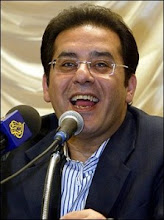
Ayman Nour walking to the al-Ghad party headquarters in Alexandria

Yesterday I found myself smack in the middle of Egyptian politics.
After a last-minute invitation from a new friend, I hopped on a mini-bus at 9am for the three-hour trip from Cairo to Alexandria. Thankfully the trip was completely uneventful, and the bus was even air-conditioned. Around 1pm we found ourselves sitting at a beach-front cafe sipping fresh juices (strawberry for me, guava for her) and reveling in the clean air and smell of the sea. We took a long stroll down the corniche (the road which runs along the water) and found ourselves outside Ayman Nour’s apartment at quarter to three – 15 minutes early! (Apparently neither of us have gotten back on Egyptian time yet.)

(Quick background: Ayman Nour is a well-known figurehead of opposition politics in Egypt. Formerly a member of the Wafd party, Nour left to form al-Ghad (Tomorrow) party in 2004. Al-Ghad was officially licensed just in time for Nour to run for President in 2005, Egypt’s first multi-candidate presidential elections since Nasser’s revolution in 1952. Nour came in second to president Hosni Mubarak, who has been in power since 1981. Officially Nour received 8% of the vote, but there is speculation that the actual percentage was much higher. Following the election Nour was convicted on forgery charges largely recognized as politically motivated and spent nearly four years in prison. He was released in February of 2009.)

We relaxed in the living room for a while, and eventually the five of us – myself, my friend, Nour, his secretary in Alexandria, and another Ghad party member – left for lunch. Nour nodded out the window to a guard station as we piled into the car. The four men at the station were watching us, and while three of them didn’t seem particularly concerned the fourth was looking between us and his phone. He was letting his superior know we were leaving the house, Nour said.

Anyone who argues that Nour’s popularity has fallen since his release from prison last year (and multiple tabloid-esque stories in the media) has not seen him in public. From the moment we entered the mall, where we stopped for lunch with other al-Ghad members, the flow of people stopping to speak with Nour, shake his hand, or take a picture with him did not abate until we got back in the car to go home at the end of the night. Men and women young and old approached him, all with smiles and handshakes and waiting cameras.


Eventually we made our way to the al-Ghad party headquarters for the Alexandria chapter. It was election day at the party – there were two issues on the ballot, and a petition as well. The first issue on the ballot was the deputy election (4 available seats, 5 candidates). The other, a referendum to confirm the party’s nomination of Ayman Nour as presidential candidate. The office, the entranceway, and the street outside were full of people milling about, speaking animatedly, talking on their phones, and vying for a moment with Nour.

Eventually my friend and I made our way inside, where there was just as much commotion. People coming to vote, and to sign their names next to their thumb-print on the petition. The petition is for a constitutional amendment to change the current electoral law, an issue supported by figures from Nour to Mohamed el-Baradei, the Egyptian former head of the IAEA. The ruling NDP party, however, has stated that it does not intend to propose constitutional amendments before the upcoming parliamentary elections.

Signing the petition

Yet al-Ghad is determined to prove that change is possible. According to Mohamed el-Wasemy, the Vice-President of the Executive Office for al-Ghad in Alexandria, the party’s internal elections are a lesson for both the party and the Egyptian people at large. The ballot counting was something that probably none of us have ever seen before. The ballot boxes are made of glass, a visual reminder of al-Ghad’s commitment to transparency. The ballots were counted out loud in front of a crowd of more than 60 people, the tallies marked on a board at the front of the room. During Friday night’s tally, every time the marker made a mistake and marked a tally for the wrong candidate, a dozen voices instantly called out and the error was immediately corrected. Each party member seated or standing in the room was watching carefully.

El-Wasemy called the elections a message to Egyptians. “A free election is not impossible to achieve,” he said.

“Political activism is the best way to bring about change in Egypt,” said Mohamed, a member of al-Ghad’s youth chapter, echoing el-Wasemy’s sentiments in an interview earlier in the day. Mohamed is a fairly new member of al-Ghad and sees the party as the only challenge to the regime. Neither the Reform and Development party or the Karama party have received official licenses, and Mohamed said that much of the other supposed opposition in the country has been created by the regime to play the part of opposition without actually being such.

Whether al-Ghad offers real opposition to the ruling NDP or not, the Tomorrow party faces many obstacles in its battle for change. Mohamed pointed to the broken lock and handle on the door of the room we were in. “Obviously we have no funding,” he said. Yet, despite the challenges, many in the party were hopeful as they gathered in the street following the election results.

“Say to me, mabrouk!” called out one of the newly elected deputies. I laughed and said to him, “Mabrouk!” Another new deputy echoed, “And me, and me!” Mabrouk – congratulations.

As the evening drew to a close, the crowd gathered on the street and slowly dispersed. Someone brought cake, and as we stood around talking a young member who spoke a little English walked over. “We call Obama the American Tutankahman,” he said. “We like Obama.” Why? I asked. “Some people love Obama because his father was Muslim,” he said. “But for me, his vision and charisma.”

After talk of el-Baradei (the headquarters of his National Association for Change in Alexandria is located in al-Ghad’s offices), corporate scandal, and a shocked exclamation of, “What is this language?!” as someone tried to decipher my notes, it was time to head back to Cairo. This time, my friend and I caught a ride with a party member back to the city. It was 11:30pm, and past 2am by the time we arrived back in Cairo.

An eventful eighteen hours, to be sure. I wonder what is next?

Nour surrounded by party members

Sallie Pisch

Alexandria, March 13th, 2010

Wednesday, December 9, 2009

Ayman Nour Biography

Ayman Nour


Ayman Nour was born on the 5 th of December 1964 to a father who was a lawyer and a Member of Parliament (MP) and a mother who established and supervised a number of charity projects in his birth town Mansurah.


He started his political career as a student activist during high school and University; and was elected as President for the Egyptian High School Students’ Union in 1980.


He won several awards in photography, school journalism & many other activities.


He graduated at Law School (Mansurah University) & started his career in journalism in the 80s, in one of the most famous opposition newspapers called “El Wafd” after “El Wafd Party” the oldest liberal party in Egypt. He was married to Gamila Ismail, who was a TV presenter, a political activist and who became his spokeswoman later on.


Nour's main concern was torture & corruption cases which led to his arrest & exposure to physical violence several times during his press campaigns.


Ayman Nour interviewed a number of arab world leaders like Yasser Arafat.
He wrote a number of books like “Liberalism is the solution” in 1992 compared to the famous Islamic slogan “Islam is the solution”.


He wrote as well “The Black Soldier : Zaki Badr” who was at that time the Egyptian Interior Minister.


He received his Ph.D. degree in “History of Law” from Russia in 1995. Then he ran for parliamentary elections and won to become the MP representing “El Wafd” liberal party in an electoral district in the center of Cairo called Bab el Sha’rea.


Till now he is considered the youngest member in the history of the Egyptian Parliament as he had been elected only few days after I had reached the legal age for nomination.


As a Parliament member ( 1995 – 2005 ) he exposed lots of corruption cases, proposed a large number of laws, amended & monitored many International treaties which involved Egypt , stood against random laws, supported civil rights , visited many parliaments around the world & won many awards for his honorable parliamentary performance on both national & international levels.


In 2003, he demanded a war crime trial for George W. Bush & Tony Blair for the invasion of Iraq without the UN permission.


He was re-elected for Parliament in 2000 announcing his intention for running for presidency after having 186 votes in the internal parliamentary elections (more than the third of the parliament which was in this time the main condition for being a presidential candidate) but then one year later he was dismissed from “El Wafd” party together with many of his colleagues in Parliament & began establishing their own political liberal movement called “Al Ghad” i.e. "Tomorrow" in 2003.


In 2002 he wrote a political & economical platform for Egypt’s problems in a book called (Modern Egypt in 2020) which later on became the basis for “Al Ghad party” policy.


In 2003 he launched with his fellows a large political campaign to attract Egyptian youth & society elite to political life based on the old Egyptian liberal values of “Al Ghad movement “such as “tolerance” , “human rights”, “third way free market”, while respecting Egyptian & islamic traditions.


In 2004 after a lot of pressure on the government (by thousands of founders, demonstrations & well written platforms handed to the Court ) the Egyptian government finally gave the legal license for the foundation of “Al Ghad” party (announcing in the government-controlled public media that it was an underhanded deal).


The Party then called for presidential elections instead of the old fashioned presidential referendum.


Because of his calls for constitutional reforms as regards the presidential elections, he was targeted by the Egyptian regime when 3 months later he was accused of falsifying official documents related to “Al Ghad” party.


His parliamentary immunity was terminated in a 30 minutes session & he was brutally dragged to jail while coming out of the Parliament building.


Days later President Mubarak announced constitutional reforms that will allow other candidates to run in the 2005 elections against him. So he submitted his nomination papers from inside the prison & the government released him to run for the Presidential elections.


In only 28 days, he carried out his election propaganda campaign where he visited almost all districts of Egypt holding conferences in each one. He was subjected to a heavy smear campaign by the government-controlled media & newspapers accusing him of being an American ally.


Finally he came second in the elections by officially taking 540000 votes (8%) compared to Mubarak who has been in power since 1981, who took 6 000 000 votes.


After the presidential elections he was put once again in jail in a trial described by many observers as an unfair trial under the control of a famous judge – the one who sent Dr.Saad el Din Ibrahim to prison few years before.


He was sentenced for 5 years in prison for “knowing about the falsified papers” & months later one of the imprisoned partners in this case was found hanged in his cell (was said to have committed suicide ) a day after his announcement that he had been intimidated by the State Security to force him to lie during his confession.


In prison he was forbidden all his rights including the right to communicate through writing and seeing other prisoners, even the right for health care which led to a lot of health problems later on.


In February 2009 – 4 months earlier than the date for his legal release from prison the government set him free (announcing once again that it was another deal between him & the regime ).


After being set free in 2009 he launched a new campaign called “Knocking the doors” to complete the visits he had started in 2005 to Egyptian towns & cities ,, & even to millions of Egyptians living outside Egypt in Europe , US & in the Gulf region.


Now, when he is supposed to be a free man, he is prevented from earning his living by resuming my job as a lawyer, or dealing with his bank accounts, or selling his property and finally he has been banned from traveling abroad.

Friday, March 20, 2009

"I Won't Wait for the Regime to Give Me Its Blessings!"

Interview with Ayman Nour : "I Won't Wait for the Regime to Give Me Its Blessings!"


Ayman Nour, the chairman of Egypt's liberal El-Ghad party, talked to Arian Fariborz and Mahmoud Tawfik about his party's perspectives for the future and his plan to run for office again in the next presidential elections


Ayman Nour (photo: AP)
Ayman Nour was released from prison in February 2009 after three years – for health reasons, was the official explanation on the part of the judiciary

Ayman Nour is one of the most prominent politicians in Egypt's liberal opposition. Many in the Arab world and the West see Nour, 44, as a liberal standard-bearer and a democratic alternative to Mubarak's authoritarian National Democratic Party and the Islamist opposition in the form of the Muslim Brotherhood.

2005 saw his arrest in the wake of the presidential election, on the pretext of electoral manipulation after his liberal El-Ghad party had gained 13 percent of votes.

According to political observers, Nour's sudden release last February was largely down to pressure from the Obama administration. Washington had categorised his arrest as an abuse of justice.

Although the state excluded Ayman Nour from political activities for five years after his release, he had announced he would be standing again in the next presidential elections in 2011.

* * *

According to many journalists and political observers, your release was a consequence of US pressure on the Egyptian government. Do you share this view?

Ayman Nour: The American pressure was certainly a factor, but I simply don't know enough details to either confirm or reject that interpretation. But I'm sure, of course, that many countries appealed on my behalf.

I'm particularly pleased on this point that the German parliament was one of the first to intercede on my behalf, by protesting against my arrest with a declaration to the Inter-Parliamentary Union (IPU).

So how do you explain your release at this particular time?

Nour: That's just what I'm wondering! To be quite honest I don't even know myself why I was released from prison now of all times. I can only assume that the regime may have been trying to polish up its image – albeit rather late, as I only had four months left to serve of my regular prison sentence...

photo: AP
A phoenix rising from the ashes? Ayman Nour viewing the burnt-out El-Ghad party headquarters in Cairo after his release


What is the situation for Egypt's liberal opposition at the moment? Particularly after its defeat in the presidential and parliamentary elections in 2005 and the decline of the extra-parliamentary opposition?

Nour: The first thing you have to realise is that the liberal opposition wasn't suppressed simply because it was liberal, but to prevent it from offering a "third way" in Egypt – as an alternative to the choice between the authoritarian regime and the Muslim Brotherhood.

I believe we can pick up this idea again now that I've been released. But to do so, we have to be prepared to enter into a hard and long battle.

What alternatives do you want to offer the Egyptians as a "third way"?

Nour: Our main goal is a constitutional state. We want to offer simple, clear and pragmatic solutions and we are prepared to put these into practice immediately – if we get the chance. If the current regime were ready to give up its power at eight o'clock tomorrow morning, we'd be capable of filling the vacuum by five past eight at the latest, and taking over the business of the state in an orderly way.

We have a very clear, detailed political agenda – the longest manifesto an Egyptian party has ever had at over 1200 pages, with solutions suitable for everyday practice that don't scare people off. One thing you have to know is that the Egyptians tend to be rather suspicious of change.


Gamila Ismail (photo: AP)
Nour had announced from his prison cell that he would run for office in the next presidential election. His wife and fellow political activist Gamila Ismail passed on his statements beyond the prison walls

Apart from that, we have a public profile as a "young people's party" for 20 to 30-year-olds. I myself may be 44, much older than that, but that still makes me only half the age of the old guard of over-80-year-olds.

Egyptian opposition parties – and the Muslim Brotherhood is no exception here – are often accused of restricting their demands to political reforms, whereas they have no clear ideas on the economy. Does the same apply to the El-Ghad party?

Nour: We have our very own ideas of a "third way" as Gerhard Schröder, Tony Blair and many others took with their social liberal reform agenda. But that mustn't keep us from our most important objective. Above all we want to fight corruption – and that can't be done via economic approaches, but only by means of political reforms, through checks and balances and by strengthening the judiciary.

What political role can you take on at all for your party in the coming years? After all, you are subject to certain state conditions that make it impossible to exercise political office freely, particularly forbidding you from running for the coming presidential elections.

Nour: Never mind the conditions – we have means of getting around them. And I'd like to say very clearly to all those who interceded for my release: what you should do now is intercede to defend my rights! My arrest was not about me personally, after all, but about curtailing my rights.
photo: AP
Solidarity with Ayman Nour: hundreds of supporters demonstrated for the 44-year-old politician's release at the start of the court case against him

I am free again now as an individual but at the same time I can't exercise my rights freely, and the impression is that the state is still following a repressive logic by politically immobilising certain individuals – a negative picture that does huge damage to Egypt's image. I for one do not allow myself to be swayed by the feeling that I'm banned from doing anything, and I will run for office in the coming presidential election. I will simply ignore this type of conditions, as I don't source my legitimacy from the state anyway. I won't wait for the regime to give me its blessings!

How does the future look for your party? There was allegedly a split after your arrest, meaning El-Ghad almost disappeared into obscurity after having been one of the most important parties of the new opposition.

Nour: The party did not split in the actual sense. What happened was that a number of members were expelled for giving in to pressure to support Mubarak in the presidential elections.

The state had tried to use them as a Trojan horse to undermine El-Ghad from within. Two weeks before my release, a judgement was passed in our favour, ruling that the party is allowed to reconstitute itself. It's true that the party almost collapsed during my time in prison, but the reason wasn't a genuine division but this state intervention.

There are some critics, however, who say the El-Ghad party revolves solely around yourself…

Nour: That's not the case at all. I am an important part of the party, that's true, as parties in Egypt are essentially not strong as quasi "impersonal organisations". One of the great faults in Egypt's party politics is just that, that the focus on certain individuals plays such an important role here.

But perhaps that's neither unusual nor a bad thing – there's plenty of evidence that that's the case in many countries all around the globe. The best counter-evidence in any case is the fact that I was in prison for four years but the party still exists and has even renewed itself. There are many new young people in the party leadership now.

But as the party's founder I naturally play a role, as it was me who put the manifesto together, provided ideas and gave them a political form. But that's the way it is in Egypt – people can identify more with individuals than with posters and pamphlets.

Interview: Arian Fariborz and Mahmoud Tawfik

© Qantara.de 2009

Wednesday, February 18, 2009

Interview with Ayman Nour on Egypt's Elections

Interviewee:
Ayman Nour
Interviewer:
Sharon Otterman

Egyptian Presidential Candidate Ayman Nour

Editor's Note: On February 18, 2009, Egypt's government released Ayman Nour, the most prominent of Egypt's jailed pro-democracy dissidents, after for than three years in prison in what was widely regarded as an effort to improve relations with the new administration of President Barack Obama. Nour told the AP that he had no warning about his release, nor could he explain the timing. "Why they did this is unknown," the AP quoted him as saying.

Nour's case has been a staple of U.S.-Egyptian relations ever since his conviction in December 2005 on charges of forging signatures on behalf of his party's efforts to contend in the 2005 presidential elections. He was arrested before the election, but the arrest drew strong protests from U.S. Secretary of State Condoleezza Rice, and Nour was released and allowed to stand as presidential candidate of Al-Ghad (Tomorrow), a secular, liberal party opposed to the longtime rule of President Hosni Mubarak.

Official results of the September 2005 voting gave Mubarak 88 percent of the vote, but the election was strongly criticized by international observers. A 2006 report from the nonpartisan Congressional Research Service noted the elections were widely regarded as fraudulent. Still, even with official corruption, candidates affiliated with the banned Muslim Brotherhood won over 20 percent of the vote, and Nour's "Tomorrow" party won another seven percent.

Shortly before the election -- and just days before he was rearrested -- Nour spoke at his home in Cairo with Sharon Otterman of CFR.org about his hopes for democracy in Egypt and the wider Middle East:

You’ve just wrapped up your presidential campaign with an enthusiastic rally here inCairo. Looking back, what do feel you’ve been able to accomplish these past weeks?

The campaign was very short, only eighteen days. We accomplished part of our mission to communicate with a huge number people from various sectors of Egyptian society. We had twenty-three rallies and visited eleven governorates. We were the most attractive campaign to the Egyptian people, obviously, with huge numbers of people coming to our events. So we feel we accomplished a part of our goals. When the results are out, they will demonstrate whether the election was free and fair enough to reflect the support we know we have from the people.

What is your best guess as to the final results?

If the elections were free and fair, I believe that President Mubarak would not get a large number of votes. Wide sections of the Egyptian community see that twenty-four years [of Mubarak rule] is a very long length of time to go without results. But if the elections are rigged, anything is possible.

Will the election be rigged?

The election will be neither free nor fair.

Many aspects of this election have already been criticized by domestic and international observers. Despite this and your own concerns, do you think this election represents an important step forward for Egypt?

No doubt, it’s a step, but it’s a limited step. There has already been a democratic system in Egypt, from 1923 to 1952. It is not enough for Egypt to have this election, with all of its flaws. There must be more reform.

When do you believe Egypt could emerge as a fully functioning democracy?

It could happen tomorrow in Egypt. Egypt is ready.

A number of opposition groups, including the Kifaya (Enough!) movement, are calling on Egyptians to boycott the election. They believe it is useless to participate because the election will not be fair. Do you think their stance is counterproductive?

It is their right to choose this option, and I respect their point of view. But I believe that boycotting is not the appropriate answer in response to a ruler determined to stay in power no matter what. I believe we need to participate to bring change.

What role do you think the Muslim Brotherhood play in this election? They have called on their many followers to vote, but have not specified a candidate.

Until now, their stance is still unclear, and I can’t speculate on it. As far as my campaign is concerned, however, it was not my goal to win the support of the Brotherhood or any other group. My goal is to gain constitutional rights for everyone, and to make sure all parties can run for office without restrictions. For their part, the members of the Muslim Brotherhood should participate in this election as any other Egyptian citizens.

Did you seek the endorsement of the Muslim Brotherhood in the course of this campaign?

I went to tell them about my election program. My goal was not more than that, to tell them about my program, to tell them as much as possible about everything I will do if elected. It is the same I would do for anyone else.

Your next challenge after this election will be facing the courts September 25 in the forgery case against you. Do you think the charges could be dismissed?

It is a fabricated case—I know that, and everyone knows that. I believe in justice, and I believe in Egypt’s judges. So I hope for the best.


http://www.cfr.org/publication/8829/interview_with_ayman_nour_on_egypts_elections.html

"Ayman Nour's release is fantastic", says LI President

Liberal International (LI) President John Lord Alderdice warmly welcomed the release of Ayman Nour of the Egyptian liberal party El Ghad after more than three years of imprisonment, and announced that the next LI Congress will take place in Cairo, Egypt.

Speaking from Kampala, Uganda, where he is currently representing the Liberal International at a meeting of ALDEPAC, the group of liberal and democratic parliamentarians from the European Union, the Pacific, Africa and the Caribbean, Lord Alderdice commented: 'The release of Ayman Nour is fantastic news. First and foremost for his own freedom and well-being, but also as an inspiration for liberal and democratic forces in Egypt. Mr. Nour's courage and determination in speaking out for the freedom of speech, democracy and political freedoms in Egypt, even at the sacrifice of his own personal freedom, have been an inspiration to many. His intended return in politics is a particularly encouraging sign for liberals in the Middle East, who have so successfully established the Network of Arab Liberals (NAL) over the last few years in which Mr. Nour's party is an active member. As members of the Liberal International across the world, we will continue to actively support Mr. Nour and other liberals in the region. It therefore gives me much pleasure to publicly announce that the 56th Liberal International Congress will take place in Cairo, Egypt, from the 29th of October until the 1st of November 2009. “

The Egyptian liberal party the Democratic Front Party (DFP) has been a member party of LI since the 2007 Belfast Congress, while Mr. Nour's El Ghad party is LI's partner that has initiated the process of formal affiliation with Liberal International.

Monday, May 8, 2006

The Trials of Ayman Nour

By Joshua Muravchik | Wall Street Journal

The year 2006 has reverberated with sobering reminders--Iraq, Lebanon, the Palestinian Authority--that democracy's progress in the Middle Eastwill be no easy thing.

While the million marchers in Beirut demanding Syrian exit from their country were the most dramatic symbol of last year's hopeful "Arab spring," it was the promise of presidential elections in Egypt--the political, cultural and demographic center of the Arab world--that gave the moment its weight. The year 2006, alas, has reverberated with sobering reminders--Iraq, Lebanon, the Palestinian Authority--that democracy's progress in the region will be no easy thing. None of the setbacks echoes more loudly than President Hosni Mubarak's decision to take the one truly independent candidate who had the temerity to run against him and clap him in jail.

That candidate was Ayman Nour, a long-time advocate of human rights and a maverick parliamentarian. Mr. Nour pried a small opening in Egyptian politics late in 2004 when he succeeded in securing legal status for his al-Ghad (Tomorrow) Party. One of the hallmarks of Egypt's authoritarianism has been its peculiar party system. A plethora of official "opposition" parties, all of them long since suborned or neutered by the government, are formally licensed, a status which genuinely independent parties are consistently denied.Such was the initial fate of al-Ghad, but Mr. Nour was unusually persistent. Another hallmark of Egypt's system--which is authoritarian but not totalitarian--is that the judiciary, particularly at its highest levels, has always retained some independence. So Mr. Nour doggedly used the courts to force the regime finally to grant the license. No sooner had the regime bent to Mr. Nour's legal tactics, however, than it announced his arrest.

The charge? Forgery. Its plausibility? Nil. The government alleged that Mr. Nour had faked some of the signatures on the petitions submitted to license his party. But the legally required number of signatures was 50, and al-Ghad had submitted 2,000. The government never claimed that he had faked all of them. Why would he, a lawyer by profession, have committed forgery just to boast an excess of signatures? More curious still, the government did not allege that he had carried out the forgeries himself, but rather that he had ordered them carried out by a handful of al-Ghad volunteers whom he barely knew. These men, all with shady pasts, came forward to accuse Mr. Nour.

When the case came for first hearing, one of the accusers recanted on the witness stand, declaring that he had never received or carried out any such instructions. He said he had been fed the whole story by state security agents who coerced him, by threatening to harm his family, to make false accusations. This would have been more than enough to have the case thrown out of any American court, but instead it was carried over, enabling Mr. Nour to run in the election.

It was scarcely a level playing field. No campaigning was allowed outside of the specified period of 19 days before election day. Meanwhile, and naturally, the news media, mostly government-run, were replete with daily paeans to President Mubarak. Moreover, to be eligible to vote, a citizen had to have registered almost a year in advance, before it was announced that there would be a presidential election.

Thus, Mr. Mubarak's victory was assured. But the regime was desperately eager for Mr. Nour not even to come in second, perhaps fearing that this would position him to effectively challenge Mr. Mubarak's son, Gamal, as his successor. Mr. Nour's campaign faced all manner of harassment; and Noman Gomaa, the well-known head of the Wafd Party, entered the race to divide the liberal vote. When asked why he ran, Mr. Gomaa, 72, responded with disarming frankness--the government had asked him to. But Mr. Nour was clearly Mr. Mubarak's main opponent, and he managed to run second even in the official count, which gave him 7%. (His supporters claim it was much more.)

Soon, he was hauled back before the court and convicted. The penalty for this first "offense," a "forgery" from which it was not alleged that he reaped any benefit? Five years at hard labor--an ominous sentence for a diabetic dependent on daily insulin.

Mr. Nour, however, has appealed to the court of cassation, which is known for its independence. It was this court that threw out the conviction of dissident Saad Edin Ibrahim in 2003, albeit not before Mr. Ibrahim's health had been permanently damaged by his prison conditions. Fearing that Mr. Nour's appeal will succeed, the regime has filed 19 new charges against him. Several of these are for various forms of lèse majesté. It used to be a crime to insult the king; after the monarchy was overthrown, the law was changed to apply instead to the president. Mr. Nour, in short, faces prosecution for criticizing Mr. Mubarak while campaigning against him for president.

Clouds shadow Mr. Nour's appeal, scheduled to begin on May 18. The judge named to preside is deeply enmeshed in some related political battles. A majority of Egypt's judges are in rebellion against the regime, demanding full judicial independence. Although less widely noted outside the country, this may prove to be a more important landmark on the road to democracy than last year's elections. Following the parliamentary elections, which were under the supervision of the judiciary, several judges accused others of fixing results on behalf of the regime. No action has been taken against the accused, but the accusers have summarily been stripped of immunity and are facing prosecution for "insulting" their colleagues. The judge appointed to "investigate" them (perhaps because of loyalty to the regime) is the same one who will preside at Mr. Nour's appeal. And two of his attorneys have been summoned for questioning and threatened with charges for insulting the president.

Nor is this all. Mr. Nour's most active defender and the person who keeps his party alive is his wife, Gamila Ismail. She, too, is now facing prosecution. Slender and pretty, she is accused of "assaulting" mammoth security officers on two different occasions. Last month she was also accused of writing a bad check, another tale that speaks volumes about the Egyptian system. When Mr. Nour was first imprisoned, Ismail sought to take an ad in the popular government-owned newspaper, Al Akhbar, proclaiming his innocence. The paper refused the ad on the grounds of "security," but also refused to return Ms. Ismail's check, promising to send a refund. The refund never came, and then, 13 months later, when Ms. Ismail's account balance dipped below the amount of the check apparently for the first time, suddenly Al Akhbar put it through, and it bounced. Hence, the "bad check" charges. So much for the independence of government newspapers and the privacy of the banks.

The story gets worse. This month, Mr. Nour was transferred to the prison hospital where he was placed, with too little sanitary isolation, amid patients suffering from HIV and scabies. The deputy warden issued a statement claiming, without basis, that Mr. Nour was suicidal, which he takes as a veiled threat against his life. His writings have been confiscated, including political writings and legal memoranda arguing that many aspects of his treatment violate the Egyptian constitution (including, ironically, the confiscation of his writings). At one court appearance last month, his two young teenage sons, who have joined their mother in campaigning on his behalf, were roughed up by state agents.

It is not only the Nour family that will have much at stake when his appeal is heard; so, too, will Egypt--where Mr. Mubarak, contrary to his campaign promises, has just extended the repressive emergency law--and the whole Middle East. And so, too, will the U.S., in terms of seeing democracy sprout in the region. The Egyptian government will claim that U.S. pressure regarding this case is inappropriate and pointless, on the grounds that the judicial process is independent. But if this were true, the judges would not be in rebellion. And were it true, Ayman Nour would never have been prosecuted.


http://www.aei.org/article/24328


Wednesday, April 26, 2006

FREEING A PARLAMENTARIAN

Steven Stalinsky *
The New York Sun

A former Egyptian parliamentarian and leader of Al-Ghad Party (the Party of Tomorrow), Dr. Ayman Nour, became an international cause celebre following his arrest last year by the Egyptian government for forging signatures on the petition to secure the formation of his new party - an allegation he has denied vehemently. He has been locked in a prison cell for the last 142 days or 3,408 hours.

According to freeaymannour.org, Al-Ghad stands for liberal and democratic values, with a focus on human rights. Other pillars of the party are encouraging constitutional reform, limiting presidential powers, and creating open, multi-candidate presidential elections in Egypt.

Freeaymannour.org offers up-to-date articles from the international press regarding Dr. Nour's case, as well as information from Western legislators who have spoken out on his behalf. For example, the site highlights U.S. House of Representatives Resolution 82, from March 3, 2005, which "express[ed] the grave concern of Congress" regarding Dr. Nour's arrest. A December 24 statement from the White House, which called Dr. Nour's five year prison sentence "deeply troubling," is also posted at freeaymannour.org.

The following are some examples of the dozens of personal letters and emails in support of Dr. Nour, from influential Europeans who also have been outraged by his imprisonment and are active in working to secure his release:

A text adopted by the European Parliament, "Urges the Egyptian authorities not to undermine the prospects recently opened ... to multi-candidate presidential elections, and to press ahead with democratic reforms; expresses its deep concern ... about the conviction of Ayman Nour ... regards this as a seriously retrograde step and calls on the Egyptian authorities to make every effort to ensure that this case is correctly dealt with." From a letter sent to freeaymannour.org by Czech politician Jana Hybaskova, member of the European Parliament, on March 8.

"[We the European Parliament] welcome and support the worldwide calls to release Ayman Nour and strongly urge the Egyptian authorities to ensure that Ayman Nour is well treated and not sub ject to torture or other ill treatment and to further ensure that he is given prompt, regular and unrestricted access to his lawyers, doctors (as he's diabetic) and family." A January 18 e-mail from an Italian politician and member of the European Parliament, Emma Bonino.

Most importantly, freeaymannour.org provides visitors an opportunity to sign a petition addressed to President Mubarak of Egypt urging Dr. Nour's release. It calls the prison sentence "an attack on the nascent initiative to a free political life in Egypt to move towards democracy and pluralism."

The petition asks the international community to support Dr. Nour and the struggle for a free and democratic Egypt. It states that all individuals and associations who care for the future of Egypt and of the Arab and Muslim world as a whole to add their signature.

To date there have been more than 600 signers including Dr. Nour's wife Gameela Ismail; Arab reformers, such as Saad Eddin Ibrahim; 27 members of the European Parliament from Finland, Britain, Italy, Sweden, the Czech Republic, Poland, France, and Germany; members of academia; journalists; activists; researchers; students; housewives; lawyers, and concerned citizens of the world.

The signers are from countries such as Egypt, Morocco, Iraq, Jordan, Tunisia, the Palestinian Territories, Algeria, Syria, Lebanon, Saudi Arabia, Kuwait, U.A.E., Libya, Spain, Switzerland, Thailand, America, Canada, Brazil, the Netherlands, Austria, Norway, and the Ivory Coast.

The Web site also requests visitors to "officially" ask Egyptian authorities to visit Dr. Nour in prison to help ensure his safety and to direct such requests to: 1. Habib el Adly, Egyptian minister of Interior, Lazoghly, Cairo, Egypt, Fax no. 202-795-7286. 2. General Mahmoud Wagdy, Head of the Egyptian prisons, Kolaly, Cairo, Egypt.

Saturday, December 24, 2005

BBC News - Egyptian opposition leader jailed

BBC News

Ayman Nour
The Egyptian government says the court trying Nour is neutral
Egyptian opposition leader Ayman Nour has received a five-year jail term after being found guilty of fraud.

Nour, who came second in a presidential poll in September, was first held in January this year accused of falsifying signatures to register his party, Ghad.

Egypt denies Nour's claim that the charges are politically motivated. And the US has voiced concern at the trial.

Hundreds of Nour's supporters at the court shouted slogans against President Hosni Mubarak as the verdict was given.

"Hosni Mubarak's rule is illegal! The trial is illegal!" they chanted.

According to the BBC's Bethany Bell in Cairo, the streets near the court were full of riot police and Ghad party supporters.

Nour has been in hospital after starting a hunger strike earlier this month in protest at his detention.

US concern

His lawyer, Amir Salim, is quoted by the Associated Press news agency as saying the decision against him will "go into the dustbin of history".

"This is a political verdict that will be annulled by the appeal court," he said.

A co-defendant in the trial, Ayman Ismail, had admitted forging documents for Nour - but later withdrew his testimony, saying the confession was forced out of him with threats against his family.

Despite the charges against him, Nour was allowed to compete in presidential polls, where his party finished second to Mr Mubarak's.

He lost his assembly seat to a candidate from the ruling party in November.

The has US earlier said it was watching Nour's trial, which it regards as a test of Cairo's tolerance of dissent.

State department spokesman Adam Ereli said this month that the US was calling on Egypt "to make every effort to ensure that this trial conforms to international standards".

Friday, March 18, 2005

A risk worth taking : an interview with Ayman Nour

A RISK WORTH TAKING


Al-Ahram Weekly

Ayman Nour tells Mona El-Nahhas that running for president and working to restore party unity top his post-release agenda


For nearly a month the name of Ayman Nour, MP and chairman of the liberal opposition Al- Ghad Party, has made headlines. Arrested in January on charges of forging thousands of party membership applications, Nour was detained at Tora prison for almost 40 days pending investigations.

On Saturday Prosecutor-General Maher Abdel-Wahed ordered Nour's release on LE10,000 bail. It remains unclear whether the case will be closed or Nour will still have to stand trial. Whatever happens, few members of the public accept the official line that the case is criminal and not politically motivated.

Following his release, Nour was soon back in the headlines, having announced his intention to run for president in the coming elections.

A few days before your release you said you intended to run in the coming presidential elections. What will be the consequences of that decision for your party and for your political future?

I am sure this step will have serious repercussions. I am ready for the risk, though, because I believe it will help outline the future of our society. My participation will help people choose among candidates who are qualified and capable of competing to provide an effective alternative to the ruling party.

With such a target in mind, my freedom or even my life would be small price to pay.

What preparations have you made for the coming elections?

The battle will be fierce. Yet we are ready for it. It is not only our party's battle, but the battle of a whole generation.

We intend to run against the ruling NDP's nominee, whether that is President Hosni Mubarak, his son or somebody else. We will present our platform against theirs, and will ask for an international committee to monitor the elections in order to guarantee transparency.

We are determined not to allow the party to be excluded from participating, particularly after we heard that they intend to tailor the legal conditions with the aim of banning party nominees from running. Doing that will only add another failure to their record.

How do you see your chances of success?

I would bet on the Egyptian people's eagerness for change. We believe they are fed up with seeing the same faces, same party and the same style of administration for 25 years.

You said earlier that your call for amending the Constitution was the reason behind your arrest. Now that President Mubarak has himself asked for a constitutional amendment do you still believe this is the case?

What I said was that my call for amending the Constitution was one of the reasons behind the case. It is not the only one.

I think the main reason was my intention to run in the presidential elections, and although I had not announced that at the time of my arrest it seems they learned of it.

If your calls for amending the Constitution and running for the office of president were behind your arrest, why were other political activists advocating the same cause not arrested as well?

Believe me I have no idea. Ask those who sent me to jail.

You said that destroying your party was the main objective behind the "state- fabricated" case against you. Why then did the government allow the party to be formed in the first place?

It was not their permission that allowed our existence. It was, after all, simply a matter of time before the courts would have ordered the granting of permission for the party to be formed once we filed a law suit against the government.

As I have repeatedly said, the government had no choice but to license the party after they were certain the court would rule in our favour.

At the time it was said the party obtained a licence after cutting a deal with the state. And some people accused the party of maintaining close ties with the government. I believe that time has proved such allegations wrong.

During your absence the party suffered several internal splits. What are your plans to restore unity?

The party suffered no splits but differences in opinion as to how the party should have been run in such a crisis. Some members thought it would be safer to avoid direct confrontation with the state, believing this would help me. Others preferred to put as much pressure on the government as possible.

Some leading party members made statements with which I was unhappy and which were not in line with the party's overall agenda. But we will deal with these issues and re- organise the party in a democratic manner.

Do you think there is sufficient time left before parliamentary and presidential elections to restore the party's strength?

I believe that working under such a strict timetable gives an incentive to the members to get their act together, overcome the ordeal and become much stronger.

Behind bars you said repeatedly that controversial journalist Ibrahim Eissa, appointed by the party's first general congress as editor-in-chief of Al-Ghad's mouthpiece, enjoyed your full support. Yet Eissa was replaced by a journalist from the weekly independent paper Sawt Al-Umma, which has attacked both you and the party. Why?

As far as I am concerned I have no authority to violate decisions made during the party's first general congress. For me Eissa remains the editor of the newspaper.

The decision to replace Eissa was not mine. I was not there when some of the party officials assigned certain journalists, whom I hardly knew, posts on the newspaper's editorial board. In jail I had to accept the will of the party officials to protect Al-Ghad from internal splits.

I'll meet very soon with the newspaper's new editorial board and evaluate the whole matter from a professional perspective. Everything I have heard until now suggests that security pressure was exerted on party officials and that was the reason behind choosing those journalists.

Does this mean the party has been infiltrated by state security?

Frankly speaking, yes. You'll not find a political party in Egypt which is not infiltrated by state security. Yet in our party such infiltration remains limited.

This, I believe, is due to the crisis we are going through and the party's youthfulness. After all, we've only been in the field for five months.

US pressure for your release led some to hint that the party has direct connections with Washington while others accused the party of receiving financial aid from the US.

The Al-Ghad Party is above suspicion. We have never received a penny, from the Egyptian government or from any foreign government. Let them ask US secretary of state, Condoleezza Rice, if they do not believe us.

Our finance comes mainly from the party's members, who paid all the expenses of the first general congress. Whoever repeats such nonsense is simply mudslinging.

Then how do you explain US support? And do you think such support was the reason behind your release?

I did not ask for this support and cannot be held responsible for it. Yet I cannot blame anyone for supporting me. I am not against foreign support, but against foreign intervention. That we will never allow when our party comes to power.

My release was natural, given that I was the wronged party. The US had nothing to do with my release. If anything, it came as a result of strong popular support.

Some believe that US support may negatively affect Al-Ghad's popularity.

I don't think so. People are smart enough to know who has connections with the US, who makes pilgrimages to the US and who receives financial aid from them.

What is your response to the attitude of the People's Assembly and its Human Rights Committee regarding your case?

Compared with the support I received from the European parliament the People's Assembly was shameful. As for its Human Rights Committee, I think it would be better if they dissolved it. We do not need a committee the only role of which is to mask the ugly image of the state.

I sent a letter to the People's Assembly speaker telling him that my life was in danger. The committee members only started to do something after 10 days and even then faked a report about my health, denying that I had been tortured or had any health problems, while in fact I am diabetic and have a heart condition.

And what about the attitude of the opposition parties?

Some of the opposition parties, the Nasserist Party and Al-Geel Al-Dimoqrati (democratic generation) Party adopted honourable stances for which I thank them. Others preferred not to declare their support for me.

As for the rest, those who took the opportunity to settle old accounts and stab me in the back, I hope they are ashamed of themselves. Their position backfired and instead of harming me they were themselves belittled in the eyes of the public.