Showing posts with label Opposition Parties. Show all posts

Tuesday, December 1, 2009

Amr Hamzawy : Egypt's Opposition Misled by Fixation with Mubarak’s Son

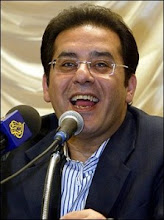
Amr Hamzawy
The National
,
1 December 2009
Tuesday


Political opposition in Egypt has been stirred by a recent campaign against Gamal Mubarak, the son of the president Hosni Mubarak, becoming Egypt’s new president in 2011. In particular, Ayman Nour, a key opposition figure and a presidential candidate in 2005, has mobilised a wide spectrum of political groups to present a united front in upcoming legislative and presidential elections in 2010 and 2011, respectively.

Upon closer look, however, Mr Nour’s rallying cry is troubling. In gearing up for elections, the opposition has demonstrated a near complete inability to prioritise the issues essential to its political future, and has squandered its efforts trying to prevent Gamal Mubarak’s succession.

Egypt’s opposition groups, including both legal parties and the Muslim Brotherhood, have been in disarray since the regime introduced stifling constitutional amendments in 2007. These measures limit the oversight powers of the judiciary in elections, fail to set term limits on the presidential mandate, and ban religiously affiliated political activities.

While opposition forces have been exclusively focused on the one issue – Gamal Mubarak’s possible ascendancy – the Egyptian regime has been carefully creating an environment which will sustain its rule. The ruling elite is no newcomer to this game. They have consistently manipulated the political process by preventing the opposition from registering candidates in elections, obstructing the campaign process, and fomenting violence on election day.

In contrast to the ruling elite’s clear direction, the opposition has no guiding compass and is left wandering through the challenges posed by the political agenda in Egypt. Their failure cannot be solely attributed to the regime’s repressive measures – a great part of the responsibility belongs to the opposition parties themselves.

Since 2005, parties including the liberal Wafd party, Ayman Nour’s Ghad party and the Democratic Front, as well as the Muslim Brotherhood (which is banned but has de facto representation in parliament) have all failed in two major tasks: formulating an elections platform and clear vision for Egypt’s political development, and applying sufficient pressure on the regime for political and economic reform.

Despite its acquisition of an unprecedented 88 parliamentary seats in the 2005 elections, the Muslim Brotherhood has yet to push for serious reform of the political system. Several concerns also remain unresolved in Egyptian and international public opinion regarding the Brotherhood’s positions on equal citizenship rights for Copts and Muslims, women’s participation in politics and freedom of expression.

The opposition parties urgently need to tackle several issues to position themselves for the 2010 and 2011 elections. First, groups have to clarify their stance on the question of domestic and international monitoring of elections. Especially with regard to the latter, the opposition remains divided.

Second, they have to prioritise calls for the abolition of the emergency law in effect in Egypt since 1981. Finally, parties should be more attuned to new political opportunities, expanding grassroots activities to capitalise on growing protest sentiment among wide segments of the population who are suffering from deteriorating social and economic conditions.

With Egypt’s declining GDP growth, the unemployment rate reaching 10.3 per cent, a poverty rate of 20 per cent, and an alarming level of debt – 76 per cent of GDP – citizens are in desperate need of competent political parties.

The implications of the upcoming elections will, of course, extend beyond Egypt’s borders. In light of the regime’s recent political manoeuvring and the opposition’s stagnation, the 2010 and 2011 elections in Egypt will test the Obama administration’s stance on democracy in the Middle East. Its position will either demonstrate a commitment to the incumbent regime of the Mubaraks as a strategic ally in a turbulent region regardless of its domestic behaviour, or signal pressure to create better conditions for democratic reform and political competition in Egypt.

The first signals from the Obama administration are not encouraging; the administration has so far put the promotion of democracy low on its list of priorities. Washington has only raised the issue of reform in the context of concessions that Mr Mubarak has already made. The Obama administration has also cut aid to numerous actors and organisations in civil society.

The campaign organised by Mr Nour is a step in the right direction for the opposition in Egypt, but he and other activists would be wise to adjust their agenda. Only by letting go of their obsession with Gamal Mubarak’s succession and addressing other issues at the core of the upcoming elections can opposition groups counter the regime’s hegemony.

Sunday, November 8, 2009

Ayman Nour: Egypt opposition versus the government


Egypt is the land of wonders. The first anniversary of the burning the headquarters of the el-Ghad Party coincides with the fifth anniversary of establishing it. I am astonished by the ability of those involved in burning my office to keep their self respect! I wonder how they dare to look right into the eyes of their children, spouses, and the whole of Egyptian society. I dare them to look into my eyes. No matter how mean and liars they are, they cannot stand long.
Some of the criminals, who committed the attack and the burning, claimed that they were in a “nonviolent” protest on Emergency Law. Others claimed that the purpose of the “nonviolent” rally was to condemn the allies of the US and the agents of Israel. Ironically, the leaders of the rally are mentioned on the CIA website. Some Egyptian newspapers – including the al-Wafd daily – condemned this already. At the same moment, this so-called “unbeatable fighter” who claims that his rally is against Israel was mentioned in Israeli media as an expected visitor after signing a business agreement with an Israeli agriculture company. One of the experts from this Israeli agriculture company is working at his office.
Egypt is the only country in the world where the ruling party selects its opposition groups and assigns its rivals. If they like an opposition activist, they will give him a license to launch an “opposition” party. If they dislike him later, they throw him in prison for years; sometimes for the same license they previously gave to him!
When Mostafa Kamal Helmy became the director of the Parties’ Affairs Committee, he infected it with some of his characteristics as a former teacher. PAC now applies the rule: good manners are preferred to intellectuality. I doubt that, one day, we might find a sub-line on the banner of the PAC reading: “discipline, pruning, and reform!” Currently, Pac director is the Secretary General of the ruling National Democratic Party. The members of PAC are the pro-regime officials from the ministries of Interior, Justice, etc. In case this committee rejected your request, you can yearn to the “Court of Parties,” which is run by judges, NDP members, and high profile governmental officials. If the PAC does not notify you with its decision, they have the right to put you in jail at any minute. Simply, the materials you submit are usually used as proof of you violating the law, in case they refused your request. If the committee chooses not notify you or send you to prison, they can plant thorns in your head. They send you someone who barely knows something about efforts you made for establishing your party and let him claim that he is a “partner” and even worse drag you down into a conflict of the leadership of your own party! Then, you find yourself obliged to prove owning a right of your own. This is the most successful strategy the government uses to exhaust you and sometimes cripple you, if you wanted to practice real opposition politics.
The judiciary cannot be of any help. If you file a claim, you have to wait for many years. If you wait and respect the rules until you finally have a verdict, the PAC still keeps the right to validate this verdict or not, and you have to wait for another supporting verdict to the first verdict. You can hold as many public conferences as you can, and the committee still keeps the right to pay attention or disregard you at all. This happens all the time in Egypt.
Egyptian political parties are either unauthorized, banned, or terrified from losing their license. The El-Ghad Party is a living example to this horrible disorder. Only 89 days after establishing the El-Ghad party, the PAC decided to solve the situation by imprisoning its leader and founder.
However, this did not lead to the results they were looking for, as we ranked second in the presidential election. Thus, the committee decided to shake us! One week after the presidential elections, they started the shaking game, but we stood strong in the face of the earthquake. Hence, the regime and its PAC decided to apply a new strategy: genocide. They arrested young members, besieged our activities, banned the party newspaper, and burnt its headquarters.
When will the regime and the so-called Parties Affairs Committee realize that political parties are not born by governmental decisions or killed by anonymous fires?

Thursday, November 5, 2009

EGYPT: Activist Ayman Nour blasts authorities for travel ban

EGYPT: Activist Ayman Nour blasts authorities for travel ban

latimes.com
November 5, 2009 | 6:45 am

ALeqM5hSeESUv_EiGZSEEdYZSjGC92zA2Q

Opposition leader Ayman Nour has attacked the ruling regime after he was barred from traveling to the United States, where he was invited to speak about Egypt's political climate at the Carnegie Endowment for International Peace in Washington.

Nour and a number of Egyptian politicians, including Gamal Mubarak -- a top official in the ruling National Democratic Party and the son of President Hosni Mubarak -- were invited to the Carnegie event. Nour said he is convinced that his travel ban was intended to prevent anti-government figures from spoiling Gamal Mubarak's trip.

"Mubarak's son wants the lion's share of the Egyptian political sphere, whether that is inside or outside the country," Nour said. "But I will not give him such pleasure, and I will take part in the Carnegie seminar through video conferences."

The founder and former head of El Ghad opposition party, who was also planning to take part in a number of conferences organized by the Egyptian community in the U.S., previously said that the Egyptian public prosecutor had issued an administrative decision preventing him from going to the U.S. and other nations in the Middle East and Europe.

Gamal Mubarak is being groomed to succeed his father, a scenario resented by many Egyptians who have suffered under the government's economic programs and repressive human-rights policies and don’t want a Mubarak dynasty. Nour and fellow opposition activists and parties recently formed a coalition under the slogan Mayehkomsh ("You don't have the right to rule"), rejecting any succession plan.

After losing to Hosni Mubarak in Egypt's first contested elections in 2005, Nour was sentenced to five years in prison on what are widely regarded as trumped-up charges of forging signatures in order to establish El Ghad party. He was released on health grounds in February and since then has only been allowed to leave the country to receive healthcare abroad.

Nour, who has been touring Egyptian cities to interact with citizens and demonstrate his political vision over the last few months, can't run in the 2011 presidential elections because of his earlier conviction.

-- Amro Hassan in Cairo

Wednesday, June 3, 2009

From Ayman Nour, a Question for Obama

Wednesday, June 3, 2009

I last saw Ayman Nour in a dingy Cairo conference room in 2005 while he was running for president against Hosni Mubarak, Egypt's military ruler. During a Middle Eastern trip, Secretary of State Condoleezza Rice had convened a small group of Egyptian dissidents and civil society leaders to discuss democracy and human rights. Many in the room were encouraged by the greater free expression Mubarak was permitting in Egypt under American pressure. A door, they thought, was opening.

Nour, looking exhausted, spoke last: "This is not an open door, it is a revolving door. It will end up with one conclusion -- a monologue, not a dialogue." Egypt's election laws, he complained, were unclear and unfair. The government was pursuing trumped-up legal charges against him. State security agents followed him everywhere.

Nour's pessimism was prophetic. After the election, he was imprisoned for three years. Now he is banned from practicing law, running for office or appearing on national television. Last week, two unknown assailants using a homemade flamethrower burned Nour's hair and face.

President Obama is entering a nation and a region where such treatment is the normal price of political courage. His Cairo University speech will send a large diplomatic signal: Does Obama honor and support such courage, or de-emphasize and dismiss it in the "realist" pursuit of other ends?

One hopes that Obama and his speechwriters have consulted "The Next Founders: Voices of Democracy in the Middle East," an important new book by Joshua Muravchik. The book profiles seven men and women -- six Arab, one Iranian -- taking impossible risks in the cause of human rights and self-government. They include a Saudi woman protesting the treatment of women as chattel and an Egyptian publisher trying to bring a free, responsible press to an authoritarian society. Most of these reformers have suffered imprisonment or faced threats to their lives and families.

Many of these dissidents, Muravchik told me in an interview, felt "betrayed" during the last few years of the Bush administration, when the containment of Iran and the Israeli-Palestinian peace process seemed to take precedence over democracy promotion (except in Iraq). Reformers in the region generally greeted Obama's election with enthusiasm. But Muravchik says dissidents are becoming "disquieted about the administration's apparent indifference to democracy and human rights abuses."

They should be, in the Middle East and elsewhere. Secretary of State Hillary Clinton has bluntly admitted that concern about Chinese human rights abuses "can't interfere with the global economic crisis" -- meaning we can't afford to offend dictators who buy our bonds. The administration talks of reviewing sanctions on Burma's junta. And Egypt's ambassador to the United States enthuses that America has stopped making "human rights, democracy and religious and general freedoms" conditions for better relations.

In this environment, the message of Obama's Cairo speech will be amplified. His Middle East advisers have probably urged him to focus (as they always do) on Israeli-Palestinian peace -- the "real" concern of the region -- instead of discredited democratic idealism. In fact, this sort of realism both reflects and strengthens the strategy that Middle Eastern dictators have pursued for decades -- the strategy of heaping attention on Israel and the Palestinians to draw attention away from their own oppression and economic failure. There is no reason Obama cannot emphasize both a two-state solution and the need for responsible and representative states across the Middle East.

It is also likely that Obama has been counseled to avoid the "d" word -- "democracy" -- in his Cairo remarks. Middle East experts sometimes contend that promoting "justice" and "good governance" is more culturally sensitive than employing such Westernized concepts as "democracy" and "freedom." The argument is common -- and uninformed. "Justice," in this context, implies human rights as the gift of a wise emir or enlightened dictator. But, as Nour and others have discovered, such gifts can be withdrawn on a whim. The next founders in the Middle East are not merely begging for more rights from autocrats; they are seeking freedom from autocracy. They want more than for tyrants to open the door of reform a crack; they want to open the door themselves.

Any presidential speech abroad has multiple audiences. One of them, in this case, is the Egyptian government, whose cooperation is needed on issues that range from proliferation to peace. But another audience will be dissidents and reformers in Egypt and beyond. And a president who does not speak boldly for their political rights -- their democratic rights -- has little useful to say to them.

michaelgerson@cfr.org

Monday, May 25, 2009

EGYPT: NO PEACE WITHOUT JUSTICE STANDS IN SOLIDARITY WITH AYMAN NOUR

Statement by Sergio Stanzani and Niccoló Figa-Talamanca, respectively President and Secretary General of No Peace Without Justice:
We have learned with deep concerns that on Friday 23 May 2009 an unknown assailant on a motorcycle attacked the prominent Egyptian dissident Ayman Nour by igniting a flammable substance in his face. This attack came a day after Ayman Nour pledged to supporters that he would run again for president in 2011 if his political party nominates him and if he can overturn a ban on him running.
No Peace Without Justice (NPWJ) continue to support the long struggle of Ayman Nour, one of the few liberal campaigners for democracy in Egypt who spent four years in prison after running against Egyptian President Hosny Mubarak in the 2005 elections, and applaud his peaceful pursuit of these ideals for the benefit of Egypt and the Arab world.
We call on the Egyptian judiciary authorities to make a complete investigation on the incident in order to bring the perpetrator of such act to justice. We also urge the political and judiciary authorities of Egypt to allow Ayman Nour to exercise his fundamental right to freedom of thought and freedom of expression, ending the repeated intimidations and restrictions against human rights defenders, in violation of Egypt's international commitments under Article 19 of the Universal Declaration for Human Rights and the UN Covenant on Civil and Political Rights.
It is not Ayman Nour's struggle but it is rather the repeated persecution against human rights defenders which are harming the image of Egypt abroad. We call upon like-minded democrats and governments to stand in solidarity with Ayman Nour and make their views known to the Egyptian authorities.

Saturday, May 23, 2009

Egypt opposition leader Ayman Nour firebombed

Egypt's Ayman Nour claims attack, suffers facial burns

Egypt opposition leader Ayman Nour firebombed


Ayman Nour was attacked Friday evening on his way to a Ghad party meeting

CAIRO (Marwa Awad)

Egypt’s leading opposition figure Ayman Nour survived a bomb attack late Friday in front of his home a day after he vowed to run for elections in 2011.

Nour, one of Egypt’s best known political dissidents, was admitted to a Cairo hospital late Friday for first degree facial burns after a motorcyclist firebombed his car.

The attack took place 300 meters (984 feet) outside of Nour's home in the upper-class neighborhood of Zamalek. A youth in his late teens rode up to Nour, who had his car window rolled down, and sprayed flammable liquid in his face and lit a fire simultaneously.

“I had my window rolled down and he came up to me within a distance of one meter. He sprayed a liquid that ignited into a ball of fire that covered my face and head and I was immediately rushed to the hospital,” Nour told Al Arabiya in his first comments since the accident and declined to disclose the name of hospital he where he is being treated.

His driver was unhurt and immediately took Nour to the hospital.

Nour said he suffered first degree burns on half his face and 20 percent of his hair. Doctors told him they expect to release him within two weeks with the possibility of minor plastic surgery.

“We are in the process of filing a statement of criminal assault to the Abdel Maguid Mahmud the Attorney General to initiate an investigation into this crime,” Ehaab al-Khoury, head of the Ghad Party, told Al Arabiya. “We will also issue an official statement condemning such an act and demanding justice.”

Osama Abdel Menem, attorney with al-Ghad party told Al Arabiya he will file the criminal assault report Sunday.

Nour did not know who his attackers were, but said he believed the attack was in response to a speech he gave Thursday in Port Said announcing his resolve to run for the presidency for a second time in 2011.

However managers at Alfa market and Hardee's in Zamalek, two businesses located near the alleged attack, were unaware of any incidents around that time.

Zamalek police said no report of criminal assault was filed by Nour or the Ghad party on Friday.

" I had my window rolled down and he came up to me within a distance of one meter. He sprayed a liquid that ignited into a ball of fire that covered my face and "
Ayman Nur, Ghad Party founder

Nour, a 44-year-old diabetic, formed a political party and mounted an unprecedented challenge against veteran President Hosni Mubarak during the 2005 presidential election, coming a distant second. He was then imprisoned on charges of forging signature to found his party, which his supporters believe were trumped up, and sentenced to five years in prison. He was released in February.

“There are many who could have done this criminal act, especially after my visit to the city of Port Said and the speech I gave there,” Nour said, adding that he remains resolved to carry on with his political activities and “will not succumb to any obstacles.”

Nour called the attack “unfair play outside of all norms of decency and legitimacy,” maintaining that ever since his release in February of this year, he has been periodically assailed in ways that sought to damage his political and social standing and hinder any progress on his political reform efforts.

“A series of distractions and obstacles were set in my path since my release. Attempts on my life of this illegitimate sort outside of the political arena try to disable the party’s development and progress,” Nour explained.

Wednesday, June 20, 2007

Al Ahram weekly : Case continues

The fate of imprisoned opposition leader Ayman Nour is still unsettled, reports Mona El-Nahhas

The Administrative Court announced on Tuesday that any decision on whether Al-Ghad Party leader Ayman Nour will be released must wait until 26 June, when official medical reports into the opposition leader's state of health -- asked for on 22 May -- are due to be issued. Meanwhile, the court ruled that Nour's defence counsel -- who had complained of procrastination in preparing the official report -- could present evidence from independent medical specialists regarding their client's health.

The court ruling means that if the official report, prepared by the Forensic Medicine Department, is not presented within two weeks then the court will rely on independent assessments of Nour's health in delivering its ruling, raising hopes among supporters of the 43-year-old Nour that his 18 months behind bars might soon come to an end.

The judge presiding over the appeal for Nour's release stressed the court would not swayed by national or international calls for Nour's release, and the decision would be based entirely on the state of Nour's health. The former presidential election candidate suffers from diabetes, heart problems and hypertension and last year underwent heart surgery while in prison.

Nour's lawyer, Amir Salem, said the court's decision was a "historical ruling", adding it represented "a severe blow to administrative bodies used to ignoring court requests".

Nour's wife Gamila Ismail told reporters she had never expected the medical report to be made available to the court panel, which was why she was treating the court ruling as a victory.

But while Salem sounded upbeat, saying any ruling in Nour's favour must be implemented immediately, Ismail sounded a more cautious note, saying she feared US pressure for her husband's release could make the regime more stubborn about the case.

Legal sources say there is a possibility the Interior Ministry will ignore any ruling in Nour's favour, using the struggle between several legal bodies, including Prosecutor-General Abdel-Meguid Mahmoud's office, over who has the right to judge the case. While some observers worry about the negative consequences of US pressure for Nour's release, others point to the case of academic and pro-democracy activist Saadeddin Ibrahim. Sentenced by a state security court in 2001 to seven years in prison for receiving foreign funds without government permission, Ibrahim was released in 2003 following enormous US pressure.

Ahead of Tuesday's hearing session international calls for Nour's release increased.

During a short visit to Egypt this week a delegation from the Alliance of Liberals and Democrats for Europe talked with Egyptian officials about Nour's health.

"We are following Nour's case, and we are waiting for the court verdict, expected to be passed on Tuesday," said Sarah Ludford, a member of the European parliament.

During a conference on democracy held in the Czech Republic last week US President George W Bush called directly for Nour's release. "I look forward to the day when conferences like this one include... Ayman Nour of Egypt," Bush said.

The point was subsequently underlined by the US State Department.

"We believe that Nour should be released. We hope this could be achieved. We'll leave it to the Egyptian government to define the way by which it expresses its reactions," said Tom Cass, deputy spokesman of the US State Department.

"What Bush said concerning Egypt is an unacceptable intervention in our internal affairs," insisted Foreign Minister Ahmed Abul-Gheit following Bush's speech.

The National Council for Human Rights (NCHR) also weighed in with its disapproval. "Bush's statements concerning Nour's case place Egypt under no obligation," said NCHR Secretary-General Mokhles Qotb. "The law defines the legal channels that are pursued in this and similar cases."

Following a meeting of the Al-Ghad Party's higher committee a statement was released on Friday condemning Bush's statements and any external intervention in the case.

Thursday, December 29, 2005

Dissident Watch: Ayman Nour

Middle East Forum

by Suzanne Gershowitz
Middle East Quarterly
Summer 2005, p. 96

On January 29, 2005, just a day before Iraq's first free elections in a half-century, the Egyptian government moved to shut down its own fledgling opposition, arresting 40-year-old Ayman Nour, chairman of the upstart Ghad (Tomorrow) party.

In Egypt, the government licenses political parties, a power it has used to constrain opposition. Nour, a lawyer who entered the Majlis ash-Sha'b (People's Assembly) in 1994, broke with the establishment nationalist Wafd Party in 2000, disillusioned with the lack of liberal reform. The same year, he published a book advocating liberalism over Islamist politics, Yawmiyat Suhufi Mushaghib (The Memoir of a Troublemaking Journalist),[1] and began efforts to form his own liberal party. After more than three years of bureaucratic hold-up, the Egyptian government formally recognized Ghad as Egypt's first new opposition party in more than a half-century.[2] On paper, Ghad's influence is slight. It has only six deputies in Egypt's 454-seat assembly while Hosni Mubarak's National Democratic Party has 415.

But unlike other Egyptian parliamentarians, Nour used his People's Assembly seat to agitate for concrete reforms. Three weeks prior to his arrest, he antagonized the Egyptian government by submitting a draft constitution mandating contested elections rather than a simple referendum on the incumbent's rule.[3] As a result, Nour's popularity has been on an upswing. One Egyptian analyst predicted he could win 20 to 30 percent of the vote.[4]

Mubarak, 76, retaliated with charges many Egyptians considered spurious. He accused Nour of forging signatures he collected in order to establish the party, a charge Nour rejects. Upon arrest, security forces kept him in a room less than 12 square feet at Nora prison.[5]

Rather than ignore the domestic abuses of an important ally, the State Department stood up for the dissident. On January 31, a State Department spokesman called on the Egyptian government to reconsider Nour's arrest.[6] During Egyptian foreign minister Ahmed Abdul-Gheit's February 15, 2005 visit to Washington, the question of political reform in Egypt "reared its head … everywhere,"[7] according to a report in Al-Ahram. Displaying her displeasure at Nour's treatment, Secretary of State Condoleezza Rice cancelled a visit to Egypt.[8]

It worked. On February 26, Mubarak announced plans to allow opposition candidates to contest presidential elections and, on March 12, he released Nour from prison.

It is too soon to tell whether Mubarak's concessions are sincere. He has not agreed to legalize all political parties or to allow international electoral monitoring.[9] His foreign minister has ridiculed U.S. support of democracy in Egypt.[10] While Nour has declared his intention to run, he still faces trial on June 28, and Mubarak's National Democratic Party seems intent on sabotaging his campaign.[11] There is no guarantee that Egyptian authorities will allow him to appear on the ballot. Nevertheless, Washington does have leverage; at $1.8 billion, Egypt is the third largest recipient of U.S. foreign aid after Iraq and Israel.[12]

Suzanne Gershowitz is a research assistant at the American Enterprise Institute.

[1] Cairo: Dar al-Hurriya, 2000. See also The Washington Post, Mar. 12, 2005.
[2] Ayman Nour, "Letter From Prison: 'Did I Take Democracy Too Seriously,'" Newsweek, Mar. 14, 2005.
[3] Al-Ahram Weekly (Cairo), Feb. 17-23, 2005.
[4] The Washington Post, Mar. 12, 2005.
[5] Nour, "Letter From Prison."
[6] U.S. Department of State, news briefing, Jan. 31, 2005.
[7] Al-Ahram Weekly, Feb. 17-23, 2005.
[8] The New York Times, Feb. 26, 2005.
[9] The Washington Post, Mar. 15, 2005.
[10] Ibid.
[11] Al-Ahram Weekly, Mar. 31-Apr. 6, 2005.
[12] Curt Tarnoff and Larry Nowels, "Summary," Foreign Aid: An Introductory Overview of U.S. Programs and Policy, Congressional Research Service, Apr. 15, 2004.

Tuesday, December 20, 2005

BBC News - Testimony withdrawn

Egyptian opposition leader Ayman Nour
If convicted Mr Nour could face up to 15 years in prison


The condition of Egyptian opposition leader Ayman Nour, who has been on hunger strike in prison for 11 days, has improved slightly, his lawyer says.

Amir Salim told the BBC that doctors had given Mr Nour injections of glucose and insulin and made him drink tea.

Mr Nour, who is on trial for forging petition signatures to register his al-Ghad party last year, says he is protesting at his treatment in prison.

He denies the charges and has said they are politically motivated.

Mr Salim said his client, who is a diabetic, was still very weak and was insisting on continuing his hunger strike until Saturday, when the judge is due to deliver his verdict.

If convicted, Mr Nour could face up to 15 years in prison.

The US says it is watching the trial closely.

Testimony withdrawn

A co-defendant in the trial, Ayman Ismail, had admitted forging documents for Mr Nour - but he has since withdrawn his testimony, saying the confession was forced out of him with threats against his family.

Mr Nour gained prominence when he formed his party in October 2004.

He was arrested in January and was detained for six weeks without charge until his release on bail.

Despite his ongoing trial, Mr Nour was allowed to stand in both the presidential and parliamentary elections earlier this year.

Mr Nour came second to President Hosni Mubarak in September's presidential poll, but lost his seat in the People's Assembly to Mr Mubarak's National Democratic Party in November.

He was jailed again by the courts earlier this month.

Tuesday, February 1, 2005

Watson calls on Egypt to release Ayman Nour

11.21.14am GMT Tue 1st Feb 2005

On hearing of the arrest yesterday of Ayman Nour, member of the Egyptian parliament and leader of the liberal opposition party al-Ghad ("Tomorrow"), Graham Watson, leader of the European Liberal Democrat Group in the European Parliament called upon President Mubarak and the Egyptian authorities to respect both the letter and the spirit of the EU-Mediterranean Agreement.

"2005 marks the 10th anniversary of the Barcelona process and represents an opportunity for a new stimulus to EU-Mediterranean relations. This kind of politically-motivated arrest of the leader of the only real opposition movement in a country dominated by a single ruling party sends all the wrong signals - that Egypt still has far to go on the road to democracy," he said.

"Political legitimacy derives precisely from a free choice of the electorate from a range of political viewpoints and not from imposing one view on everyone. Approaching the end of his fourth term of office, Mubarak should seize the opportunity of going down in history for supporting constitutional reform and a multi-party democracy. The EU should not stand idly by in the face of blatant disregard for the rule of law in its relations with privileged partner states. If Ayman Nour is not released promptly, collective EU action should be considered. Parliament should address this matter in its next 'urgency debate' on Human Rights on the 24th February if the matter has not been resolved, " Mr. Watson added.