Showing posts with label poverty. Show all posts

Saturday, October 17, 2009

Egypt: 29 years between a president and his heir

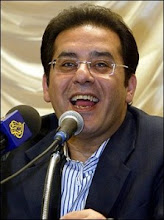
Ayman Nour

President Mubarak made his first Presidential oath on October 14, 1981. He swore to observe the interests of the country. He said “I” and did not mention “I and my son after me” in his oath. Three days ago, Mubarak completed his 29th year as president of Egypt. Let’s, then, qualify the statuesque in Egypt after 29 years under Mubarak – Mubarak senior! I dedicate this article to the youth of the April 6 movement, who are going to hold a parallel conference to the annual conference of the National Democratic Party (NDP) at the end of this month.

Egypt lives in a chaos of “reversed” selections. The best items are expelled out and the worst items are kept in. Hypocrites and corrupt members are taken to the top.

There is a case of doubled general failure every where. “Zero” has become the slogan of the current phase of Egyptian history, in all fields.

High prices of basic commodities and various costs of living are exaggerated in a most unprecedented way in history!

More than half of the Egyptian people live under the poverty line. They cannot earn their daily living.

Public health is deteriorating daily thanks to the pesticides, poisoned substances in the air and water, corruption, poverty, pollution and life’s pressures.

Free health services are getting worse. Providing proper medication has become the responsibility, not of the country, but of the patients who can pay for it.

Corruption is controlling every single activity inside the state, from the highest level of the regime to the lowest levels. Systematic stealing is happening everywhere.

Bribes became the only way for citizens to have their rights given, their interests satisfied, and their legal permits taken, and their day moving smoothly.

Nepotism and favoritism have become the ideal gateway to having anything done.

Education is getting worse; both undergraduate and graduate levels.

Parents are doubly burdened by the responsibility of supporting their children with private lessons or parallel education classes, particularly after the appearance of Swine Flu.

Unemployment is killing the ambitions of fresh graduates and young people who have lost their hope in the future for themselves and for their country.

The number of those who commit suicide at a young age is increasing out of their feeling of social injustice.

The marriage age is increasing and unmarried youth and “custom” marriage have become a rampant phenomena of the Egyptian society.

The number of the crimes for immoral behavior, homosexuality and whoredom is increasing.

The social texture is dissolving. The divorce rate in Egyptian society is reaching unexpected and unprecedented levels.

Unjustified violence and crimes of robbery and murder are happening at higher rates.

The traditional values of Egyptian society are vanishing. The morals and behavior of Egyptian society is changing to the negative.

Egyptian youth are seeking illegal migration, despite the high risk, which was not the case before. Hundreds of Egyptian youth died while trying to get out of Egypt through the sea!

Egyptian youth who could not do illegal migration to other countries, made another migration into themselves. Some ran to drugs, some ran to extremism and some ran to the glories of the past.

Egypt has become a big prison; its bars are the impossibility of life with dignity.

Egypt is witnessing the illegal marriage between power and money. Corruption is wasting the credibility of the so-called reformists and their claimed reforms.

Egypt is no longer the gift of the Nile. Egypt has become the gift of the monopoly of everything: monopoly of power, economy, businesses, and rights.

Justice has disappeared on legal and moral levels. The sense of tyranny and injustice is everywhere.

Egypt is going through a general case of a slow death caused by the eternity of officials on their seats, and even worse inheritance of these seats.

The police state is controlling different forms of life in Egypt. Police logic has become the governing rule of all state offices.

Laws were turned into a means to support tyranny, suppression and corruption via a false majority in Parliament.

Hypocrisy and lying are controlling different forms of life here. Beautifying the failure, decorating the ugly, and justifying the wrong are now the official behavior of the state.

The official media in Egypt has become the personal property of the president, his family and his party. This has increased people’s sense of alienation inside their country.

The above symptoms are only one part of the real image of Egypt’s sufferings at the beginning of the 29th year of President Mubarak in office. Those are the symptoms of a number of fatal diseases that include: totalitarianism, individual rule, lack of transparency, lack of power exchanges, lack of judicial independence, election fraud and the monopoly of power.

We should not accept our country to be inherited by those who are still putting their knife on our neck! Now is the time to put an end to this very long and absurd black comedy!

[Cited]


Tuesday, May 3, 2005

Egyptian election a high-risk undertaking

Egyptian election a high-risk undertaking


Jackson Diehl
The Windsor Star

Ayman Nour, the liberal Egyptian opposition politician whose jailing early this year has made him the leading challenger to President Hosni Mubarak, recently tried to launch his campaign for September's presidential election by knocking on doors. Police stopped him, telling him he didn't have permission.

He tried to stage a conference for 1,500 of his supporters. A fire set by pro-government thugs forced the temporary clearing of the hall. When that failed to stop the meeting, the electricity was cut off.

It gets worse. Nour says he has been served with a court order mandating demolition of a community centre he has maintained in the Cairo neighbourhood of Bab al Shariya, his political base. Pro-government newspapers have reported that his penthouse apartment also will be demolished. One weekly paper that recently began appearing alongside Nour's party organ at newsstands published an article detailing how the 40-year-old parliamentarian might be assassinated: A sniper, it predicted, would open fire on his car.

Then there is the continuing criminal case, which almost everyone outside Mubarak's government, and some inside it, regards as blatantly political. A trial date has been set for June 28, and Nour says the case has been assigned to a notorious Egyptian security court judge. That judge is known for his closeness to Mubarak and for the seven-year sentence he imposed four years ago on another liberal dissident, Saad Eddin Ibrahim.

"I lie in bed at night thinking that either I'm going to end up in jail or I'm going to be killed," a visibly anxious Nour told me last week. "To say the least, this campaign has gotten off to a very bad start."

If so, the prospect is bad not just for Nour but for Mubarak, who effectively has staked his legacy and the future of the regime he leads on his promise to replace the rigged referendum that has previously extended his rule with a multi-candidate democratic election. There's little doubt the 76-year-old Mubarak will win the election, in part because it will exclude unsanctioned political parties --including the Muslim Brotherhood, Egypt's powerful Islamic movement. But a free and fair election within those limits -- with access to the media and full freedom to campaign for Nour and the two or three other candidates who might challenge Mubarak -- would be seen by most Egyptians and many outsiders, including the Bush administration, as a political breakthrough.

On the other hand, an electoral farce featuring the persecution or jailing of Nour and the ballot-box stuffing widely reported in previous Egyptian elections would eliminate the possibility that Egypt, like Mexico or South Korea, will be led to democracy by its ruling party.

AGGRESSIVE EFFORT

It could also scatter the group of young technocrats who, under Prime Minister Ahmed Nazif, have embarked on an aggressive effort to liberalize the economy and modernize the regime. The prosecution of Nour, one told me, is intended "to stop the reforms."

Nazif, whose tax and tariff cutting and privatization of state companies have prompted a 130-per-cent gain in the Cairo stock market since last summer, insists the government is committed to real change. "We led peace. We can lead political reform," he said, echoing the phrase President Bush has used for Egypt. He added: "We don't have any differences" with Washington "on where we want to be. We might have some differences on the tactics and the pace." A senior Egyptian security official I spoke to was more circumspect, but also adamant. "This won't be the Tunisian model," he said, referring to the farcical multi-candidate election staged by strongman Zine Abidine Ben Ali last year. "It will be fair, it will be open and it will be under the eyes of everyone in our society."

The real meaning of these pledges is now being hammered out in official committees that are drafting the constitutional amendment providing for presidential elections, the law that will govern this year's campaign and the ruling party's platform.

Regime liberals are pressing for a month-long window in which opposition candidates will each get two hours a week on state television; a suspension of emergency regulations that now bar them from holding public rallies and demonstrations; public financing for their campaigns; a nonpartisan authority to manage the election and, crucially, international observers to guarantee that the balloting will be fair and the count honest. Intriguingly, the national judges' union recently declared that its members will not supervise polling places, as had been expected, unless Mubarak accepts reform legislation making the judiciary more independent.

Yet the liberals concede that even if they win all their battles, they have no control over the prosecution of Nour, which is in the hands of Mubarak and his security apparatus. Nazif said the case could be wrapped up in June, allowing Nour to campaign freely if he is acquitted. But the security official I spoke to said the case would be extended, after a preliminary session, until October -- meaning that Nour will run with the prospect of being sentenced to a prison term after Mubarak is safely re-elected.

"This is a battle about the future," Nour said. "They want to convict me, even if only for a day, so that I can't run for president or parliament again." That would help clear the path for Mubarak's son Gamal, who, like Nour, is in his 40s. It would also propel Egypt toward the very political turmoil and international isolation that Mubarak seeks to avoid.

Jackson Diehl is deputy editorial page editor of the Washington Post. He filed this column from Cairo

Wednesday, November 10, 2004

Al Ahram weekly : Tomorrow's party today

Tomorrow's party today


With an official licence finally in hand, the new Al-Ghad Party will be electing its chairman tomorrow. Mona El-Nahhas reports on the party's struggle for legitimacy and interviews its founder, Ayman Nour


Nour and Al-Ghad Party members during the press conference at Beit Al- Umma

The Political Parties Committee, an affiliate of the Shura Council, approved the formation of Al-Ghad (Tomorrow) Party last week, bringing the number of political parties in Egypt to 18.

Since its formation in 1977, the committee -- which is authorised to give licences to new parties -- has turned down such requests 63 times. Prior to Al-Ghad, only two applicants -- Al-Wefaq Al-Watani (National Accord) Party in 2000, and Al-Geel Al-Democrati (Democratic Generation) Party in 2001 -- have broken that mould.

Al-Ghad Party's approval was announced in a very brief statement issued after a short meeting of committee members on 27 October. The statement did not explain the approval, which observers found odd, considering that Al- Ghad's application had been rejected thrice before on the grounds that its platform was not fundamentally different from that of any currently existing party.

Following each rejection, 40-year-old MP Ayman Nour -- who represents the party's 5,200 founders -- attempted to amend the party's platform, which now weighs in at 2000 pages.

Nour said the decision was "a significant boost for democracy and pluralism in Egypt". He expressed hope that two other frequent applicants -- Al-Karama and Al- Wasat parties -- would also obtain official authorisation in the near future. Al-Karama Party was rejected on the grounds that "it advocates a radical ideology", while Al- Wasat Party was denied a licence for its alleged links to the banned Muslim Brotherhood group.

A statement from the Egyptian Organisation for Human Rights (EOHR) welcomed the government's decision to licence Al-Ghad. At the same time, the EOHR called for the parties committee to be abolished altogether, arguing that since the ruling National Democratic Party (NDP) controls the committee, it could only constitute an obstacle to unfettered political life.

Some political analysts have interpreted the granting of a licence to Nour's party as a governmental stab at the liberal Wafd Party, which has recently stepped up its criticism of the NDP.

"The government does not want strong parties," said Cairo University political science professor Hassan Nafaa, who thinks the government might be counterbalancing the Wafd Party with Al-Ghad. "The Wafd will be preoccupied by its new competitor, which will attempt to attract a large number of Wafdists into its ranks. As a logical result, the two parties' attention will be distracted from serious political issues into infantile struggles. And the government will emerge as the winner."

Shura Council Speaker Safwat El-Sherif, who serves as chairman of the political parties committee, dismissed allegations of political manoeuvring. The committee's decisions, he said, "are completely void of personal whims, providing licences to parties that have proven to have unique platforms".

Wafd Party Chairman Noman Gomaa chose not to comment on the approval.

Nour, a former Wafdist, insisted that his party was not out to battle the Wafd, even though 25 per cent of the latter's members have recently joined the new party. At the same time, Nour chose Beit Al-Umma -- the historic residence of the leader of the 1919 anti-colonial revolution and founder of the Wafd Party, Saad Zaghlul (1858-1927) -- to host the press conference announcing Al-Ghad Party's inauguration.

During last Thursday's press conference, Nour said, "Zaghlul is neither owned by, nor serves as a trademark of the Wafd Party."

Nour was dismissed from the Wafd Party in 2001, after Gomaa accused him of attempting to split the party by leading a dissident faction. Following his dismissal, Nour -- who already held a parliamentary seat representing the Wafd -- turned independent.

The new party's mouthpiece -- a daily newspaper -- will be launched in January 2005.

Al-Ghad's first general congress, meanwhile, is set to take place tomorrow. Party founders will elect the chairman and 46 members of the party's higher committee. Nominations were submitted between Sunday and Tuesday.

The elections will take place at the international conference centre in Nasr City, and results will be announced on Friday evening. Until then, the party will continue to be led by Nour.

The party already includes six independent members of parliament, which would appear to automatically make it the leader of the opposition front at the People's Assembly, whose next session begins 11 November.

That role, however, is still up in the air since People's Assembly Speaker Fathi Sorour has suggested that Al-Ghad would not be recognised as a parliamentary bloc before 2005, when new parliamentary elections will be held. Nour's argument is that the six independent MPs who now belong to the party should be reclassified as Al-Ghad Party MPs, to be headed by MP Abdel-Moneim El-Tunisi.

The party first submitted its platform to the Political Parties committee in July 2003. When the committee rejected it on the grounds that it was similar to those of the existing parties, Nour contested the decision at the Political Parties Court, an affiliate of the Supreme Administrative Court that is authorised to hear appeals relating to political parties.

After several hearings, a final verdict was scheduled for May. The ruling was then delayed until 25 September. When three of the eight public figures on the court (all of whom are members of the NDP) failed to attend, the ruling was delayed again. Another deliberate absence of five of the public figures caused a third postponement of the verdict, this time until 6 November.

Besides court appeals, Nour also re-submitted the party's application to the Political Parties Committee three times, using a legal loophole that allows party founders to file successive requests using a different name for the party each time, as long as amendments to the party's platform are introduced. Following the party's authorisation, Nour announced that all legal cases that had previously been filed would be dropped.

Al-Ghad calls for democratic reform, with an emphasis on secularism and promoting the empowerment of women, who constitute 37 per cent of the party's founders. Al-Ghad is also the only Egyptian political party in which a woman, Mona Makram Ebeid, holds the post of party secretary- seneral.

The party's main concern, as voiced by its founders, is combating poverty and solving the average citizen's problems. Its platform gives priority to domestic issues, paying far less attention to regional and international affairs.

Al-Ghad's agenda for political reform is summed up by the new constitution it has drafted to replace the one currently in use. The party aims to obtain one million signatures in support of its draft constitution, after which they plan to put it before parliament.

Al-Ghad's draft constitution abolishes the system of presidential referendum, in which the People's Assembly nominates a single candidate for a popular referendum.

No less significantly, Al-Ghad's draft constitution opts for a parliamentary rather than a presidential system, wherein the government is formed by the party with a parliamentary majority and executive power rests with the prime minister, rather than the president. Under the parliamentary system, the president's powers are largely symbolic.

Reform starts at home

Ayman Nour, founder of Al-Ghad Party, was born in Mansoura in the Daqahliya governorate in 1964. Nour graduated from Mansoura University's faculty of law in 1985, and went on to obtain a masters degree in the philosophy of political history as well as a PhD in international law.

He had begun working as a journalist for the liberal Wafd Party newspaper, Al- Wafd, in 1984, and eventually rose up in the party's ranks to become an elected member of the Wafd's Higher Committee.

In 1995, Nour ran for and won a parliamentary seat representing Cairo's Bab Al- Sha'riya district. In 2000, he was re-elected.

In March 2001, after the death of longtime Wafd leader Fouad Serageddin, Nour was dismissed from the party after clashing with its new chairman, Noaman Gomaa.

How do you explain the Political Parties Committee's approval of Al-Ghad Party?

I think that the committee had no choice but to approve the party's foundation. We were certain to get a court ruling in our favour, so the committee found it better for the approval to come willingly from within rather than be imposed on them by a court ruling.

Some have said the approval is a stab at the Wafd Party, which has recently stepped up its criticism of the ruling National Democratic Party (NDP). Would you agree?

I don't think this is true, since the tone of our criticism is just as harsh as that used by the Wafd.

Before getting the licence, we were very harsh in our criticism of the government, via the dozens of inquiries we submitted at the People's Assembly [on important matters].

I want to make it clear that we will never be an alternative for the Wafd. If we aim to replace any of the existing parties, it will be the NDP.

Would you provide us with a summary of the party's priorities?

First, we will focus on widening the party's membership by meeting with people everywhere. We will also prepare ourselves for the upcoming parliamentary elections scheduled for late 2005, when we hope to win numerous seats.

You have repeatedly described Al-Ghad as being a unique party. In your opinion, what distinguishes it from currently existing parties?

Al-Ghad is a party for the younger generation, since nearly 64 per cent of its members are under 45.

As a youthful party, its ideological perspectives and mechanisms will be different, inspiring a boost to Egyptian political life. We are also the only party with a large number of founding members, something that reflects an ability to interact with the public.

And finally, we have a new liberal ideology, which takes the social dimension into account, and provides solutions for poorer classes.

How do you think Egypt can go about achieving a comprehensive reform programme?

Political reform is the basis of any reform in Egypt. Without amending the current constitution, political reform cannot take place. Because we believe in the importance of this, Al-Ghad took the initiative and drafted an alternative constitution, adopting the principle of power rotation.

We hope this new constitution will see the light very soon.

Why have you decided that your party will not take part in the opposition parties' reform alliance?

We will never join the alliance, which rejected our participation from the very start, on the pretext that we were not a legitimate party.

That's their opinion, which I don't think will change. Even if it changed after we became official, it makes no difference to us. We are not going to be part of their alliance, but that does not mean that we will refrain from coordinating with them on reform-related issues.

Why have you said that Al-Ghad will not take the governmental financial aid allocated to all parties?

Simply because we decided to depend on ourselves; the financial aid we get from party members and supporters is enough.

Moreover, the governmental support may be used to shackle the party's performance.

Does Al-Ghad intend to engage in a dialogue with the NDP?

As a liberal party, Al-Ghad believes in dialogue. Dialogue between Egypt's different political forces is very much needed, if we are talking about reform. Thus, if we are invited to an open dialogue with the NDP, we will be willing to do so, as long as that dialogue is without preconditions.

And what about the Muslim Brotherhood group?

We have no objection to the Brotherhood or any political force whose legitimacy is from the people, rather than via a mere license.

When Al-Ghad holds its first general congress to elect the party's leadership tomorrow, will you be the only candidate for the chairman's post?

Of course not -- former MP Mohamed Farid Hassanein and others will run against me for the post, and I am very pleased with that, since having several nominees is a healthy phenomenon.

And although the party statutes give the party founder the right to chair the party for five successive years without holding elections, I decided to give up that right. I insisted on not chairing the party unless fair elections took place.

Not content with this, I also added a new item to the statutes banning the party chairman from nominating himself for the same post for more than two successive terms. After all, it would be nonsense to call for power rotation without applying it on ourselves first.

How will Al-Ghad's internal leadership elections be any different from those of other parties?

Our elections will feature, for the first time, judicial supervision over the whole process. The idea of judicial supervision was the brainchild of the party's leadership.

We asked judges and public figures to supervise the electoral process in order to guarantee fair results.