Showing posts with label police violence. Show all posts

Sunday, May 31, 2009

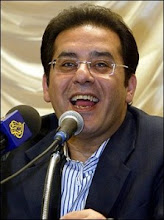
dissident Ayman Nour is pessimistic on eve of Obama visit

Los Angeles Times Articles

In Egypt, dissident Ayman Nour is pessimistic on eve of Obama visit

Ayman Nour was freed from prison early this year in a gesture to the U.S., but he fears that Washington, which needs Egypt's help in the region, won't push for democratic reforms.

May 31, 2009|Jeffrey Fleishman and Noha El-Hennawy

CAIRO — Egypt's leading dissident, his forehead singed from a recent attack, sits near a window in an armchair, depressed and wondering whether he was better off behind bars.

"I want to go back to jail," says Ayman Nour, whom the government released in February as an apparent goodwill gesture to the Obama administration. "The government insists on getting the maximum benefit out of my liberation, but they are causing me the maximum harm.

"I am denied all rights. My party cannot return to the political scene. I am stalked by the police. They are even messing with my personal life. There is no ceiling to the injustice and the revenge of this regime."

When President Obama steps to the podium Thursday in Cairo, in what is expected to be a major address to the Muslim world, many will be listening for an initiative to end the Arab-Israeli conflict. But others, like Nour and Egyptian activist Saad Eddin Ibrahim, will be looking for an aggressive approach to advance human rights.

Nour, who was imprisoned after the 2005 election in which he ran against President Hosni Mubarak, is the country's most prominent opposition figure. But Mubarak's 27-year rule has seen thousands of other activists, bloggers and members of the radical Muslim Brotherhood locked up on what human rights groups say are scurrilous charges to prevent any challenge to the ruling National Democratic Party.

The question now is: How will Obama, whose charisma and speeches have entranced the Arab world, balance the United States' national interests with its calls for increased democracy in the Middle East? For decades, those matters have been at cross purposes, especially in Egypt and Saudi Arabia, two strategic U.S. allies whose regimes have stifled democratic ideals.

In Egypt, activists say the $1.2 billion in annual U.S. aid, most of it military, should be contingent on the Mubarak government granting wider political freedoms. Ibrahim, who has been in self-exile in the United States, had argued this point and was sentenced to two years in prison on charges of damaging Egypt's reputation -- a verdict that was overturned Monday in what is seen as another offering to Washington.

"Obama is the most respected American president outside the U.S. in almost a century," Nour says. "He is different. He has a different skin and comes from a different culture. The Arab person finds him an inspiring model and hopes someone like him can reach power here the same way Obama did. . . . But so far, we can say that Obama has a confusing agenda as far as democracy in this region is concerned. If he gives up democratization, his work will be meaningless."

Tuesday, May 22, 2007

Who is behind the attempt at Ayman Nour's Life?


Home

Dislocation of the left shoulder.. Severe pain in both arms.. A medical collar to support the neck.. About nine elongated injuries, bruises and hematomas, some of which showing a starting infection.. Bruises and hematomas on the chest.. Bruises in the right wrist and elongated scratches and cut wounds in both legs..

That is the summary of the injuries of Dr. Ayman Nour inflicted on him by police violence as a punishment for his inability to walk up the stairs rapidly enough to satisfy his tormentors: General Emad Shehata and lieutenant Ahmed Abdel Hamid in addition to another general and lieutenant from Giza criminal intelligence, all of whom were "escorting" Dr. Ayman Nour from the Tora Mazra'a prison to the Giza court house to attend a court session regarding a complaint raised against him by Mr. Mahmoud Abaza, chairman of the Wafd party, demanding that Dr. Nour pay him the sum of 92 Egyptian pounds (Less than 20$)!!

Since the court room is located on the third floor, Dr. Nour requested to use the lift, which he was denied. Instead the "escorting" police force started verbally abusing, pushing and beating him to force him up the stairs. Since he was handcuffed and in view of his health condition he could not manage fast enough upon which he was hit in the chest and back and was literally dragged up the remaining two floors.

This barbaric aggression against a prisoner of conscience inside the court house by the men of the ministry of Interior provide evidence that their conduct cannot be classified as an individual transgression, which is the term used by the Egyptian Minister of Interior to describe the widespread torture and degrading and inhuman treatment which citizens are met with in police stations and state security headquarters. It is a crime committed by the police and their seniors, publicly and in plain day light and in one of the houses of justice and over a period of time that permitted the infliction of all those injuries on Dr. Nour and which clearly indicates that the inflictors were not concerned regarding possible accountability or punitive measures. It also indicates a premeditated political will of the respective authorities to kill Dr. Nour in his prison as a punishment for his resilience. Dr. Nour has been subject to a long list of oppressive measures and violations of his human rights starting from the procedures surrounding the lifting of his parliamentary impunity, to the unfair trial he was subjected to, the degrading conditions of his imprisonment resulting in marked deterioration of his health condition and finally this brutal police violence against him in the Giza criminal court house, which is a new attempt to break him physically after failure of attempts to break him morally and psychologically.

The undersigned organizations, as they condemn the humiliation, violence and degrading treatment that Dr. Nour received by the hands of his tormentors in what seemed like an attempt at his life, hold all political and state authorities concerned responsible for the safety and life of Dr. Ayman Nour and demand his immediate release in view of his health condition and an impartial investigation regarding the recent police aggression against him.

The undersigned organizations (in alphabetical order)

Arabic network for human rights information
Arab organization for criminological reform
Association for freedom of thought and expression
Association for human rights legal aid
Association of justice for legal aid and human rights
Cairo institute for human rights
Center for alternative development
Center for human rights and legal research and information
Egyptian association against torture
Egyptian association for the promotion of community participation
Egyptian initiative for personal rights
Hisham Mubarak law center
Human rights association for assistance of prisoners
Institution of children of the land
Land center for human rights
Nadim center for rehabilitation of victims of violence

Tuesday, October 11, 2005

BBC News - Egypt court rebuffs Nour petition

Ayman Nour in court
Nour is caged in court as is the practice in Egypt

An Egyptian appeals court has fined opposition figure Ayman Nour and rejected his request for a new tribunal to try him on charges of forgery.

Mr Nour's lawyers said the court had given no explanation for the 9,000 Egyptian pound ($1,500) penalty.

The defence had argued that the court colluded with the prosecution by preventing their client from speaking.

Mr Nour, who was second in last month's presidential election, is accused of forging signatures to set up his party.

"The claims upon which Ayman Nour based the reasons for his appeal have no basis in truth or law," the court said in its ruling.

Punishment

Defence lawyer Amir Salem, in an interview with AFP news agency, criticised the court's conduct.

"This fine amounts to a punishment, and should have only been imposed if the defence's request had been made with a view to slowing or precluding progress in the trial, which was not the case here," he said.

Forty-year-old Mr Nour, who heads the Ghad (Tomorrow) party, denies the charges against him and says he is the victim of a plot to block his rise on the political scene.

He was arrested in January and was detained for six weeks without charge until his release on bail. The detention raised concerns in Washington.

A co-defendant in the trial, Ayman Ismail, had admitted forging documents for Mr Nour - but he has since withdrawn his testimony, saying the confession was forced out of him with threats against his family.

If Mr Nour is convicted he could face up to 15 years in prison.

Saturday, September 10, 2005

BBC News - Egypt election row sparks protest

Ayman Nour
Mr Nour has called for the election to be repeated
Up to 2,000 people took to the streets of the Egyptian capital Cairo on Saturday in a protest over President Hosni Mubarak's re-election.

President Mubarak, in power for 24 years, won with 88.6% of the votes - in an election marked by low turnout.

Shouting "Hosni rigged the elections", they marched alongside Ghad party leader Ayman Nour.

Mr Nour and Wafd party leader Numan Gumaa - who got 7.6% and 2.9% of the vote respectively - dismissed the vote.

Complaints rejected

Police escorted the protesters but did not try to disperse them.

A small group of Mubarak supporters tried to stage a counter-demonstration, but police kept the two groups separate.

Members of the Kefaya (Enough) protest movement and the left-leaning Tagammu Party also marched with Mr Nour through the Cairo streets.

Egypt's electoral commission has rejected the candidates' complaints of a fraudulent result. It has also turned down Mr Nour's request for a re-run.

But groups monitoring the vote said there were widespread abuses, mainly by Mr Mubarak's National Democratic Party (NDP) and electoral officials.

However they say this would not have affected the overall result.

Ghad (Tomorrow) has insisted Mr Nour took at least 30% of the vote.

A Ghad spokesman said many of Mr Nour's supporters had been prevented from entering polling stations to vote.

Voters 'apathetic'

Mr Nour told the Associated Press news agency: "This is a farce. I will appeal to get our rights back."

However, other opposition figures said that while there had been flaws, the election had been more positive than expected.

Mr Mubarak, who previously had been elected only in single-candidate referendums, changed the system this year under pressure from the US and domestic political groups.

Egyptian President Hosni Mubarak
A win for Hosni Mubarak was widely predicted all along

BBC Middle East correspondent Ian Pannell says the main problem for reformers is not the reports of fraud but rather that the vast majority of people chose to stay at home - turnout was just 23%.

Many were apathetic, or sceptical that this election would be any different to those held previously, he says, adding that there is little in the final result to persuade them otherwise.

Although Washington has welcomed the election, its reception in the Arab world has been more muted, our correspondent adds, reflecting a deep reservoir of caution about change.

BBC Cairo correspondent Heba Saleh says many in Egypt will be disappointed the opposition did not do better because it would have signalled the possibility of a more vibrant political life and speedier democratic transformation.

Tuesday, May 3, 2005

Egyptian election a high-risk undertaking

Egyptian election a high-risk undertaking


Jackson Diehl
The Windsor Star

Ayman Nour, the liberal Egyptian opposition politician whose jailing early this year has made him the leading challenger to President Hosni Mubarak, recently tried to launch his campaign for September's presidential election by knocking on doors. Police stopped him, telling him he didn't have permission.

He tried to stage a conference for 1,500 of his supporters. A fire set by pro-government thugs forced the temporary clearing of the hall. When that failed to stop the meeting, the electricity was cut off.

It gets worse. Nour says he has been served with a court order mandating demolition of a community centre he has maintained in the Cairo neighbourhood of Bab al Shariya, his political base. Pro-government newspapers have reported that his penthouse apartment also will be demolished. One weekly paper that recently began appearing alongside Nour's party organ at newsstands published an article detailing how the 40-year-old parliamentarian might be assassinated: A sniper, it predicted, would open fire on his car.

Then there is the continuing criminal case, which almost everyone outside Mubarak's government, and some inside it, regards as blatantly political. A trial date has been set for June 28, and Nour says the case has been assigned to a notorious Egyptian security court judge. That judge is known for his closeness to Mubarak and for the seven-year sentence he imposed four years ago on another liberal dissident, Saad Eddin Ibrahim.

"I lie in bed at night thinking that either I'm going to end up in jail or I'm going to be killed," a visibly anxious Nour told me last week. "To say the least, this campaign has gotten off to a very bad start."

If so, the prospect is bad not just for Nour but for Mubarak, who effectively has staked his legacy and the future of the regime he leads on his promise to replace the rigged referendum that has previously extended his rule with a multi-candidate democratic election. There's little doubt the 76-year-old Mubarak will win the election, in part because it will exclude unsanctioned political parties --including the Muslim Brotherhood, Egypt's powerful Islamic movement. But a free and fair election within those limits -- with access to the media and full freedom to campaign for Nour and the two or three other candidates who might challenge Mubarak -- would be seen by most Egyptians and many outsiders, including the Bush administration, as a political breakthrough.

On the other hand, an electoral farce featuring the persecution or jailing of Nour and the ballot-box stuffing widely reported in previous Egyptian elections would eliminate the possibility that Egypt, like Mexico or South Korea, will be led to democracy by its ruling party.

AGGRESSIVE EFFORT

It could also scatter the group of young technocrats who, under Prime Minister Ahmed Nazif, have embarked on an aggressive effort to liberalize the economy and modernize the regime. The prosecution of Nour, one told me, is intended "to stop the reforms."

Nazif, whose tax and tariff cutting and privatization of state companies have prompted a 130-per-cent gain in the Cairo stock market since last summer, insists the government is committed to real change. "We led peace. We can lead political reform," he said, echoing the phrase President Bush has used for Egypt. He added: "We don't have any differences" with Washington "on where we want to be. We might have some differences on the tactics and the pace." A senior Egyptian security official I spoke to was more circumspect, but also adamant. "This won't be the Tunisian model," he said, referring to the farcical multi-candidate election staged by strongman Zine Abidine Ben Ali last year. "It will be fair, it will be open and it will be under the eyes of everyone in our society."

The real meaning of these pledges is now being hammered out in official committees that are drafting the constitutional amendment providing for presidential elections, the law that will govern this year's campaign and the ruling party's platform.

Regime liberals are pressing for a month-long window in which opposition candidates will each get two hours a week on state television; a suspension of emergency regulations that now bar them from holding public rallies and demonstrations; public financing for their campaigns; a nonpartisan authority to manage the election and, crucially, international observers to guarantee that the balloting will be fair and the count honest. Intriguingly, the national judges' union recently declared that its members will not supervise polling places, as had been expected, unless Mubarak accepts reform legislation making the judiciary more independent.

Yet the liberals concede that even if they win all their battles, they have no control over the prosecution of Nour, which is in the hands of Mubarak and his security apparatus. Nazif said the case could be wrapped up in June, allowing Nour to campaign freely if he is acquitted. But the security official I spoke to said the case would be extended, after a preliminary session, until October -- meaning that Nour will run with the prospect of being sentenced to a prison term after Mubarak is safely re-elected.

"This is a battle about the future," Nour said. "They want to convict me, even if only for a day, so that I can't run for president or parliament again." That would help clear the path for Mubarak's son Gamal, who, like Nour, is in his 40s. It would also propel Egypt toward the very political turmoil and international isolation that Mubarak seeks to avoid.

Jackson Diehl is deputy editorial page editor of the Washington Post. He filed this column from Cairo

Thursday, October 21, 2004

Egypt keeps new parties on short leash


| Staff writer of The Christian Science Monitor

It's another Wednesday night in Cairo's poor Bab Al-Sharaya neighborhood and legislator Ayman Nour is leading one of his weekly party meetings, where Egypt's old-style culture of political patronage and the yearnings for democracy of a shrinking middle class collide.

Hundreds of poor constituents press up to Mr. Nour's elegant wife, Gameela, seeking help navigating Egypt's Kafkaesque bureaucracy, assistance in land disputes, or simply a little money.

It's precisely the sort of political ferment that President George W. Bush had in mind when he said the invasion of Iraq would serve as a "dramatic and inspiring example of freedom" to the region. His vision was for democratic change in an Arab world hamstrung by decades of authoritarian rule that has damaged its economies and helped Islamic militancy to flourish.Later, on the stage of a converted wedding hall, Nour delivers a rousing political speech, dismissing the government as outdated and repressive, punctuated by occasional shouts of assent from some 300 supporters.

But despite Nour's credentials as a member of Parliament, and the fact that his weekly meetings have yet to be stopped by the government, the Ghad Party operates in a legal limbo. Earlier this month, his and three other parties failed to win official approval for their organizations, making it illegal for them to attempt to widen their support before elections scheduled for next October.

"We've been promised legal status for a long time - but they never deliver,'' says Nour, who was originally elected to parliament as a member of Egypt's opposition WAFD Party, but was later kicked out of WAFD for criticizing its leadership. He remains in Parliament as an independent, since his new party is not recognized. "I'm extending my parliamentary immunity as far as a I can to allow us to operate, but as things stand we can't build the opposition Egypt needs. Egypt's politics are stagnant, and that's why the country is in so much trouble."

Over the past few years, there's been an unprecedented level of talk about reform in Egypt and other Arab allies of the US such as the Kingdom of Saudi Arabia and Kuwait. But that talk has translated into little action, with strict limits on political activity in almost all Arab countries.

Last week Saudi Arabia, which is planning its first-ever national elections next year for posts in its largely ceremonial municipal councils, said that women would not be allowed to vote. Even in countries that have held relatively free parliamentary elections, like Kuwait last year, there have been no real gains for the forces of reform. There, gerrymandering and strong support for Islamist candidates reduced the number of legislators who support a Western-style democracy.

But it is in Egypt, the sleeping giant of the region, where the hope for change was perhaps greatest. Formally a republic, the country had some experience with liberal politics as recently as the 1950s. A large number of activists hark back to Egypt's liberal period when it was the region's intellectual and political leader.

"We want to reinvigorate the multi-party system, which is dying out here,'' says Mona Makram-Ebied, a Harvard-educated political scientist and a supporter of Nour's Ghad Party, or party of tomorrow. "There's a younger generation thirsting for a voice. They want to make a new and modern Egypt, and there's a great nostalgia to make Egypt what it was when it was the lodestar of the Arab world. But the system we have now is ossified, and it's standing in our way."

Ms. Makram-Ebeid, who comes from a prominent liberal political family, says reformers' hopes were lifted by a promise from the ruling party last month that it would make it easier for competitors to register. To her mind, the Ghad Party had jumped through every hoop put in front of it by the government.

The party has called for constitutional reforms that would create a parliamentary democracy and help prevent another leader from dominating the way President Hosni Mubarak has for the past 23-years. Therefore, Makram-Ebeid felt that no government committed to reform could continue to stand in their way. "Yet they still block us."

As dozens of party supporters gathered outside the Political Parties Court in Cairo earlier this month, expecting to hear their application had been approved (after four earlier denials), they were met with disappointment. The panel, composed of judges and members appointed by Mubarak's government, failed to reach a quorum when most of the government appointees failed to show up, blocking the party without having to issue an outright denial.

"When the government talks of reform, they are addressing foreign nations, and trying to fool the naïve,'' says Nour, who is also a lawyer. "They're just playing games with us."

So far, Nour has played the game right back. Having identified a loophole in the country's tight party registration law, which allows new parties a four month grace period to conduct limited activities while they await approval, he's created five parties with slight variations on the "Ghad" name in the past 20 months, registering a new name every time their application has been refused.

But he says time is running out, with elections scheduled for next October and no party offices beyond the one he runs in his Cairo constituency. "We think we could make inroads in a fair election. But now, we don't have a party newspaper and we can't really reach out to the people. I'll probably have to run for office as an independent again."