Monday, November 20, 2006

EGYPT/BONINO: NO OPENINGS. DISSIDENTS STILL IN PRISON

EGYPT/BONINO: NO OPENINGS. DISSIDENTS STILL IN PRISON


"In Egypt a relevant economic liberalisation is not accompanied by an opening from a political point of view".

Minister Emma Bonino, who has lived in Cairo for a long time, said this to Radio Radicale the night before Romano Prodi's visit to Egypt. "I haven't spoken with Prodi about Egypt in particular" Bonino said "in that country there is a economic liberalisation in progress with a relevant growth while there are no openings from a political point of view.

I have no information about openings that are relevant or consistent. Ayman Nour (dissident Egyptian intellectual, ed.) is still in prison".

Thursday, May 18, 2006

Egypt/Bonito: “AYMAN NOUR’S FIVE YEAR JAIL TERM FILL ME WITH GRIEF”

Rome, May 18, 2006 - “Ayman Nour’s sentence to five years imprisonment by the Court of Appeals in Cairo is bewildering.. As a friend, the fact that Ayman Nour will stay in prison for another four years fill me with grief: my thoughts go to his wife and adolescent children.

In March 2005, together with colleagues from the Liberal Group of the European Parliament, we had successfully urged the authorities to release him. Today, depriving him of his personal freedom for another four years has a sour taste of political persecution”.

Monday, May 8, 2006

The Trials of Ayman Nour

By Joshua Muravchik | Wall Street Journal

The year 2006 has reverberated with sobering reminders--Iraq, Lebanon, the Palestinian Authority--that democracy's progress in the Middle Eastwill be no easy thing.

While the million marchers in Beirut demanding Syrian exit from their country were the most dramatic symbol of last year's hopeful "Arab spring," it was the promise of presidential elections in Egypt--the political, cultural and demographic center of the Arab world--that gave the moment its weight. The year 2006, alas, has reverberated with sobering reminders--Iraq, Lebanon, the Palestinian Authority--that democracy's progress in the region will be no easy thing. None of the setbacks echoes more loudly than President Hosni Mubarak's decision to take the one truly independent candidate who had the temerity to run against him and clap him in jail.

That candidate was Ayman Nour, a long-time advocate of human rights and a maverick parliamentarian. Mr. Nour pried a small opening in Egyptian politics late in 2004 when he succeeded in securing legal status for his al-Ghad (Tomorrow) Party. One of the hallmarks of Egypt's authoritarianism has been its peculiar party system. A plethora of official "opposition" parties, all of them long since suborned or neutered by the government, are formally licensed, a status which genuinely independent parties are consistently denied.Such was the initial fate of al-Ghad, but Mr. Nour was unusually persistent. Another hallmark of Egypt's system--which is authoritarian but not totalitarian--is that the judiciary, particularly at its highest levels, has always retained some independence. So Mr. Nour doggedly used the courts to force the regime finally to grant the license. No sooner had the regime bent to Mr. Nour's legal tactics, however, than it announced his arrest.

The charge? Forgery. Its plausibility? Nil. The government alleged that Mr. Nour had faked some of the signatures on the petitions submitted to license his party. But the legally required number of signatures was 50, and al-Ghad had submitted 2,000. The government never claimed that he had faked all of them. Why would he, a lawyer by profession, have committed forgery just to boast an excess of signatures? More curious still, the government did not allege that he had carried out the forgeries himself, but rather that he had ordered them carried out by a handful of al-Ghad volunteers whom he barely knew. These men, all with shady pasts, came forward to accuse Mr. Nour.

When the case came for first hearing, one of the accusers recanted on the witness stand, declaring that he had never received or carried out any such instructions. He said he had been fed the whole story by state security agents who coerced him, by threatening to harm his family, to make false accusations. This would have been more than enough to have the case thrown out of any American court, but instead it was carried over, enabling Mr. Nour to run in the election.

It was scarcely a level playing field. No campaigning was allowed outside of the specified period of 19 days before election day. Meanwhile, and naturally, the news media, mostly government-run, were replete with daily paeans to President Mubarak. Moreover, to be eligible to vote, a citizen had to have registered almost a year in advance, before it was announced that there would be a presidential election.

Thus, Mr. Mubarak's victory was assured. But the regime was desperately eager for Mr. Nour not even to come in second, perhaps fearing that this would position him to effectively challenge Mr. Mubarak's son, Gamal, as his successor. Mr. Nour's campaign faced all manner of harassment; and Noman Gomaa, the well-known head of the Wafd Party, entered the race to divide the liberal vote. When asked why he ran, Mr. Gomaa, 72, responded with disarming frankness--the government had asked him to. But Mr. Nour was clearly Mr. Mubarak's main opponent, and he managed to run second even in the official count, which gave him 7%. (His supporters claim it was much more.)

Soon, he was hauled back before the court and convicted. The penalty for this first "offense," a "forgery" from which it was not alleged that he reaped any benefit? Five years at hard labor--an ominous sentence for a diabetic dependent on daily insulin.

Mr. Nour, however, has appealed to the court of cassation, which is known for its independence. It was this court that threw out the conviction of dissident Saad Edin Ibrahim in 2003, albeit not before Mr. Ibrahim's health had been permanently damaged by his prison conditions. Fearing that Mr. Nour's appeal will succeed, the regime has filed 19 new charges against him. Several of these are for various forms of lèse majesté. It used to be a crime to insult the king; after the monarchy was overthrown, the law was changed to apply instead to the president. Mr. Nour, in short, faces prosecution for criticizing Mr. Mubarak while campaigning against him for president.

Clouds shadow Mr. Nour's appeal, scheduled to begin on May 18. The judge named to preside is deeply enmeshed in some related political battles. A majority of Egypt's judges are in rebellion against the regime, demanding full judicial independence. Although less widely noted outside the country, this may prove to be a more important landmark on the road to democracy than last year's elections. Following the parliamentary elections, which were under the supervision of the judiciary, several judges accused others of fixing results on behalf of the regime. No action has been taken against the accused, but the accusers have summarily been stripped of immunity and are facing prosecution for "insulting" their colleagues. The judge appointed to "investigate" them (perhaps because of loyalty to the regime) is the same one who will preside at Mr. Nour's appeal. And two of his attorneys have been summoned for questioning and threatened with charges for insulting the president.

Nor is this all. Mr. Nour's most active defender and the person who keeps his party alive is his wife, Gamila Ismail. She, too, is now facing prosecution. Slender and pretty, she is accused of "assaulting" mammoth security officers on two different occasions. Last month she was also accused of writing a bad check, another tale that speaks volumes about the Egyptian system. When Mr. Nour was first imprisoned, Ismail sought to take an ad in the popular government-owned newspaper, Al Akhbar, proclaiming his innocence. The paper refused the ad on the grounds of "security," but also refused to return Ms. Ismail's check, promising to send a refund. The refund never came, and then, 13 months later, when Ms. Ismail's account balance dipped below the amount of the check apparently for the first time, suddenly Al Akhbar put it through, and it bounced. Hence, the "bad check" charges. So much for the independence of government newspapers and the privacy of the banks.

The story gets worse. This month, Mr. Nour was transferred to the prison hospital where he was placed, with too little sanitary isolation, amid patients suffering from HIV and scabies. The deputy warden issued a statement claiming, without basis, that Mr. Nour was suicidal, which he takes as a veiled threat against his life. His writings have been confiscated, including political writings and legal memoranda arguing that many aspects of his treatment violate the Egyptian constitution (including, ironically, the confiscation of his writings). At one court appearance last month, his two young teenage sons, who have joined their mother in campaigning on his behalf, were roughed up by state agents.

It is not only the Nour family that will have much at stake when his appeal is heard; so, too, will Egypt--where Mr. Mubarak, contrary to his campaign promises, has just extended the repressive emergency law--and the whole Middle East. And so, too, will the U.S., in terms of seeing democracy sprout in the region. The Egyptian government will claim that U.S. pressure regarding this case is inappropriate and pointless, on the grounds that the judicial process is independent. But if this were true, the judges would not be in rebellion. And were it true, Ayman Nour would never have been prosecuted.


http://www.aei.org/article/24328


Wednesday, April 26, 2006

FREEING A PARLAMENTARIAN

Steven Stalinsky *
The New York Sun

A former Egyptian parliamentarian and leader of Al-Ghad Party (the Party of Tomorrow), Dr. Ayman Nour, became an international cause celebre following his arrest last year by the Egyptian government for forging signatures on the petition to secure the formation of his new party - an allegation he has denied vehemently. He has been locked in a prison cell for the last 142 days or 3,408 hours.

According to freeaymannour.org, Al-Ghad stands for liberal and democratic values, with a focus on human rights. Other pillars of the party are encouraging constitutional reform, limiting presidential powers, and creating open, multi-candidate presidential elections in Egypt.

Freeaymannour.org offers up-to-date articles from the international press regarding Dr. Nour's case, as well as information from Western legislators who have spoken out on his behalf. For example, the site highlights U.S. House of Representatives Resolution 82, from March 3, 2005, which "express[ed] the grave concern of Congress" regarding Dr. Nour's arrest. A December 24 statement from the White House, which called Dr. Nour's five year prison sentence "deeply troubling," is also posted at freeaymannour.org.

The following are some examples of the dozens of personal letters and emails in support of Dr. Nour, from influential Europeans who also have been outraged by his imprisonment and are active in working to secure his release:

A text adopted by the European Parliament, "Urges the Egyptian authorities not to undermine the prospects recently opened ... to multi-candidate presidential elections, and to press ahead with democratic reforms; expresses its deep concern ... about the conviction of Ayman Nour ... regards this as a seriously retrograde step and calls on the Egyptian authorities to make every effort to ensure that this case is correctly dealt with." From a letter sent to freeaymannour.org by Czech politician Jana Hybaskova, member of the European Parliament, on March 8.

"[We the European Parliament] welcome and support the worldwide calls to release Ayman Nour and strongly urge the Egyptian authorities to ensure that Ayman Nour is well treated and not sub ject to torture or other ill treatment and to further ensure that he is given prompt, regular and unrestricted access to his lawyers, doctors (as he's diabetic) and family." A January 18 e-mail from an Italian politician and member of the European Parliament, Emma Bonino.

Most importantly, freeaymannour.org provides visitors an opportunity to sign a petition addressed to President Mubarak of Egypt urging Dr. Nour's release. It calls the prison sentence "an attack on the nascent initiative to a free political life in Egypt to move towards democracy and pluralism."

The petition asks the international community to support Dr. Nour and the struggle for a free and democratic Egypt. It states that all individuals and associations who care for the future of Egypt and of the Arab and Muslim world as a whole to add their signature.

To date there have been more than 600 signers including Dr. Nour's wife Gameela Ismail; Arab reformers, such as Saad Eddin Ibrahim; 27 members of the European Parliament from Finland, Britain, Italy, Sweden, the Czech Republic, Poland, France, and Germany; members of academia; journalists; activists; researchers; students; housewives; lawyers, and concerned citizens of the world.

The signers are from countries such as Egypt, Morocco, Iraq, Jordan, Tunisia, the Palestinian Territories, Algeria, Syria, Lebanon, Saudi Arabia, Kuwait, U.A.E., Libya, Spain, Switzerland, Thailand, America, Canada, Brazil, the Netherlands, Austria, Norway, and the Ivory Coast.

The Web site also requests visitors to "officially" ask Egyptian authorities to visit Dr. Nour in prison to help ensure his safety and to direct such requests to: 1. Habib el Adly, Egyptian minister of Interior, Lazoghly, Cairo, Egypt, Fax no. 202-795-7286. 2. General Mahmoud Wagdy, Head of the Egyptian prisons, Kolaly, Cairo, Egypt.

Wednesday, April 19, 2006

"Chirac must raise case of Ayman Nour to President Mubarak", says Graham Watson

12.00.00am BST (GMT +0100) Wed 19th Apr 2006

Graham WATSON (Lib Dem, UK), leader of the Alliance of Liberals and Democrats for Europe, calls on French President Jacques Chirac to raise the case of Ayman Nour during his meeting with Egyptian President Hosni Mubarak in Cairo today. In the European Parliament, Liberals and Democrats have been at the forefront of the international campaign calling for the liberation of the imprisoned leader of Egypt's democratic opposition party who stood last year as a candidate for Egypt's presidential elections.
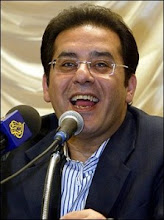
"Jacques Chirac will probably discuss the Iranian nuclear stand-off as well as the Israel-Palestinian conflict. He must also speak up to promote democracy in the Middle East. Barely a month ago, the European Parliament unanimously adopted a resolution calling for the liberation of Ayman Nour. Under an ALDE initiative, a letter jointly signed by MEPs and Members of the US House of Representatives was also sent to the Egyptian authorities. If there is no positive evolution on the question of his release, it is also because EU Heads of State do not speak up with one voice to follow up on human rights violations", declared Graham Watson.

Graham Watson also raised concern over the recent clashes which erupted in Egypt between Muslims and Copts that led to bloodshed as well as attacks on several Coptic churches in Alexandria. "Human rights, religious freedom and democracy are all part of the "political dialogue and reform" Chapter of the Action Plan that the EU and Egypt are currently negotiating in the framework of the European Neighborhood Policy. Liberals and Democrats urge for progress to be made. The liberation of Ayman Nour would be a step in the right direction towards solid partnership", he concluded.

Thursday, December 29, 2005

Dissident Watch: Ayman Nour

Middle East Forum

by Suzanne Gershowitz
Middle East Quarterly
Summer 2005, p. 96

On January 29, 2005, just a day before Iraq's first free elections in a half-century, the Egyptian government moved to shut down its own fledgling opposition, arresting 40-year-old Ayman Nour, chairman of the upstart Ghad (Tomorrow) party.

In Egypt, the government licenses political parties, a power it has used to constrain opposition. Nour, a lawyer who entered the Majlis ash-Sha'b (People's Assembly) in 1994, broke with the establishment nationalist Wafd Party in 2000, disillusioned with the lack of liberal reform. The same year, he published a book advocating liberalism over Islamist politics, Yawmiyat Suhufi Mushaghib (The Memoir of a Troublemaking Journalist),[1] and began efforts to form his own liberal party. After more than three years of bureaucratic hold-up, the Egyptian government formally recognized Ghad as Egypt's first new opposition party in more than a half-century.[2] On paper, Ghad's influence is slight. It has only six deputies in Egypt's 454-seat assembly while Hosni Mubarak's National Democratic Party has 415.

But unlike other Egyptian parliamentarians, Nour used his People's Assembly seat to agitate for concrete reforms. Three weeks prior to his arrest, he antagonized the Egyptian government by submitting a draft constitution mandating contested elections rather than a simple referendum on the incumbent's rule.[3] As a result, Nour's popularity has been on an upswing. One Egyptian analyst predicted he could win 20 to 30 percent of the vote.[4]

Mubarak, 76, retaliated with charges many Egyptians considered spurious. He accused Nour of forging signatures he collected in order to establish the party, a charge Nour rejects. Upon arrest, security forces kept him in a room less than 12 square feet at Nora prison.[5]

Rather than ignore the domestic abuses of an important ally, the State Department stood up for the dissident. On January 31, a State Department spokesman called on the Egyptian government to reconsider Nour's arrest.[6] During Egyptian foreign minister Ahmed Abdul-Gheit's February 15, 2005 visit to Washington, the question of political reform in Egypt "reared its head … everywhere,"[7] according to a report in Al-Ahram. Displaying her displeasure at Nour's treatment, Secretary of State Condoleezza Rice cancelled a visit to Egypt.[8]

It worked. On February 26, Mubarak announced plans to allow opposition candidates to contest presidential elections and, on March 12, he released Nour from prison.

It is too soon to tell whether Mubarak's concessions are sincere. He has not agreed to legalize all political parties or to allow international electoral monitoring.[9] His foreign minister has ridiculed U.S. support of democracy in Egypt.[10] While Nour has declared his intention to run, he still faces trial on June 28, and Mubarak's National Democratic Party seems intent on sabotaging his campaign.[11] There is no guarantee that Egyptian authorities will allow him to appear on the ballot. Nevertheless, Washington does have leverage; at $1.8 billion, Egypt is the third largest recipient of U.S. foreign aid after Iraq and Israel.[12]

Suzanne Gershowitz is a research assistant at the American Enterprise Institute.

[1] Cairo: Dar al-Hurriya, 2000. See also The Washington Post, Mar. 12, 2005.
[2] Ayman Nour, "Letter From Prison: 'Did I Take Democracy Too Seriously,'" Newsweek, Mar. 14, 2005.
[3] Al-Ahram Weekly (Cairo), Feb. 17-23, 2005.
[4] The Washington Post, Mar. 12, 2005.
[5] Nour, "Letter From Prison."
[6] U.S. Department of State, news briefing, Jan. 31, 2005.
[7] Al-Ahram Weekly, Feb. 17-23, 2005.
[8] The New York Times, Feb. 26, 2005.
[9] The Washington Post, Mar. 15, 2005.
[10] Ibid.
[11] Al-Ahram Weekly, Mar. 31-Apr. 6, 2005.
[12] Curt Tarnoff and Larry Nowels, "Summary," Foreign Aid: An Introductory Overview of U.S. Programs and Policy, Congressional Research Service, Apr. 15, 2004.

Wednesday, December 28, 2005

Egypt - Emma Bonito: Ayman Nour's sentencing is yet another blunder by a regime falling to pieces

Egypt - Emma Bonito: Ayman Nour's sentencing is yet another blunder by a regime falling to pieces

Statement by Emma Bonino, MEP and member of the Secretariat of Rosa nel Pugno

Rome, December 28th 2005 - "One notable exception exists to the saying "History never repeats itself,": the régime run by Hosni Mubarak, a stagnant reality for over twenty years. " This is the comment made by the radical leader Emma Bonino, currently on mission in Sri Lanka to monitor Italian aid following last year's Tsunami devastation, on the five year sentence to prison inflicted on the president of the Egyptian Liberal Party, Ayman Nour.

"Similarly to what happened to Saad Ibrahim only a few years ago", continues Emma Bonino,"this ruling too has a political flavour and it was passed exactly for the same reasons: to use all possible excuses to hinder any liberal alternative might make headway in the country , even at the risk of repeating clumsy performances critisized by the international community in the past compelling Mubarak to embarassing about- turns.

Ayman Nour's sentencing is yet another blunder by a régime falling to pieces. As in the past, a major international mobilisation is necessary to support all those that, in Egypt, are active in trying to overturn this farcical verdict".