Tuesday, December 20, 2005

BBC News - Testimony withdrawn

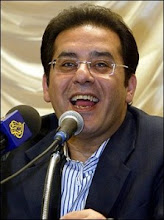
Egyptian opposition leader Ayman Nour
If convicted Mr Nour could face up to 15 years in prison


The condition of Egyptian opposition leader Ayman Nour, who has been on hunger strike in prison for 11 days, has improved slightly, his lawyer says.

Amir Salim told the BBC that doctors had given Mr Nour injections of glucose and insulin and made him drink tea.

Mr Nour, who is on trial for forging petition signatures to register his al-Ghad party last year, says he is protesting at his treatment in prison.

He denies the charges and has said they are politically motivated.

Mr Salim said his client, who is a diabetic, was still very weak and was insisting on continuing his hunger strike until Saturday, when the judge is due to deliver his verdict.

If convicted, Mr Nour could face up to 15 years in prison.

The US says it is watching the trial closely.

Testimony withdrawn

A co-defendant in the trial, Ayman Ismail, had admitted forging documents for Mr Nour - but he has since withdrawn his testimony, saying the confession was forced out of him with threats against his family.

Mr Nour gained prominence when he formed his party in October 2004.

He was arrested in January and was detained for six weeks without charge until his release on bail.

Despite his ongoing trial, Mr Nour was allowed to stand in both the presidential and parliamentary elections earlier this year.

Mr Nour came second to President Hosni Mubarak in September's presidential poll, but lost his seat in the People's Assembly to Mr Mubarak's National Democratic Party in November.

He was jailed again by the courts earlier this month.

Tuesday, December 6, 2005

Human Rights Watch Egypt : Ayman Nur Trial Badly Flawed

Judge Jails Opposition Leader, Others, Without Explanation
December 6, 2005

The decision by the presiding judge to jail the Egyptian opposition party leader Ayman Nur and other defendants during their trial on Monday underscores the highly politicized conduct of the case, Human Rights Watch said today. Nur, a member of parliament who ran against President Hosni Mubarak in September’s presidential election, faces criminal charges of forgery over many of the signatures that his Ghad (Tomorrow) Party needed to get legal recognition.

Human Rights Watch has monitored the 17 sessions of the trial, which began on June 28. On Monday, the presiding judge, `Adil `Abd al-Salam Guma`, scheduled a final session for Saturday, December 10. He then abruptly ordered Nur and the others, who had been free on bail, confined to jail until the Saturday session.

Nur’s defense attorneys told Human Rights Watch that they expect the judge to issue verdicts at Saturday’s session, following closing remarks from defense and prosecution attorneys.

“Ayman Nur’s trial, like the violence against voters in the parliamentary elections, is a terrible advertisement for President Mubarak’s supposed reform agenda, and for Egypt’s judiciary,” said Joe Stork, deputy director of Human Rights Watch’s Middle East division. “In the courtroom, as at the voting booths, there is little tolerance for challenges to the ruling party’s hegemony.”

The state is trying Nur with five others charged in the case. The five provided confessions before the trial started saying Nur instigated the forgery scheme and pressured them to take part. It appears that they are hoping to be acquitted in return for turning state’s witness in the case. A seventh person is being tried with them in absentia.

Throughout the trial, the other defendants’ lawyers persistently defamed Nur and his defense team and interrupted their arguments, but Judge Guma` consistently rejected requests from Nur’s attorneys to stop them.

One of the defendants, Ayman Isma’il Hassan, retracted his statement against Nur in the second session of the trial, on June 30, saying that security agents had coerced him into making the statement. Judge Guma` at first refused to allow his retraction to be put into the record. Isma’il repeated his retraction of his confession at the next session, on July 6, and requested the court to order the government to protect him from reprisal. Judge Guma` on this occasion did allow the retraction to be entered into the record, but rejected Isma’il’s request for protection, saying he was not responsible for anything outside the courtroom.

Judge Guma` consistently refused to grant most defense requests for access to relevant documents, such as copies of the signatures that were allegedly forged. The judge also refused a request to subpoena the minutes of the January 19, 2005, meeting of the Ministry of Interior’s Public Audit Bureau, which generated the forgery accusations.

The judge initially denied the defense counsels’ request to subpoena testimony from `Adil Yassin, an official of the Public Audit Bureau, even though one person called by the defense testified that he witnessed Yassin discussing plans with another defendant, Isma’il Zakariyya, to entrap Nur in the forgery scheme; Judge Guma` subsequently allowed Nur’s defense team to subpoena Yassin. In his testimony, Yassin said that he received five forged signatures and “information” that Ayman Nur and two other “unknown” persons were responsible for the forgeries.

In the trial’s 10th session, on November 29, Judge Guma` rejected as irrelevant 15 questions that Nur’s lawyers put to witnesses. But in the same session, despite objections from Nur’s lawyers, he allowed questions from the other defendants’ lawyers that were solely intended to insult and defame Nur.

The initial court sessions were held in a small downtown courtroom in which plainclothes and uniformed security officers took up most seats, sometimes preventing lawyers as well as journalists and supporters of the defendants from attending. The sessions were eventually moved to a larger courtroom in Nasr City, a Cairo suburb.

Nur, who was jailed for 45 days in January when he was arrested on the forgery charges, mounted the strongest challenge to President Mubarak in Egypt’s first contested presidential elections in September. In the parliamentary elections, Nur lost his seat to a candidate from the ruling National Democratic Party, and all other Ghad Party candidates lost their bids as well. Nur has charged that “a decision was taken at the highest level that Ghad would not win a single seat.”


Ayman Nur’s trial, like the violence against voters in the parliamentary elections, is a terrible advertisement for President Mubarak’s supposed reform agenda, and for Egypt’s judiciary. In the courtroom, as at the voting booths, there is little tolerance for challenges to the ruling party’s hegemony.

Joe Stork, deputy director of Human Rights Watch’s Middle East division

Thursday, November 10, 2005

BBC News - Egypt opposition head loses seat

Egyptian opposition leader Ayman Nour
Mr Nour's party has accused the NDP of intimidation and vote-buying

Egyptian opposition leader Ayman Nour lost his parliamentary seat in Wednesday's first-round election, Egypt's election commission has said.

The leader of the al-Ghad Party was beaten by the ruling National Democratic Party (NDP) in the central Cairo district of Bab al-Sharia.

Mr Nour says voting there was marred by fraud and intimidation.

Preliminary results suggest that the NDP will retain its control of the People's Assembly.

Intisar Nasim, assistant justice minister and secretary general of the higher parliamentary election commission, told Egyptian television that half the results were now known.

On Wednesday, voters in eight governorates chose between some 1,500 candidates competing for about 180 of the 444 elected seats in the People's Assembly.

Egyptians in the remaining 18 governorates will vote on 20 November and 1 December, with the final outcome of the election not likely to be known until the middle of December.

'Ferocious' campaign

Mr Nour lost his seat of 10 years to the NDP's Yahya Wahdan, a former security officer.

Despite Mr Nour's popularity as one of Egypt's leading pro-democracy figures, it was always expected he would lose his seat given the ferocity of the NDP campaign against him, says the BBC's correspondent in Cairo, Heba Saleh.

However, Mr Nour disputes the result and has accused the NDP of intimidation and vote-buying in the constituency.

"What happened today is not an election," Mr Nour told the Associated Press on Wednesday.

Mr Nour gained prominence when he formed the al-Ghad Party in October 2004.

It soon became the largest opposition party in the People's Assembly, with six deputies.

Three months later Mr Nour was charged with forging documents in his party's application papers.

The case came to court in June, but was postponed allow him to stand in September's presidential election.

Having come second to President Hosni Mubarak in the poll, he will have to return to court on 26 November. Mr Nour denies the charges.

NDP leaders safe

The election was not expected to challenge the National Democratic Party's dominance of the People's Assembly and preliminary results appear to confirm such predictions.

Senior NDP leaders and government ministers standing in the eight governorates contested yesterday retained their sears.

Fathi Surour, the speaker of the People's Assembly, and Zakaria Azmi, the chief of the presidential cabinet, were re-elected in Cairo, while NDP vice chairman Kamal al-Shazli won in the Nile Delta.

Tuesday, October 11, 2005

BBC News - Egypt court rebuffs Nour petition

Ayman Nour in court
Nour is caged in court as is the practice in Egypt

An Egyptian appeals court has fined opposition figure Ayman Nour and rejected his request for a new tribunal to try him on charges of forgery.

Mr Nour's lawyers said the court had given no explanation for the 9,000 Egyptian pound ($1,500) penalty.

The defence had argued that the court colluded with the prosecution by preventing their client from speaking.

Mr Nour, who was second in last month's presidential election, is accused of forging signatures to set up his party.

"The claims upon which Ayman Nour based the reasons for his appeal have no basis in truth or law," the court said in its ruling.

Punishment

Defence lawyer Amir Salem, in an interview with AFP news agency, criticised the court's conduct.

"This fine amounts to a punishment, and should have only been imposed if the defence's request had been made with a view to slowing or precluding progress in the trial, which was not the case here," he said.

Forty-year-old Mr Nour, who heads the Ghad (Tomorrow) party, denies the charges against him and says he is the victim of a plot to block his rise on the political scene.

He was arrested in January and was detained for six weeks without charge until his release on bail. The detention raised concerns in Washington.

A co-defendant in the trial, Ayman Ismail, had admitted forging documents for Mr Nour - but he has since withdrawn his testimony, saying the confession was forced out of him with threats against his family.

If Mr Nour is convicted he could face up to 15 years in prison.

Saturday, September 10, 2005

BBC News - Egypt election row sparks protest

Ayman Nour
Mr Nour has called for the election to be repeated
Up to 2,000 people took to the streets of the Egyptian capital Cairo on Saturday in a protest over President Hosni Mubarak's re-election.

President Mubarak, in power for 24 years, won with 88.6% of the votes - in an election marked by low turnout.

Shouting "Hosni rigged the elections", they marched alongside Ghad party leader Ayman Nour.

Mr Nour and Wafd party leader Numan Gumaa - who got 7.6% and 2.9% of the vote respectively - dismissed the vote.

Complaints rejected

Police escorted the protesters but did not try to disperse them.

A small group of Mubarak supporters tried to stage a counter-demonstration, but police kept the two groups separate.

Members of the Kefaya (Enough) protest movement and the left-leaning Tagammu Party also marched with Mr Nour through the Cairo streets.

Egypt's electoral commission has rejected the candidates' complaints of a fraudulent result. It has also turned down Mr Nour's request for a re-run.

But groups monitoring the vote said there were widespread abuses, mainly by Mr Mubarak's National Democratic Party (NDP) and electoral officials.

However they say this would not have affected the overall result.

Ghad (Tomorrow) has insisted Mr Nour took at least 30% of the vote.

A Ghad spokesman said many of Mr Nour's supporters had been prevented from entering polling stations to vote.

Voters 'apathetic'

Mr Nour told the Associated Press news agency: "This is a farce. I will appeal to get our rights back."

However, other opposition figures said that while there had been flaws, the election had been more positive than expected.

Mr Mubarak, who previously had been elected only in single-candidate referendums, changed the system this year under pressure from the US and domestic political groups.

Egyptian President Hosni Mubarak
A win for Hosni Mubarak was widely predicted all along

BBC Middle East correspondent Ian Pannell says the main problem for reformers is not the reports of fraud but rather that the vast majority of people chose to stay at home - turnout was just 23%.

Many were apathetic, or sceptical that this election would be any different to those held previously, he says, adding that there is little in the final result to persuade them otherwise.

Although Washington has welcomed the election, its reception in the Arab world has been more muted, our correspondent adds, reflecting a deep reservoir of caution about change.

BBC Cairo correspondent Heba Saleh says many in Egypt will be disappointed the opposition did not do better because it would have signalled the possibility of a more vibrant political life and speedier democratic transformation.

Wednesday, June 22, 2005

BBC News - 'Travel ban' on Egypt party chief

Ayman Nour greets Condoleezza Rice in Cairo
Nour was one of Rice's most honoured guests on Monday

Egyptian police have prevented opposition politician Ayman Nour from leaving the country to speak at the European Parliament, he says.

Mr Nour is due to stand trial next month for forging signatures on his party's registration documents.

The young lawyer called his treatment "unconstitutional". He says the charges against him are politically motivated.

On Monday, he was one of a number of opposition activists who met US Secretary of State Condoleezza Rice.

He was on his way to Strasbourg to address the parliament when he says he was stopped at Cairo's international airport.

"This is unconstitutional and it is politically motivated," Mr Nour told the Associated Press news agency.

Presidential challenge

Mr Nour will stand trial next week in a criminal court along with six other defendants from his al-Ghad (Tomorrow) party.

He says he hopes to stand against President Hosni Mubarak in country's first multi-candidate presidential elections due in September.

Mr Nour was released on bail on 12 March after six weeks in prison over the alleged forgery case. His detention without charge raised concern in Washington, which called for his release.

If he is convicted he would be disqualified from the presidential race.

On her recent visit Ms Rice criticised Cairo for cracking down on dissenters and called on it to ensure the upcoming election was free and fair. Among her talks with opposition figures on Monday, she held a 45-minute meeting with Mr Nour.