Showing posts with label elections. Show all posts

Thursday, January 28, 2010

Ayman Nour: One year since Obama’s inauguration

Barack Hussein Obama has made history since he became the first black person to win a seat in the U.S. Senate and made history for the second time when he won the Democratic Party’s nomination for the Presidential election. He has since made more history when he scored victory in the elections, becoming the first black American President in history.

But making history is different than entering this space and formulating the wide consequences resulted from this victory, as before Obama, American President James Buchanon also made history as the first and the only president to remain a lifelong bachelor, as well as President Martin Van Buren, considering English was not his mother tongue.

Obama’s real problem from the moment of his inauguration last January 20, 2009, is that he began a new phase, which is greater than making history; a difficult stage of the competition, much harder than the old Republican rivals or even his stubborn Democratic rival – and his current Secretary of State – Hilary Clinton, or with his predecessor: Bush.

Obama’s rival after one year in office is himself. He is the only person he cannot defeat, as Obama, the current President of the United States, is a rival to Obama – who was described by the dreamy minds as “the savior”; minds that painted the image of Obama and put it in the background of the image. They drew the descriptions of Moses splitting the sea and Joshua who stopped the sun, and Christ, who revives the dead! And certainly, Obama is not any of these prophets.

Although America is part of the world – and not the whole world – Obama has become a universal dream, especially considering the other was a universal nightmare. Strangely enough, and dangerous, is the conflicting expectations about Obama from related parties whose positions have conflicting interests and can only be unified by hope and ambition in this “magical” image. They have planted in their imagination of Barack Obama, who has to find an impossible approach to fulfill this imagination.

Obama’s problem, who had plenty of sympathy in Egypt and many Arab countries is doubled due to historical considerations and past experience with former presidents of the US, who at the beginning were greeted by them [Arabs], then they called on for their impeachment.

At the end of World War I President Woodrow Wilson made the 12 principles his priority. The last of these principles was the right of every nation to self-determination and Egypt’s Revolution in 1919 was against the British occupation of Egypt, demanding the right to self-determination, and the demonstrators shouted slogans honoring Saad Zaghloul (revolutionary leader) and Mr. Wilson.

In Syria, demonstrations demanded an American Mandate in the hope of the promise of Wilson.

Suddenly, President Wilson recognized the British protégé in Egypt, and demonstrations were organized to call for his impeachment, after it was organized in the beginning to cheer his life! The same thing happened in Syria, when he recognized the French Mandate of Syria and Lebanon!

When President Roosevelt declared the Four Freedoms, the motivation of Arabs turned from Hitler to America, then Truman succeeded Roosevelt, to recognize Israel, breaking Roosevelt’s promises during World War II, causing a shock to the Arabs and a shift in their feelings as they were frustrated.

This happened in 1956, when America gained its popularity back, for its stance against the tripartite aggression on Egypt, the popularity that has soon faded away because of America’s rejection in financing the construction of the High Dam.

When the Egyptian-American relations were restored, the Egyptian people welcomed President Nixon in an unprecedented event, then Carter remained to hold a special place in the hearts of Egyptians until America’s constant bias with Israel, which has been the cause of the deterioration of the Egyptian-American Rapprochement for years.

Obama’s real rival is the image of Obama himself, people who chant for his favor may in fact chant and shout against him. Only if he decided to read history well to be able to make it again after one year has already been lost.

BM

Wednesday, December 9, 2009

Ayman Nour Biography

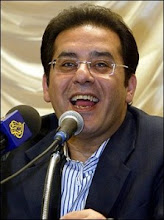
Ayman Nour


Ayman Nour was born on the 5 th of December 1964 to a father who was a lawyer and a Member of Parliament (MP) and a mother who established and supervised a number of charity projects in his birth town Mansurah.


He started his political career as a student activist during high school and University; and was elected as President for the Egyptian High School Students’ Union in 1980.


He won several awards in photography, school journalism & many other activities.


He graduated at Law School (Mansurah University) & started his career in journalism in the 80s, in one of the most famous opposition newspapers called “El Wafd” after “El Wafd Party” the oldest liberal party in Egypt. He was married to Gamila Ismail, who was a TV presenter, a political activist and who became his spokeswoman later on.


Nour's main concern was torture & corruption cases which led to his arrest & exposure to physical violence several times during his press campaigns.


Ayman Nour interviewed a number of arab world leaders like Yasser Arafat.
He wrote a number of books like “Liberalism is the solution” in 1992 compared to the famous Islamic slogan “Islam is the solution”.


He wrote as well “The Black Soldier : Zaki Badr” who was at that time the Egyptian Interior Minister.


He received his Ph.D. degree in “History of Law” from Russia in 1995. Then he ran for parliamentary elections and won to become the MP representing “El Wafd” liberal party in an electoral district in the center of Cairo called Bab el Sha’rea.


Till now he is considered the youngest member in the history of the Egyptian Parliament as he had been elected only few days after I had reached the legal age for nomination.


As a Parliament member ( 1995 – 2005 ) he exposed lots of corruption cases, proposed a large number of laws, amended & monitored many International treaties which involved Egypt , stood against random laws, supported civil rights , visited many parliaments around the world & won many awards for his honorable parliamentary performance on both national & international levels.


In 2003, he demanded a war crime trial for George W. Bush & Tony Blair for the invasion of Iraq without the UN permission.


He was re-elected for Parliament in 2000 announcing his intention for running for presidency after having 186 votes in the internal parliamentary elections (more than the third of the parliament which was in this time the main condition for being a presidential candidate) but then one year later he was dismissed from “El Wafd” party together with many of his colleagues in Parliament & began establishing their own political liberal movement called “Al Ghad” i.e. "Tomorrow" in 2003.


In 2002 he wrote a political & economical platform for Egypt’s problems in a book called (Modern Egypt in 2020) which later on became the basis for “Al Ghad party” policy.


In 2003 he launched with his fellows a large political campaign to attract Egyptian youth & society elite to political life based on the old Egyptian liberal values of “Al Ghad movement “such as “tolerance” , “human rights”, “third way free market”, while respecting Egyptian & islamic traditions.


In 2004 after a lot of pressure on the government (by thousands of founders, demonstrations & well written platforms handed to the Court ) the Egyptian government finally gave the legal license for the foundation of “Al Ghad” party (announcing in the government-controlled public media that it was an underhanded deal).


The Party then called for presidential elections instead of the old fashioned presidential referendum.


Because of his calls for constitutional reforms as regards the presidential elections, he was targeted by the Egyptian regime when 3 months later he was accused of falsifying official documents related to “Al Ghad” party.


His parliamentary immunity was terminated in a 30 minutes session & he was brutally dragged to jail while coming out of the Parliament building.


Days later President Mubarak announced constitutional reforms that will allow other candidates to run in the 2005 elections against him. So he submitted his nomination papers from inside the prison & the government released him to run for the Presidential elections.


In only 28 days, he carried out his election propaganda campaign where he visited almost all districts of Egypt holding conferences in each one. He was subjected to a heavy smear campaign by the government-controlled media & newspapers accusing him of being an American ally.


Finally he came second in the elections by officially taking 540000 votes (8%) compared to Mubarak who has been in power since 1981, who took 6 000 000 votes.


After the presidential elections he was put once again in jail in a trial described by many observers as an unfair trial under the control of a famous judge – the one who sent Dr.Saad el Din Ibrahim to prison few years before.


He was sentenced for 5 years in prison for “knowing about the falsified papers” & months later one of the imprisoned partners in this case was found hanged in his cell (was said to have committed suicide ) a day after his announcement that he had been intimidated by the State Security to force him to lie during his confession.


In prison he was forbidden all his rights including the right to communicate through writing and seeing other prisoners, even the right for health care which led to a lot of health problems later on.


In February 2009 – 4 months earlier than the date for his legal release from prison the government set him free (announcing once again that it was another deal between him & the regime ).


After being set free in 2009 he launched a new campaign called “Knocking the doors” to complete the visits he had started in 2005 to Egyptian towns & cities ,, & even to millions of Egyptians living outside Egypt in Europe , US & in the Gulf region.


Now, when he is supposed to be a free man, he is prevented from earning his living by resuming my job as a lawyer, or dealing with his bank accounts, or selling his property and finally he has been banned from traveling abroad.

Monday, December 7, 2009

Ayman Nour: Thank you Baradei for keeping my chasers occupied


In Egypt, when you oppose the regime, you will be labeled as either ignorant, a fool, or a hypocrite! If you introduced yourself as an alternative to the head of the regime, you will be labeled as either a criminal or a murderer! Opposing gods would bring their curse and anger upon you. But opposing the regime would shed your blood, lead you to death, and make you an example to scare whoever dares to do what you have done. Opposing the regime is disliked, but competing as an alternative is a big deal that shakes the seven heavens.
When Dr. Mohamed Elbaradei released a statement on his “faraway intentions” to run for presidency seat, the heat came up higher. The pro-regime journalists and media started an immediate urgent campaign of moral assassination of Elbaradie. They started only a few hours after the statement was released. They were referring to him as a reason of pride to the country, they are laughing at him with claim that he is a stranger who spent 28 years outside Egypt. They even accused him of being a spy for the United States of America and its regional ally. Then, they started looking for the other nationalities that Elbaradei might have; some claimed American and some others claimed Swedish!
In less than a minute, the Egyptian citizen, Mohamed Elbaradei turned into half citizen, or quarter of a citizen, or a few remains of a citizen. They made him a foolish student of Botrous Ghali, untalented employee who lacks experience on internal problems of Egypt, and above all a spy to other countries abroad!
I will not commit the foolishness of the pro-regime press. I will not listen to the intense statements of state officials and regime men against Elbaradie. I can understand this horrible process of mental assassination. I have been there before!
In 2000, I announced my intention to run for presidency during a TV interviewed with my late colleague and friend Magdi Mehanna. Before that date, the state-run media outlets used to interview me, almost daily, as a patriotic opposition figure. They used me as a proof of the understanding of the regime, who would accept those who say “no” sometimes; except for gods of course!
I won 168 votes (more than one third of votes) at the internal elections of parliament in 2000, and subsequently fulfilled the provision of article 76 of the Egyptian constitution, which was amended later in 2005. As soon as I won the votes, I found myself in hell. The first burn came from El-Wafd Party which, all of a sudden, cancelled my membership and removed me from my work as a journalist in El-Wafd newspaper.
When my wife ran in the elections of the Shura Council in 2001 against the leader, the details of the new era had been already established. We faced the widest process of forgery and violence, upon the demands of the big boss, as we were told!
Suddenly, they turned me from a good citizen and a patriotic Member of Parliament for ten years into an unpatriotic person with a wealth from unsuspected sources. I wonder where this wealth they are talking about is.
In the presidential elections of 2005, the regime fabricated a naïve and funny legal case against me. The official wing of the supreme authority was directly involved, while other authority tools were busy with assassinating me in cold blood. They are not done yet!
The fools of the regime are not ashamed of spreading rumors and lies about me. They claimed that my father is not my father! They said that I escaped military service, although I am a single child. Some had great ability for imagination. They claimed that I was a soldier in the US army during Vietnam War, although I was born in 1964.
Many thanks for Dr. Elbaradei for keeping the authorities, who were chasing me for years, busy!

Friday, June 5, 2009

Enduring Jailings and Attacks, Dissident Ayman Nour’s Ordeal Exemplifies US-Ignored Egyptian Repression of Political Opposition


Nour-web
President Obama came to Cairo amidst a massive security crackdown and heaping praise on Egyptian President Hosni Mubarak, whom he called “a stalwart ally” and a “force for stability and good in the region.” We hear from former presidential candidate Ayman Nour, one of Egypt’s best-known dissidents and the chairman of the Al-Ghad Party. Nour was sentenced to five years in prison in December 2005 and recently injured in an attack he says is linked to elements of Mubarak’s ruling party. Democracy Now! producer Anjali Kamat spoke to Nour in Cairo earlier this year.

Guest:
Ayman Nour, one of Egypt’s best-known dissidents and the chairman of the Al-Ghad (Tomorrow) Party in Egypt.


RUSH TRANSCRIPT


AMY GOODMAN: As we talk about reaction to the speech and also hear from other Egyptian voices, I wanted to turn to the case of the former presidential candidate Ayman Nour, one of Egypt’s best-known dissidents, chair of the Al-Ghad, or Tomorrow, Party in Egypt, challenged Mubarak for president in 2005. He came in distant second, garnering something like seven to 13 percent of the vote, according to different estimates.

But Ayman Nour was sentenced to five years in prison in December 2005 on charges of allegedly forging some of the signatures required to register his political party. While in prison, Nour’s case received much international attention, including mentions by the White House press secretary and President Bush, but he was only released in February of this year.

Well, last month, just after he was released, Ayman Nour was injured. He was driving in a car, and a man came up in a motorcycle near him and sprayed flames in his face using an aerosol spray can. Nour has accused elements from President Mubarak’s ruling party of being behind the attack. Last year, his party headquarters in downtown Cairo was burned down.

Issandr, a little more on who he is, as we go then to the piece that Anjali Kamat did with him in Egypt, when she sat down with him in his home.

ISSANDR EL AMRANI: Well, Ayman Nour is a quite popular politician who was a member of parliament for a district of Cairo, who in 2004 formed his own party, a kind of a centrist-liberal party. And for the first time, since 2005 had the first directly contested presidential elections in Egypt, he really took on, partly encouraged by the pressure that the Bush administration was putting on Egypt for political reform, he really took on President Mubarak in his campaign. He came second in the race with about 7.5 percent, compared to President Mubarak’s 87 percent. But that’s quite an achievement in the very tightly controlled political space there is in Egypt. But for his crimes, a few months later, on Christmas Day 2005, in fact, he was convicted, in prison, and he only recently got out earlier this year.

AMY GOODMAN: And was burned.

ISSANDR EL AMRANI: And a few days ago, indeed, he was burned in an attack on the street. Someone threw some chemical products on his face. Part of his skin was damaged, some of his hair also.

AMY GOODMAN: Let’s go for a moment—

ISSANDR EL AMRANI: [inaudible]—

AMY GOODMAN: I want to go for a few minutes to Anjali’s interview with him. Anjali Kamat had been in Gaza, come back to Egypt, and got a chance to sit down with Ayman Nour in his house. And she asked him what sort of role, if any, he thought the United States should play in promoting democracy in Egypt.

    AYMAN NOUR: [translated] In fact, this issue is very embarrassing and difficult for me. The demands on my behalf from the European parliament and the United States allowed the Egyptian government to spread false propaganda about me. They claimed that I subscribe to a Western or an American agenda and not an Egyptian one. This is absolutely untrue and has no basis in reality.
    I cannot rely solely on the American role in promoting democracy and believe there is also a very important Egyptian role in addition to that of the international community, Europe and the US, in terms of pushing the Egyptian regime to take positive steps towards democracy.
    Now, we cannot deny the role the US has played in terms of democratization. But this role has taken a serious beating because of what has happened in Iraq and because of the lack of balance in the ways the US has handled the Palestinian issue.
    The repressive Arab regimes do not want a solution to the Palestinian issue, because they want this issue to remain as an excuse to continue their militarized repression under the slogans of fighting for Palestine, and they will continue to suppress the voices freedom and democracy until this issue is marginalized.
    The United States needs to understand this. There must be a true solution to this issue, a just and balanced solution. And there needs to be a role for the United States that does not support oppressive regimes, because that support only creates an enormous decrease in support from the Arab people, as well as a big loss in the right of the Arab populations to progress, advancement, peace, democracy and freedom.
    We hope that in the coming period the United States will emphasize principles over interests. This is what we have been missing, and this is what we hope we can achieve.
    There are prisoners of conscience in the Arab world. I was among them. In terms of limited political options, I remain one of them. There needs to be a role for all free people to call for freedom of all prisoners of conscience in the Arab world—in Syria, Bahrain, Saudi, Egypt, Tunisia, Algeria. In most Arab countries, there is a real crisis. People are hoping that the new administration—and it is a direct administration—takes a different position than the previous administration.
    ANJALI KAMAT: Ayman Nour, what are your expectations of President Obama?
    AYMAN NOUR: [translated] There’s no doubt that we have a special enthusiasm for the new American president, as does much of the rest of the world. Personally, my enthusiasm has to do with the fact that I think we are of the same generation, more or less the same age, and belong to the same kind of political culture. Also, by chance, his election slogans of change and “Yes, we can,” these were the same slogans I raised in my presidential campaign in 2005.
    All these similarities are encouraging, but we also recognize that this is the President of the United States of America and not the president of the world or the Arab world or Egypt. And we realize that he has certain calculations. But we hope that principles can win over interests. If he advances on the basis of principle, it will lead to the realization of long-term permanent interests. If, on the other hand, it’s the short-term interests that win out, that will worsen the image of the United States among our people and lead to a far greater loss of support for the US.
    ANJALI KAMAT: You were arrested four years ago. Can you describe the circumstances of your arrest and why you think you were arrested?
    AYMAN NOUR: [translated] I was arrested after entering the presidential elections, in which I was a runner-up to President Mubarak. The publicly announced reasons for my arrest are laughable and pathetic. They claimed that the documents used to found my party were forged and that some of the signatures presented were forged. The law just requires fifty signatures. We had over 5,200 signatures. Also, these signatures were in the regime’s possession; they were not with me. So we changed some of the signatures and also gave them copies of the original signatures.
    But I was sentenced to five years in jail. I spent four years in prison. From the beginning, it was clear that the goal was to drive me away from politics and kill the party that I founded, the Ghad Party. Ghad is a young liberal party and project. The aim was to destroy Ghad, a liberal party, and me as the leader. But they did not succeed on both counts, as proven by the widespread popular reception I received and still receive in most of the provinces of Egypt. Just yesterday, I was in Port Saeed. Truly, the reception has been wonderful.
    I’d like to reiterate that their aim in arresting me was not realized, and I think it’s the opposite that happened, which ended up in our favor and not against us.
    ANJALI KAMAT: Can you talk a little bit about the plans for the future for your party and yourself politically?
    AYMAN NOUR: [translated] The Ghad Party is a rational, liberal, objective and secular alternative to the repressive regime and also is an alternative to the irrational extremist parties. We see ourselves as the third way. We are an alternative that is in line with the moderate nature of Egyptians and with their great spirit, which has been a liberal spirit since before the revolution.
    We do face a number of problems, particularly in relation to participating as a candidate in the elections, which is very, very difficult, and the government has placed several obstacles before me and my party in this regard. We are now rebuilding our party.
    I am, of course, extremely thankful to all who have asked for Ayman Nour’s release, but I hope the demand will now change to focus on the rights of Ayman Nour, because Ayman Nour as a political or electoral project cannot do anything without his rights. And securing my rights is no less important than securing my freedom and my life.
    ANJALI KAMAT: How do you see the future of the Mubarak government?
    AYMAN NOUR: The Egyptian regime is old and has roots dating back to 1952. But for the past twenty-eight years, it has been represented by the same person: President Mubarak. This, I think, is unprecedented anywhere in the world.
    The future of the current Egyptian regime depends on its ability to understand that its role must come to an end, that it must provide a real opportunity for power to circulate among the Egyptians. It has to give the Egyptian people their right to choose their rulers, their representatives, without texts that restrict and frustrate these rights and freedoms to the extent that they don’t exist at all or become some kind of a mirage.

AMY GOODMAN: Former presidential candidate in Egypt, Ayman Nour. He was imprisoned by Mubarak for a number of years, just came out, for three years, sentenced to five, and then was burned when he was driving in his car. A motorcycle pulled up and an aerosol spray can—a man holding it lit a flame and burned his face. We believe that he was at Cairo University today. Juan?

JUAN GONZALEZ: Yes, I’d like to ask Issandr El Amrani about the dissidents that were also invited. Not only, apparently, was he invited to be at the speech by President Obama, but several members of the Muslim Brotherhood and other human rights leaders in Egypt were invited. Talk about the Muslim Brotherhood and its role within this long-running Mubarak authoritarian regime.

ISSANDR EL AMRANI: Well, the Muslim Brotherhood is today the strongest opposition force in Egyptian politics. It’s not allowed to run in elections as a political party, but its members run as independents. In the last parliamentary elections in 2005, they won about 20 percent of seats in parliament. They are ideologically close to Hamas in Palestine, very supportive of the Palestinian cause and very suspicious of and critical of US policies in the region under the Bush administration, thus far under the Obama administration, and historically.

The Muslim Brotherhood is—there’s been a lot of talk in recent years about possible engagements of Islamists, and some people have suggested that this is—inviting the Muslim Brotherhood is recognizing its legitimate role in Egyptian politics with the—something that the Egyptian regime may not be very happy about. And, you know, this move was probably also—this is a speech to the Muslim world, also an outreach to the Islamist movements, which are certain to play a role, an important role, in Egypt and the rest of the region, should there be democracy.

But for the last few years, the Muslim Brotherhood has been prevented from participating in other elections, repressed heavily, and is used as a pretext, as a scarecrow, by the Mubarak regime to—notably with Washington—to say that it’s either us or them. And that’s a false choice.

AMY GOODMAN: Professor Cole, President Mubarak not being there, how significant is this?

JUAN COLE: Oh, I don’t think that’s significant. President Obama met with Mubarak at the presidential palace before the speech. Mubarak, you know, obviously was blessing this event in some ways. So I don’t think it’s important that he wasn’t there. I think, you know, it attests to his security concerns. There have been assassination attempts on him. It may also be that he didn’t want to be seen as overshadowing Obama as a visitor. Hosting is very important in Arab culture.

But I think the big issues with regard to democracy in Egypt, you know, really have to be addressed by the Obama administration, but I wonder whether it’s not better for them to address them behind the scenes. You know, Condi Rice went to Beirut, and she denounced Mubarak before the last presidential election, and the Bush administration, I understand, put enormous pressure on Mubarak to open up those presidential elections. So he let Ayman Nour out of prison, let him run, let him lose, and then put him back in prison. So, you know, the Egyptian regime is very difficult to strongarm, and it may backfire if the US seems too heavy-handed in this regard.

AMY GOODMAN: Egypt is a place where the US has worked with the government, with the dictatorship, around rendition. Issandr El Amrani, last words on that, kidnapping people off the streets of another country, bringing them to Egypt, where they engage in the torture.

ISSANDR EL AMRANI: That’s right. And as far as I understand it, this policy was shaped in the Clinton administration, is continuing under the Obama administration, unless we stop his extraordinary rendition and the rendition of people to places like Guantanamo Bay or US territory. So if this policy is still taking place, this is again one of the other many ironies of President Obama choosing Egypt. You know, we found out a few weeks ago that Shaykh al-Libi, an alleged al-Qaeda member, was rendited to Egypt, tortured here and, because of his torture, gave a false account of links between al-Qaeda and Saddam Hussein, which was used to justify the invasion of Iraq in Colin Powell’s speech to the UN. And if you look at the [inaudible]—

AMY GOODMAN: And we’re going to have to leave it there, Issandr. I want to thank you both for being with us. Issandr El Amrani, independent political analyst, blogs at arabist.net. And Professor Juan Cole, internationally respected historian and blogger, professor of history at University of Michigan, author ofEngaging the Muslim World. Also, special thanks to Anjali Kamat and Jacquie Soohen.


Tuesday, March 3, 2009

BBC News - Profile: Ayman Nour

BBC

Profile: Ayman Nour

Before his imprisonment, Ayman Nour was a relative newcomer to Egypt's stagnant political scene.

Ayman Nour
Ayman Nour's Ghad party was founded in October 2004
Mr Nour, a softly-spoken, eloquent former lawyer, formed his political party in October 2004 with a view to contesting presidential elections the following year.

Three months later, prosecutors in Cairo charged him with forging signatures to register Ghad, the party whose name means "tomorrow" in Arabic.

He developed a vocal band of supporters at home and a profile abroad.

And his liberal credentials brought him into direct competition with the youthful wing of the governing party, headed by President Hosni Mubarak's son, Gamal.

They also brought him to the attention of the US, Egypt's biggest ally in the West, which has urged Cairo to reform the political system that has kept President Mubarak in power for more than two decades.

Analysts said the speed with which Mr Nour was stripped of parliamentary immunity and brought to trial suggested the government did not want to under-estimate the political threat he posed.

The government rejected all allegations that the trial was politically motivated.

Jail term

Washington voiced disquiet at Mr Nour's treatment and Cairo delayed his trial, enabling him to take part in the 2005 elections.

The presidential poll saw Mr Nour come a distant second to the incumbent, polling 8% of the vote to Mr Mubarak's 89% - a result Nour alleged was rigged.

In November 2005, Mr Nour also lost his parliamentary seat to a ruling party candidate - another result that he claimed was rigged.

His trial went ahead a month later, delivering a guilty verdict and handing him a five-year jail term.

A co-defendant at the trial complained he had been forced to make a false confession.

Political family

Mr Nour, a diabetic dependent on insulin, spent the week before the verdict in hospital as a result of a hunger strike he had started in protest at his detention.

Ayman Nour behind bars and his wife, Gameela Ismail
Ayman Nour's wife has campaigned for his release

During an earlier spell in prison, he wrote to US magazine Newsweek, saying the government was suspicious of his reformist inclinations and wanted to discredit him by labelling him as an agent of the US.

"The solidarity shown to me by my supporters, together with sympathy from the international community, have triggered in [the] authorities a strange stubbornness," he wrote.

The 44-year-old comes from a family with a long history of involvement in public life.

Throughout his trial, his wife, Gameela Ismail, led daily protests against the Mubarak administration.

While in prison last year, he is known to have written to Barack Obama as he campaigned for the US presidency. It is understood he urged Mr Obama to help Arab reformers push for democracy in the Middle East.

Meanwhile, during a speech in Egypt in May 2008, President George W Bush pointedly remarked that "too often in the Middle East, politics consisted of one leader in power and the opposition in jail".

Mr Nour's release was unexpected but comes at a time of expectation that the Obama administration could bring a change in diplomatic relations in the region.

Saturday, February 21, 2009

What Ayman Nour Told Me


Hope to bring you a post-prison interview with freed Egyptian opposition leader Ayman Nour soon, but here's a look at what he told me on the eve of the 2005 presidential election. His brief statements to journalists this week indicate that he is no less determined to struggle for democracy in Egypt than he was when he ran against Hosni Mubarak--or before serving the past three plus years in jail for, most people believe, standing up against the regime. [I spoke with Nour in his apartment three days before the election, but the Q&A seems to be irretrievable from the time.com archives.]


TIME: In your last speech in Cairo's Tahrir Square, you attacked Mubarak and said what you wanted to say. Is that a sign of a fair election?


NOUR: This has nothing to do with the elections. This has to do with the fact that I have personally overcome the fear of this regime. People are afraid of injustice, of oppression, of the police, of a ruler who can do anything. The indications don't suggest that this will be a fair election. The media is not neutral, the press works for the president 24 hours a day. There were attempts to tarnish [my] reputation. There is no international supervision. But we are attempting to liberate our will, to ensure that there are elections, to ensure there is change. If there are indeed true elections, then I imagine that Hosni Mubarak would get 20-30 percent of the vote.


TIME: Does the election nonetheless represent some positive change?


NOUR: Yes, it is a step. But we cannot be content with that. We want a peaceful sharing of power, not just a shape without content. [Under the monarchy] until 1952, there was a sharing of power. There was a normal process where governments came and went.


TIME: Is Mubarak capable of reforming Egypt from within the regime?


NOUR: It is normal that he will announce some changes and achieve some of them. Even if he makes changes, it will not be true as far as the people are concerned. There will always be loopholes and ways of getting around democracy, and at the end it will not lead to the desired effects.


TIME: Why did you run for president?


NOUR: I don't believe in boycotts, which is an act of apathy.


TIME: Assuming Mubarak is declared the winner, what is your next step?


NOUR: It depends on how he wins. If he wins democratically and with transparency, we will congratulate him. If he wins by fraud, then we will start a new battle in facing an illegitimate regime, from protests to civil disobedience.


TIME: Like what happened recently in the Ukraine where the presidential election was disputed?


NOUR: I am not Ukrainian. I am Egyptian. What is the problem with the Ukrainian example? In my opinion, it was some people trying to change their county. I do not see that they have a committed a crime. The regime is in a mess because there is real anger in society now and this anger will not be diffused unless this regime goes. Without my having to lead demonstrations, these demonstrations will go on.


TIME: Why would Egyptians vote for you?


NOUR: My program expresses the desires of the Egyptian people. There is a link between me and the people.


TIME: Ordinary Egyptians really support you, a liberal?


NOUR: Most Egyptians are in the middle closer to the liberals than to leftists or Islamists.


TIME: What do you expect with your upcoming trial?


NOUR: It has no basis. [Mubarak] is a weird stubborn man and he can do anything. My experience in prison was very important to me, one of injustice, of torture. There is something called torture in the Egyptian jails and something called legal violence. There are many, many people who are innocent. There are some who have been in jail for 15 years without a case against them or trial. My top priority now is to release political prisoners. Before I went to prison, it was constitutional reform.


TIME: Were you tortured?


NOUR: There was violence and there is evidence of the violence. [Nour rolls up his trousers to show bruises on his shins.]


TIME: Are the changes taking place in Egypt irreversible?


NOUR: Egypt's only chance for progress and stability is through real democratic change. It is hard to stop everything, but it is also difficult to continue everything. This is a party, a regime and some individuals that are not prepared for democratic thought


TIME: What explains the changes we are seeing in Egypt and the Arab world?


NOUR: The Arab world is not an island. Democracy is no longer a choice as much as it has become a direction that the whole world is taking. It is not possible that the whole world moves toward democracy and the Arab world moves in the opposite direction. America has an important role in everything that takes place in the Arab world. So when it comes to democracy, why would it not have an important role?


TIME: Did the overthrow of Saddam Hussein help Arab democrats?

NOUR: The American presence in Iraq has greatly harmed Egyptian calls for reform because the Egyptian citizen is saying that we do not want to turn into Iraq. This puts us in an awkward situation when we talk about reform. Saddam Hussein was a dictator, but what exists today is something worse than Saddam. Saddam was an oppressor and a dictator, but there are other dictators that America does not confront. The feelings of the Arabs is that what took place in Iraq has nothing to do with democracy at all.


TIME: But has it turned out that Saddam's fall helped democracy in the region?


NOUR: No doubt that the totalitarian regimes that exist in the Arab world are affected by external pressure more so than local public opinion. There is also no doubt that the declaration of the Greater Middle East Initiative put some kind of pressure on these despotic regimes. This is useful in the process of democracy.


--By Scott MacLeod/Cairo


Wednesday, February 18, 2009

Interview with Ayman Nour on Egypt's Elections

Interviewee:
Ayman Nour
Interviewer:
Sharon Otterman

Egyptian Presidential Candidate Ayman Nour

Editor's Note: On February 18, 2009, Egypt's government released Ayman Nour, the most prominent of Egypt's jailed pro-democracy dissidents, after for than three years in prison in what was widely regarded as an effort to improve relations with the new administration of President Barack Obama. Nour told the AP that he had no warning about his release, nor could he explain the timing. "Why they did this is unknown," the AP quoted him as saying.

Nour's case has been a staple of U.S.-Egyptian relations ever since his conviction in December 2005 on charges of forging signatures on behalf of his party's efforts to contend in the 2005 presidential elections. He was arrested before the election, but the arrest drew strong protests from U.S. Secretary of State Condoleezza Rice, and Nour was released and allowed to stand as presidential candidate of Al-Ghad (Tomorrow), a secular, liberal party opposed to the longtime rule of President Hosni Mubarak.

Official results of the September 2005 voting gave Mubarak 88 percent of the vote, but the election was strongly criticized by international observers. A 2006 report from the nonpartisan Congressional Research Service noted the elections were widely regarded as fraudulent. Still, even with official corruption, candidates affiliated with the banned Muslim Brotherhood won over 20 percent of the vote, and Nour's "Tomorrow" party won another seven percent.

Shortly before the election -- and just days before he was rearrested -- Nour spoke at his home in Cairo with Sharon Otterman of CFR.org about his hopes for democracy in Egypt and the wider Middle East:

You’ve just wrapped up your presidential campaign with an enthusiastic rally here inCairo. Looking back, what do feel you’ve been able to accomplish these past weeks?

The campaign was very short, only eighteen days. We accomplished part of our mission to communicate with a huge number people from various sectors of Egyptian society. We had twenty-three rallies and visited eleven governorates. We were the most attractive campaign to the Egyptian people, obviously, with huge numbers of people coming to our events. So we feel we accomplished a part of our goals. When the results are out, they will demonstrate whether the election was free and fair enough to reflect the support we know we have from the people.

What is your best guess as to the final results?

If the elections were free and fair, I believe that President Mubarak would not get a large number of votes. Wide sections of the Egyptian community see that twenty-four years [of Mubarak rule] is a very long length of time to go without results. But if the elections are rigged, anything is possible.

Will the election be rigged?

The election will be neither free nor fair.

Many aspects of this election have already been criticized by domestic and international observers. Despite this and your own concerns, do you think this election represents an important step forward for Egypt?

No doubt, it’s a step, but it’s a limited step. There has already been a democratic system in Egypt, from 1923 to 1952. It is not enough for Egypt to have this election, with all of its flaws. There must be more reform.

When do you believe Egypt could emerge as a fully functioning democracy?

It could happen tomorrow in Egypt. Egypt is ready.

A number of opposition groups, including the Kifaya (Enough!) movement, are calling on Egyptians to boycott the election. They believe it is useless to participate because the election will not be fair. Do you think their stance is counterproductive?

It is their right to choose this option, and I respect their point of view. But I believe that boycotting is not the appropriate answer in response to a ruler determined to stay in power no matter what. I believe we need to participate to bring change.

What role do you think the Muslim Brotherhood play in this election? They have called on their many followers to vote, but have not specified a candidate.

Until now, their stance is still unclear, and I can’t speculate on it. As far as my campaign is concerned, however, it was not my goal to win the support of the Brotherhood or any other group. My goal is to gain constitutional rights for everyone, and to make sure all parties can run for office without restrictions. For their part, the members of the Muslim Brotherhood should participate in this election as any other Egyptian citizens.

Did you seek the endorsement of the Muslim Brotherhood in the course of this campaign?

I went to tell them about my election program. My goal was not more than that, to tell them about my program, to tell them as much as possible about everything I will do if elected. It is the same I would do for anyone else.

Your next challenge after this election will be facing the courts September 25 in the forgery case against you. Do you think the charges could be dismissed?

It is a fabricated case—I know that, and everyone knows that. I believe in justice, and I believe in Egypt’s judges. So I hope for the best.


http://www.cfr.org/publication/8829/interview_with_ayman_nour_on_egypts_elections.html