Showing posts with label middle east. Show all posts

Thursday, January 28, 2010

Ayman Nour: One year since Obama’s inauguration

Barack Hussein Obama has made history since he became the first black person to win a seat in the U.S. Senate and made history for the second time when he won the Democratic Party’s nomination for the Presidential election. He has since made more history when he scored victory in the elections, becoming the first black American President in history.

But making history is different than entering this space and formulating the wide consequences resulted from this victory, as before Obama, American President James Buchanon also made history as the first and the only president to remain a lifelong bachelor, as well as President Martin Van Buren, considering English was not his mother tongue.

Obama’s real problem from the moment of his inauguration last January 20, 2009, is that he began a new phase, which is greater than making history; a difficult stage of the competition, much harder than the old Republican rivals or even his stubborn Democratic rival – and his current Secretary of State – Hilary Clinton, or with his predecessor: Bush.

Obama’s rival after one year in office is himself. He is the only person he cannot defeat, as Obama, the current President of the United States, is a rival to Obama – who was described by the dreamy minds as “the savior”; minds that painted the image of Obama and put it in the background of the image. They drew the descriptions of Moses splitting the sea and Joshua who stopped the sun, and Christ, who revives the dead! And certainly, Obama is not any of these prophets.

Although America is part of the world – and not the whole world – Obama has become a universal dream, especially considering the other was a universal nightmare. Strangely enough, and dangerous, is the conflicting expectations about Obama from related parties whose positions have conflicting interests and can only be unified by hope and ambition in this “magical” image. They have planted in their imagination of Barack Obama, who has to find an impossible approach to fulfill this imagination.

Obama’s problem, who had plenty of sympathy in Egypt and many Arab countries is doubled due to historical considerations and past experience with former presidents of the US, who at the beginning were greeted by them [Arabs], then they called on for their impeachment.

At the end of World War I President Woodrow Wilson made the 12 principles his priority. The last of these principles was the right of every nation to self-determination and Egypt’s Revolution in 1919 was against the British occupation of Egypt, demanding the right to self-determination, and the demonstrators shouted slogans honoring Saad Zaghloul (revolutionary leader) and Mr. Wilson.

In Syria, demonstrations demanded an American Mandate in the hope of the promise of Wilson.

Suddenly, President Wilson recognized the British protégé in Egypt, and demonstrations were organized to call for his impeachment, after it was organized in the beginning to cheer his life! The same thing happened in Syria, when he recognized the French Mandate of Syria and Lebanon!

When President Roosevelt declared the Four Freedoms, the motivation of Arabs turned from Hitler to America, then Truman succeeded Roosevelt, to recognize Israel, breaking Roosevelt’s promises during World War II, causing a shock to the Arabs and a shift in their feelings as they were frustrated.

This happened in 1956, when America gained its popularity back, for its stance against the tripartite aggression on Egypt, the popularity that has soon faded away because of America’s rejection in financing the construction of the High Dam.

When the Egyptian-American relations were restored, the Egyptian people welcomed President Nixon in an unprecedented event, then Carter remained to hold a special place in the hearts of Egyptians until America’s constant bias with Israel, which has been the cause of the deterioration of the Egyptian-American Rapprochement for years.

Obama’s real rival is the image of Obama himself, people who chant for his favor may in fact chant and shout against him. Only if he decided to read history well to be able to make it again after one year has already been lost.

BM

Thursday, November 5, 2009

EGYPT: Activist Ayman Nour blasts authorities for travel ban

EGYPT: Activist Ayman Nour blasts authorities for travel ban

latimes.com
November 5, 2009 | 6:45 am

ALeqM5hSeESUv_EiGZSEEdYZSjGC92zA2Q

Opposition leader Ayman Nour has attacked the ruling regime after he was barred from traveling to the United States, where he was invited to speak about Egypt's political climate at the Carnegie Endowment for International Peace in Washington.

Nour and a number of Egyptian politicians, including Gamal Mubarak -- a top official in the ruling National Democratic Party and the son of President Hosni Mubarak -- were invited to the Carnegie event. Nour said he is convinced that his travel ban was intended to prevent anti-government figures from spoiling Gamal Mubarak's trip.

"Mubarak's son wants the lion's share of the Egyptian political sphere, whether that is inside or outside the country," Nour said. "But I will not give him such pleasure, and I will take part in the Carnegie seminar through video conferences."

The founder and former head of El Ghad opposition party, who was also planning to take part in a number of conferences organized by the Egyptian community in the U.S., previously said that the Egyptian public prosecutor had issued an administrative decision preventing him from going to the U.S. and other nations in the Middle East and Europe.

Gamal Mubarak is being groomed to succeed his father, a scenario resented by many Egyptians who have suffered under the government's economic programs and repressive human-rights policies and don’t want a Mubarak dynasty. Nour and fellow opposition activists and parties recently formed a coalition under the slogan Mayehkomsh ("You don't have the right to rule"), rejecting any succession plan.

After losing to Hosni Mubarak in Egypt's first contested elections in 2005, Nour was sentenced to five years in prison on what are widely regarded as trumped-up charges of forging signatures in order to establish El Ghad party. He was released on health grounds in February and since then has only been allowed to leave the country to receive healthcare abroad.

Nour, who has been touring Egyptian cities to interact with citizens and demonstrate his political vision over the last few months, can't run in the 2011 presidential elections because of his earlier conviction.

-- Amro Hassan in Cairo

Saturday, May 23, 2009

Egypt opposition leader Ayman Nour firebombed

Egypt's Ayman Nour claims attack, suffers facial burns

Egypt opposition leader Ayman Nour firebombed


Ayman Nour was attacked Friday evening on his way to a Ghad party meeting

CAIRO (Marwa Awad)

Egypt’s leading opposition figure Ayman Nour survived a bomb attack late Friday in front of his home a day after he vowed to run for elections in 2011.

Nour, one of Egypt’s best known political dissidents, was admitted to a Cairo hospital late Friday for first degree facial burns after a motorcyclist firebombed his car.

The attack took place 300 meters (984 feet) outside of Nour's home in the upper-class neighborhood of Zamalek. A youth in his late teens rode up to Nour, who had his car window rolled down, and sprayed flammable liquid in his face and lit a fire simultaneously.

“I had my window rolled down and he came up to me within a distance of one meter. He sprayed a liquid that ignited into a ball of fire that covered my face and head and I was immediately rushed to the hospital,” Nour told Al Arabiya in his first comments since the accident and declined to disclose the name of hospital he where he is being treated.

His driver was unhurt and immediately took Nour to the hospital.

Nour said he suffered first degree burns on half his face and 20 percent of his hair. Doctors told him they expect to release him within two weeks with the possibility of minor plastic surgery.

“We are in the process of filing a statement of criminal assault to the Abdel Maguid Mahmud the Attorney General to initiate an investigation into this crime,” Ehaab al-Khoury, head of the Ghad Party, told Al Arabiya. “We will also issue an official statement condemning such an act and demanding justice.”

Osama Abdel Menem, attorney with al-Ghad party told Al Arabiya he will file the criminal assault report Sunday.

Nour did not know who his attackers were, but said he believed the attack was in response to a speech he gave Thursday in Port Said announcing his resolve to run for the presidency for a second time in 2011.

However managers at Alfa market and Hardee's in Zamalek, two businesses located near the alleged attack, were unaware of any incidents around that time.

Zamalek police said no report of criminal assault was filed by Nour or the Ghad party on Friday.

" I had my window rolled down and he came up to me within a distance of one meter. He sprayed a liquid that ignited into a ball of fire that covered my face and "
Ayman Nur, Ghad Party founder

Nour, a 44-year-old diabetic, formed a political party and mounted an unprecedented challenge against veteran President Hosni Mubarak during the 2005 presidential election, coming a distant second. He was then imprisoned on charges of forging signature to found his party, which his supporters believe were trumped up, and sentenced to five years in prison. He was released in February.

“There are many who could have done this criminal act, especially after my visit to the city of Port Said and the speech I gave there,” Nour said, adding that he remains resolved to carry on with his political activities and “will not succumb to any obstacles.”

Nour called the attack “unfair play outside of all norms of decency and legitimacy,” maintaining that ever since his release in February of this year, he has been periodically assailed in ways that sought to damage his political and social standing and hinder any progress on his political reform efforts.

“A series of distractions and obstacles were set in my path since my release. Attempts on my life of this illegitimate sort outside of the political arena try to disable the party’s development and progress,” Nour explained.

Friday, February 20, 2009

Egypt Frees a Dissident: A Gesture for Obama? By Scott MacLeod / Cairo


Former Egyptian opposition leader Ayman Nour, right, greets supporters as he arrivesl at his party's headquarters, in Cairo, Egypt, Nouri was unexpectedly released from prison on Wednesday after serving more than three years.
Amr Nabil / AP

___________________________________________________________

Ayman Nour was released from prison on Wednesday, but not even his wife knew that he was coming home. Egyptian authorities jailed the opposition leader in 2006 on charges of electoral fraud, but his imprisonment was widely seen as an effort to silence President Hosni Mubarak's most outspoken critic. Nour's wife Gamila Ismail, who organized "Free Ayman Nour" protests, often despaired that her husband, who suffers from diabetes and other ailments, would remain in prison until the end of his five-year sentence in Cairo's notorious Tora prison. And so, when Nour finally arrived at his apartment as a free man, he didn't have keys and nobody answered the door.

Egypt's attorney general cited "medical reasons" for Nour's release even though Egyptian courts had repeatedly denied Nour's request for a pardon on those grounds. Many see politics behind the decision. Mubarak, 80, wants to improve relations with the new Obama administration, following eight years of cold relations with the Bush administration that were frosty in part due to Nour's imprisonment. "Does Mubarak want to risk another four years of bad relations with the United States? I don't think so," says Hesham Kassem, former deputy leader of Nour's liberal, secular al-Ghad party. "If [Nour's imprisonment] had gone on into the Obama administration, then we were not talking about a Mubarak-Bush problem anymore, but an Egyptian-American problem." (See pictures of people around the world watching Obama's Inauguration.)

Cairo-Washington relations have been chilly over numerous issues, including U.S. handling of the Israeli-Palestinian conflict and the American invasion of Iraq as well as disagreements over domestic reform in Egypt. The U.S. froze negotiations on a free trade agreement with Egypt after Nour was handed his prison sentence; Mubarak, in turn, halted his regular visits to Washington. In contrast, Mubarak appears elated by Obama's decision to plunge immediately into Arab-Israeli peacemaking, and gave a warm welcome last month to George Mitchell when the new U.S. special envoy made Cairo the first stop of his first Middle East tour. Last week in Washington, Egyptian Foreign Minister Ahmed Abul-Gheit, who bitterly sparred with former Secretary of State Condeleezza Rice over Nour, became the first Arab counterpart to meet with Obama's top diplomat, Hillary Clinton.

The freeing of Nour, 44, not even a month after Obama assumed office, is also being seen partly as a final snub of President Bush, whose administration repeatedly and publicly pressured Mubarak to free Nour. "Bush was gone Jan. 20," says Kassem. "They had it out together, and Mubarak had his way. Mubarak came out on top. When is the perfect timing to release Ayman Nour? Within a few weeks of Obama coming in." (See pictures of George W. Bush in the Middle East.)

Yet it's far from certain that Nour's release heralds an easing of the regime's pressure on opponents and critics. Within the last two weeks, for example, Egyptian state security agents reportedly detained and held without charge for four days an Egyptian-German blogger, Philip Rizk, who had protested what he saw as the regime's inadequate support of Paletinians during the recent Gaza conflict with Israel. Human Rights Watch has denounced Egypt's "appalling domestic rights record," citing alleged "torture in police stations, arbitrary arrests of non-violent dissidents and crippling restrictions on civil society organizations." Rights groups have also criticized Egypt's state of emergency, which has remained in force throughout Mubarak's five terms as President.

A better indication of the regime's intentions will be seen in how it deals with Nour following his release. Within hours of tasting freedom, Nour told reporters that he intends to re-enter politics despite the ban imposed on political activity imposed by his conviction. In the 2005 election, Nour was runnerup, winning 7% of the vote to Mubarak's 88%, but government pressure, possibly including fires that damaged al-Ghad's offices, has decimated Nour's party. In its court prosecution of Nour, the government charged that he had forged signatures on documents required for registering al-Ghad to become a political party. Regime critics have speculated that the regime sought to silence Nour because he posed a threat to the prospects of Mubarak's son, Gamal, 45, to become Egypt's next president.

Nour has a long way to go to rebuild his political career. Though he gained respect for defying Mubarak and enduring a prison sentence, few Egyptians see the freed prisoner as a local Nelson Mandela. Many value Mubarak's National Democratic Party for bringing stability, while large numbers of government opponents support the banned Muslim Brotherhood group. Nonetheless, some observers believe that Nour's release may be an indication of greater freedom to come for all opposition parties. "This is a positive sign," says Hala Mustafa, editor of the Egyptian journal Democracy. "In the end, the regime showed a relative tolerance toward one of its fierce opponents. It is a sign that maybe the regime is willing to compromise. Before, the regime [used to shut] the door for any compromise. Political openness is a must, and it is very difficult to turn back."


Saturday, April 26, 2008

Except Ayman Nour

Cairo, April 26, 2008

The Arabic Network for Human Rights Information stated today that all prisoners of opinion are detained in Burg Al Arab prison except Dr. Ayman Nour who is detained in Mazra'at Tura prison. Three of the opinion prisoners out of five are arrested according to the emergency law. The three are Ali Abdul Fattah, director of the Egyptian media center, Mos'ad Abu Fagr, a novelist and a blogger and an activist in "wedna na'ish" (we wanna live) movement and Karim Al Behairy, a labor historian and blogger who was recently detained due to the strike called for by internet activists and democratic movements. The three prisoners are detained in Burg Al Arab detention camp located in Alexandria desert.

The remaining two prisoners are the secular blogger Karim Amir, sentenced to four years in prison, and detained in Burg Al Arab, and Dr. Ayman Nour, sentenced to five years in prison, and detained in Mazra'at Tura prison south Cairo.

Is it a coincidence that all opinion prisoners are detained in Burg Al Arab prison? This prison is in a remote area, Alexandria desert, while the detainees are from different places according to their accommodations. This makes us say that detaining opinion prisoners in such a remote prison away from the detainees' accommodation areas is a sign that the interior ministry is cracking down against opinion prisoners in Egypt.

Next May will witness three important events; the world day for press freedom on May 3, a strike called for by internet activists and democratic movements on May 4 the president birthday date, and the termination of emergency law activation period on May 27.

Mr. Gamal Eid, the executive director of the Arabic Network for Human Rights Information said, "We hope that the Egyptian government will not extend the emergency law activation period next May". "To terminate the emergency law activation period means that the opinion prisoners will be released, and also means that the president will issue a decree to release both Ayman Nour and Karim Amir. After 27 years, Egypt is to be without emergency law and without opinion prisoners", added Gamal Eid.

Tuesday, December 20, 2005

BBC News - Testimony withdrawn

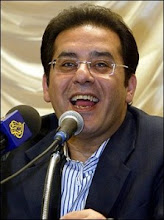
Egyptian opposition leader Ayman Nour
If convicted Mr Nour could face up to 15 years in prison


The condition of Egyptian opposition leader Ayman Nour, who has been on hunger strike in prison for 11 days, has improved slightly, his lawyer says.

Amir Salim told the BBC that doctors had given Mr Nour injections of glucose and insulin and made him drink tea.

Mr Nour, who is on trial for forging petition signatures to register his al-Ghad party last year, says he is protesting at his treatment in prison.

He denies the charges and has said they are politically motivated.

Mr Salim said his client, who is a diabetic, was still very weak and was insisting on continuing his hunger strike until Saturday, when the judge is due to deliver his verdict.

If convicted, Mr Nour could face up to 15 years in prison.

The US says it is watching the trial closely.

Testimony withdrawn

A co-defendant in the trial, Ayman Ismail, had admitted forging documents for Mr Nour - but he has since withdrawn his testimony, saying the confession was forced out of him with threats against his family.

Mr Nour gained prominence when he formed his party in October 2004.

He was arrested in January and was detained for six weeks without charge until his release on bail.

Despite his ongoing trial, Mr Nour was allowed to stand in both the presidential and parliamentary elections earlier this year.

Mr Nour came second to President Hosni Mubarak in September's presidential poll, but lost his seat in the People's Assembly to Mr Mubarak's National Democratic Party in November.

He was jailed again by the courts earlier this month.

Monday, April 25, 2005

Washington Post : Battle for Egypt's Future

Monday, April 25, 2005

CAIRO -- Ayman Nour, the liberal Egyptian opposition politician whose jailing early this year has made him the leading challenger to President Hosni Mubarak, recently tried to launch his campaign for September's presidential election by knocking on doors. Police stopped him, telling him he didn't have permission. He tried to stage a conference for 1,500 of his supporters. A fire set by pro-government thugs forced the temporary clearing of the hall. When that failed to stop the meeting, the electricity was cut off.

It gets worse. Nour says he has been served with a court order mandating demolition of a community center he has maintained in the Cairo neighborhood of Bab al Shariya, his political base. Pro-government newspapers have reported that his penthouse apartment also will be demolished. One weekly paper that recently began appearing alongside Nour's party organ at newsstands published an article detailing how the 40-year-old parliamentarian might be assassinated: A sniper, it predicted, would open fire on his car.

Then there is the continuing criminal case, which almost everyone outside Mubarak's government, and some inside it, regards as blatantly political. A trial date has been set for June 28, and Nour says the case has been assigned to a notorious Egyptian security court judge. That judge is known for his closeness to Mubarak and for the seven-year sentence he imposed four years ago on another liberal dissident, Saad Eddin Ibrahim. "I lie in bed at night thinking that either I'm going to end up in jail or I'm going to be killed," a visibly anxious Nour told me last week. "To say the least, this campaign has gotten off to a very bad start."

ad_icon

If so, the prospect is bad not just for Nour but for Mubarak, who effectively has staked his legacy and the future of the regime he leads on his promise to replace the rigged referendum that has previously extended his rule with a multi-candidate democratic election. There's little doubt the 76-year-old Mubarak will win the election, in part because it will exclude unsanctioned political parties--including the Muslim Brotherhood, Egypt's powerful Islamic movement. But a free and fair election within those limits--with access to the media and full freedom to campaign for Nour and the two or three other candidates who might challenge Mubarak--would be seen by most Egyptians and many outsiders, including the Bush administration, as a political breakthrough.

On the other hand, an electoral farce featuring the persecution or jailing of Nour and the ballot-box stuffing widely reported in previous Egyptian elections would eliminate the possibility that Egypt, like Mexico or South Korea, will be led to democracy by its ruling party. It could also scatter the group of young technocrats who, under Prime Minister Ahmed Nazif, have embarked on an aggressive effort to liberalize the economy and modernize the regime. The prosecution of Nour, one told me, is intended "to stop the reforms." Nazif, whose tax and tariff cutting and privatization of state companies have prompted a 130 percent gain in the Cairo stock market since last summer, insists the government is committed to real change. "We led peace. We can lead political reform," he said, echoing the phrase President Bush has used for Egypt. He added: "We don't have any differences" with Washington "on where we want to be. We might have some differences on the tactics and the pace." A senior Egyptian security official I spoke to was more circumspect, but also adamant. "This won't be the Tunisian model," he said, referring to the farcical multi-candidate election staged by strongman Zine Abidine Ben Ali last year. "It will be fair, it will be open and it will be under the eyes of everyone in our society."

The real meaning of these pledges is now being hammered out in official committees that are drafting the constitutional amendment providing for presidential elections, the law that will govern this year's campaign and the ruling party's platform. Regime liberals are pressing for a month-long window in which opposition candidates will each get two hours a week on state television; a suspension of emergency regulations that now bar them from holding public rallies and demonstrations; public financing for their campaigns; a nonpartisan authority to manage the election and, crucially, international observers to guarantee that the balloting will be fair and the count honest. Intriguingly, the national judges' union recently declared that its members will not supervise polling places, as had been expected, unless Mubarak accepts reform legislation making the judiciary more independent.

Yet the liberals concede that even if they win all their battles, they have no control over the prosecution of Nour, which is in the hands of Mubarak and his security apparatus. Nazif said the case could be wrapped up in June, allowing Nour to campaign freely if he is acquitted. But the security official I spoke to said the case would be extended, after a preliminary session, until October--meaning that Nour will run with the prospect of being sentenced to a prison term after Mubarak is safely reelected.

"This is a battle about the future," Nour said. "They want to convict me, even if only for a day, so that I can't run for president or parliament again." That would help clear the path for Mubarak's son Gamal, who, like Nour, is in his forties. It would also propel Egypt toward the very political turmoil and international isolation that Mubarak seeks to avoid.

Friday, March 18, 2005

A risk worth taking : an interview with Ayman Nour

A RISK WORTH TAKING


Al-Ahram Weekly

Ayman Nour tells Mona El-Nahhas that running for president and working to restore party unity top his post-release agenda


For nearly a month the name of Ayman Nour, MP and chairman of the liberal opposition Al- Ghad Party, has made headlines. Arrested in January on charges of forging thousands of party membership applications, Nour was detained at Tora prison for almost 40 days pending investigations.

On Saturday Prosecutor-General Maher Abdel-Wahed ordered Nour's release on LE10,000 bail. It remains unclear whether the case will be closed or Nour will still have to stand trial. Whatever happens, few members of the public accept the official line that the case is criminal and not politically motivated.

Following his release, Nour was soon back in the headlines, having announced his intention to run for president in the coming elections.

A few days before your release you said you intended to run in the coming presidential elections. What will be the consequences of that decision for your party and for your political future?

I am sure this step will have serious repercussions. I am ready for the risk, though, because I believe it will help outline the future of our society. My participation will help people choose among candidates who are qualified and capable of competing to provide an effective alternative to the ruling party.

With such a target in mind, my freedom or even my life would be small price to pay.

What preparations have you made for the coming elections?

The battle will be fierce. Yet we are ready for it. It is not only our party's battle, but the battle of a whole generation.

We intend to run against the ruling NDP's nominee, whether that is President Hosni Mubarak, his son or somebody else. We will present our platform against theirs, and will ask for an international committee to monitor the elections in order to guarantee transparency.

We are determined not to allow the party to be excluded from participating, particularly after we heard that they intend to tailor the legal conditions with the aim of banning party nominees from running. Doing that will only add another failure to their record.

How do you see your chances of success?

I would bet on the Egyptian people's eagerness for change. We believe they are fed up with seeing the same faces, same party and the same style of administration for 25 years.

You said earlier that your call for amending the Constitution was the reason behind your arrest. Now that President Mubarak has himself asked for a constitutional amendment do you still believe this is the case?

What I said was that my call for amending the Constitution was one of the reasons behind the case. It is not the only one.

I think the main reason was my intention to run in the presidential elections, and although I had not announced that at the time of my arrest it seems they learned of it.

If your calls for amending the Constitution and running for the office of president were behind your arrest, why were other political activists advocating the same cause not arrested as well?

Believe me I have no idea. Ask those who sent me to jail.

You said that destroying your party was the main objective behind the "state- fabricated" case against you. Why then did the government allow the party to be formed in the first place?

It was not their permission that allowed our existence. It was, after all, simply a matter of time before the courts would have ordered the granting of permission for the party to be formed once we filed a law suit against the government.

As I have repeatedly said, the government had no choice but to license the party after they were certain the court would rule in our favour.

At the time it was said the party obtained a licence after cutting a deal with the state. And some people accused the party of maintaining close ties with the government. I believe that time has proved such allegations wrong.

During your absence the party suffered several internal splits. What are your plans to restore unity?

The party suffered no splits but differences in opinion as to how the party should have been run in such a crisis. Some members thought it would be safer to avoid direct confrontation with the state, believing this would help me. Others preferred to put as much pressure on the government as possible.

Some leading party members made statements with which I was unhappy and which were not in line with the party's overall agenda. But we will deal with these issues and re- organise the party in a democratic manner.

Do you think there is sufficient time left before parliamentary and presidential elections to restore the party's strength?

I believe that working under such a strict timetable gives an incentive to the members to get their act together, overcome the ordeal and become much stronger.

Behind bars you said repeatedly that controversial journalist Ibrahim Eissa, appointed by the party's first general congress as editor-in-chief of Al-Ghad's mouthpiece, enjoyed your full support. Yet Eissa was replaced by a journalist from the weekly independent paper Sawt Al-Umma, which has attacked both you and the party. Why?

As far as I am concerned I have no authority to violate decisions made during the party's first general congress. For me Eissa remains the editor of the newspaper.

The decision to replace Eissa was not mine. I was not there when some of the party officials assigned certain journalists, whom I hardly knew, posts on the newspaper's editorial board. In jail I had to accept the will of the party officials to protect Al-Ghad from internal splits.

I'll meet very soon with the newspaper's new editorial board and evaluate the whole matter from a professional perspective. Everything I have heard until now suggests that security pressure was exerted on party officials and that was the reason behind choosing those journalists.

Does this mean the party has been infiltrated by state security?

Frankly speaking, yes. You'll not find a political party in Egypt which is not infiltrated by state security. Yet in our party such infiltration remains limited.

This, I believe, is due to the crisis we are going through and the party's youthfulness. After all, we've only been in the field for five months.

US pressure for your release led some to hint that the party has direct connections with Washington while others accused the party of receiving financial aid from the US.

The Al-Ghad Party is above suspicion. We have never received a penny, from the Egyptian government or from any foreign government. Let them ask US secretary of state, Condoleezza Rice, if they do not believe us.

Our finance comes mainly from the party's members, who paid all the expenses of the first general congress. Whoever repeats such nonsense is simply mudslinging.

Then how do you explain US support? And do you think such support was the reason behind your release?

I did not ask for this support and cannot be held responsible for it. Yet I cannot blame anyone for supporting me. I am not against foreign support, but against foreign intervention. That we will never allow when our party comes to power.

My release was natural, given that I was the wronged party. The US had nothing to do with my release. If anything, it came as a result of strong popular support.

Some believe that US support may negatively affect Al-Ghad's popularity.

I don't think so. People are smart enough to know who has connections with the US, who makes pilgrimages to the US and who receives financial aid from them.

What is your response to the attitude of the People's Assembly and its Human Rights Committee regarding your case?

Compared with the support I received from the European parliament the People's Assembly was shameful. As for its Human Rights Committee, I think it would be better if they dissolved it. We do not need a committee the only role of which is to mask the ugly image of the state.

I sent a letter to the People's Assembly speaker telling him that my life was in danger. The committee members only started to do something after 10 days and even then faked a report about my health, denying that I had been tortured or had any health problems, while in fact I am diabetic and have a heart condition.

And what about the attitude of the opposition parties?

Some of the opposition parties, the Nasserist Party and Al-Geel Al-Dimoqrati (democratic generation) Party adopted honourable stances for which I thank them. Others preferred not to declare their support for me.

As for the rest, those who took the opportunity to settle old accounts and stab me in the back, I hope they are ashamed of themselves. Their position backfired and instead of harming me they were themselves belittled in the eyes of the public.

Tuesday, February 1, 2005

EMMA BONINO introduces an urgent written question to the European Commission and Council

ARREST OF EGYPTIAN MEMBER OF PARLIAMENT AYMAN NOUR : EMMA BONINO INTRODUCES AN URGENT WRITTEN QUESTION TO THE EUROPEAN COMMISSION AND COUNCIL


Bruxelles, 1st February 2005-02-01

Emma Bonino, Member of the European Parliament and former member of the European Commission, introduced an urgent written question to the European Commission and Council with regard to the arrest of the lawyer Ayman Nour, Egyptian Member of Parliament and President of the party Egypt Tomorrow (El Ghad), on 29 January 2005, in front of the Egyptian Parliament, immediately after it lifted his parliamentary immunity.

Emma Bonino underlined that Ayman Nour was subject to investigations by the Supreme State Security Office, one of the tribunals established under the emergency law in vigour since 1981.

Within the frame of the Euro-Mediterranean relations, the European Union signed bilateral association agreements with Egypt which entered into force on 1 June 2004, and is based on the respect of principles of democracy and respect of human rights.

In view of the lifting of Ayman Nour's parliamentary immunities which is a clear infringement of the internal regulations of the People's Assembly, Emma Bonino seeks the support of the European institutions and in particular stresses the strict application of Article 2 of the Association Agreement.

Thursday, October 21, 2004

Egypt keeps new parties on short leash


| Staff writer of The Christian Science Monitor

It's another Wednesday night in Cairo's poor Bab Al-Sharaya neighborhood and legislator Ayman Nour is leading one of his weekly party meetings, where Egypt's old-style culture of political patronage and the yearnings for democracy of a shrinking middle class collide.

Hundreds of poor constituents press up to Mr. Nour's elegant wife, Gameela, seeking help navigating Egypt's Kafkaesque bureaucracy, assistance in land disputes, or simply a little money.

It's precisely the sort of political ferment that President George W. Bush had in mind when he said the invasion of Iraq would serve as a "dramatic and inspiring example of freedom" to the region. His vision was for democratic change in an Arab world hamstrung by decades of authoritarian rule that has damaged its economies and helped Islamic militancy to flourish.Later, on the stage of a converted wedding hall, Nour delivers a rousing political speech, dismissing the government as outdated and repressive, punctuated by occasional shouts of assent from some 300 supporters.

But despite Nour's credentials as a member of Parliament, and the fact that his weekly meetings have yet to be stopped by the government, the Ghad Party operates in a legal limbo. Earlier this month, his and three other parties failed to win official approval for their organizations, making it illegal for them to attempt to widen their support before elections scheduled for next October.

"We've been promised legal status for a long time - but they never deliver,'' says Nour, who was originally elected to parliament as a member of Egypt's opposition WAFD Party, but was later kicked out of WAFD for criticizing its leadership. He remains in Parliament as an independent, since his new party is not recognized. "I'm extending my parliamentary immunity as far as a I can to allow us to operate, but as things stand we can't build the opposition Egypt needs. Egypt's politics are stagnant, and that's why the country is in so much trouble."

Over the past few years, there's been an unprecedented level of talk about reform in Egypt and other Arab allies of the US such as the Kingdom of Saudi Arabia and Kuwait. But that talk has translated into little action, with strict limits on political activity in almost all Arab countries.

Last week Saudi Arabia, which is planning its first-ever national elections next year for posts in its largely ceremonial municipal councils, said that women would not be allowed to vote. Even in countries that have held relatively free parliamentary elections, like Kuwait last year, there have been no real gains for the forces of reform. There, gerrymandering and strong support for Islamist candidates reduced the number of legislators who support a Western-style democracy.

But it is in Egypt, the sleeping giant of the region, where the hope for change was perhaps greatest. Formally a republic, the country had some experience with liberal politics as recently as the 1950s. A large number of activists hark back to Egypt's liberal period when it was the region's intellectual and political leader.

"We want to reinvigorate the multi-party system, which is dying out here,'' says Mona Makram-Ebied, a Harvard-educated political scientist and a supporter of Nour's Ghad Party, or party of tomorrow. "There's a younger generation thirsting for a voice. They want to make a new and modern Egypt, and there's a great nostalgia to make Egypt what it was when it was the lodestar of the Arab world. But the system we have now is ossified, and it's standing in our way."

Ms. Makram-Ebeid, who comes from a prominent liberal political family, says reformers' hopes were lifted by a promise from the ruling party last month that it would make it easier for competitors to register. To her mind, the Ghad Party had jumped through every hoop put in front of it by the government.

The party has called for constitutional reforms that would create a parliamentary democracy and help prevent another leader from dominating the way President Hosni Mubarak has for the past 23-years. Therefore, Makram-Ebeid felt that no government committed to reform could continue to stand in their way. "Yet they still block us."

As dozens of party supporters gathered outside the Political Parties Court in Cairo earlier this month, expecting to hear their application had been approved (after four earlier denials), they were met with disappointment. The panel, composed of judges and members appointed by Mubarak's government, failed to reach a quorum when most of the government appointees failed to show up, blocking the party without having to issue an outright denial.

"When the government talks of reform, they are addressing foreign nations, and trying to fool the naïve,'' says Nour, who is also a lawyer. "They're just playing games with us."

So far, Nour has played the game right back. Having identified a loophole in the country's tight party registration law, which allows new parties a four month grace period to conduct limited activities while they await approval, he's created five parties with slight variations on the "Ghad" name in the past 20 months, registering a new name every time their application has been refused.

But he says time is running out, with elections scheduled for next October and no party offices beyond the one he runs in his Cairo constituency. "We think we could make inroads in a fair election. But now, we don't have a party newspaper and we can't really reach out to the people. I'll probably have to run for office as an independent again."