Part 1
Part 2
Part 3
Friday, March 27, 2009

Friday, March 20, 2009
"I Won't Wait for the Regime to Give Me Its Blessings!"
Interview with Ayman Nour : "I Won't Wait for the Regime to Give Me Its Blessings!"
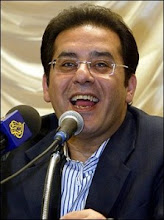
Ayman Nour, the chairman of Egypt's liberal El-Ghad party, talked to Arian Fariborz and Mahmoud Tawfik about his party's perspectives for the future and his plan to run for office again in the next presidential elections

2005 saw his arrest in the wake of the presidential election, on the pretext of electoral manipulation after his liberal El-Ghad party had gained 13 percent of votes.
According to political observers, Nour's sudden release last February was largely down to pressure from the Obama administration. Washington had categorised his arrest as an abuse of justice.
Although the state excluded Ayman Nour from political activities for five years after his release, he had announced he would be standing again in the next presidential elections in 2011.
* * *
According to many journalists and political observers, your release was a consequence of US pressure on the Egyptian government. Do you share this view?
Ayman Nour: The American pressure was certainly a factor, but I simply don't know enough details to either confirm or reject that interpretation. But I'm sure, of course, that many countries appealed on my behalf.
I'm particularly pleased on this point that the German parliament was one of the first to intercede on my behalf, by protesting against my arrest with a declaration to the Inter-Parliamentary Union (IPU).
So how do you explain your release at this particular time?
Nour: That's just what I'm wondering! To be quite honest I don't even know myself why I was released from prison now of all times. I can only assume that the regime may have been trying to polish up its image – albeit rather late, as I only had four months left to serve of my regular prison sentence...

A phoenix rising from the ashes? Ayman Nour viewing the burnt-out El-Ghad party headquarters in Cairo after his release
Nour: The first thing you have to realise is that the liberal opposition wasn't suppressed simply because it was liberal, but to prevent it from offering a "third way" in Egypt – as an alternative to the choice between the authoritarian regime and the Muslim Brotherhood.
I believe we can pick up this idea again now that I've been released. But to do so, we have to be prepared to enter into a hard and long battle.
What alternatives do you want to offer the Egyptians as a "third way"?
Nour: Our main goal is a constitutional state. We want to offer simple, clear and pragmatic solutions and we are prepared to put these into practice immediately – if we get the chance. If the current regime were ready to give up its power at eight o'clock tomorrow morning, we'd be capable of filling the vacuum by five past eight at the latest, and taking over the business of the state in an orderly way.
We have a very clear, detailed political agenda – the longest manifesto an Egyptian party has ever had at over 1200 pages, with solutions suitable for everyday practice that don't scare people off. One thing you have to know is that the Egyptians tend to be rather suspicious of change.

Apart from that, we have a public profile as a "young people's party" for 20 to 30-year-olds. I myself may be 44, much older than that, but that still makes me only half the age of the old guard of over-80-year-olds.
Egyptian opposition parties – and the Muslim Brotherhood is no exception here – are often accused of restricting their demands to political reforms, whereas they have no clear ideas on the economy. Does the same apply to the El-Ghad party?
Nour: We have our very own ideas of a "third way" as Gerhard Schröder, Tony Blair and many others took with their social liberal reform agenda. But that mustn't keep us from our most important objective. Above all we want to fight corruption – and that can't be done via economic approaches, but only by means of political reforms, through checks and balances and by strengthening the judiciary.
What political role can you take on at all for your party in the coming years? After all, you are subject to certain state conditions that make it impossible to exercise political office freely, particularly forbidding you from running for the coming presidential elections.
Nour: Never mind the conditions – we have means of getting around them. And I'd like to say very clearly to all those who interceded for my release: what you should do now is intercede to defend my rights! My arrest was not about me personally, after all, but about curtailing my rights.

I am free again now as an individual but at the same time I can't exercise my rights freely, and the impression is that the state is still following a repressive logic by politically immobilising certain individuals – a negative picture that does huge damage to Egypt's image. I for one do not allow myself to be swayed by the feeling that I'm banned from doing anything, and I will run for office in the coming presidential election. I will simply ignore this type of conditions, as I don't source my legitimacy from the state anyway. I won't wait for the regime to give me its blessings!
How does the future look for your party? There was allegedly a split after your arrest, meaning El-Ghad almost disappeared into obscurity after having been one of the most important parties of the new opposition.
Nour: The party did not split in the actual sense. What happened was that a number of members were expelled for giving in to pressure to support Mubarak in the presidential elections.
The state had tried to use them as a Trojan horse to undermine El-Ghad from within. Two weeks before my release, a judgement was passed in our favour, ruling that the party is allowed to reconstitute itself. It's true that the party almost collapsed during my time in prison, but the reason wasn't a genuine division but this state intervention.
There are some critics, however, who say the El-Ghad party revolves solely around yourself…
Nour: That's not the case at all. I am an important part of the party, that's true, as parties in Egypt are essentially not strong as quasi "impersonal organisations". One of the great faults in Egypt's party politics is just that, that the focus on certain individuals plays such an important role here.
But perhaps that's neither unusual nor a bad thing – there's plenty of evidence that that's the case in many countries all around the globe. The best counter-evidence in any case is the fact that I was in prison for four years but the party still exists and has even renewed itself. There are many new young people in the party leadership now.
But as the party's founder I naturally play a role, as it was me who put the manifesto together, provided ideas and gave them a political form. But that's the way it is in Egypt – people can identify more with individuals than with posters and pamphlets.
Interview: Arian Fariborz and Mahmoud Tawfik
© Qantara.de 2009
Ayman Nour, the chairman of Egypt's liberal El-Ghad party, talked to Arian Fariborz and Mahmoud Tawfik about his party's perspectives for the future and his plan to run for office again in the next presidential elections
; "Ayman Nour (photo: AP)")
Ayman Nour was released from prison in February 2009 after three years – for health reasons, was the official explanation on the part of the judiciary
Ayman Nour is one of the most prominent politicians in Egypt's liberal opposition. Many in the Arab world and the West see Nour, 44, as a liberal standard-bearer and a democratic alternative to Mubarak's authoritarian National Democratic Party and the Islamist opposition in the form of the Muslim Brotherhood.2005 saw his arrest in the wake of the presidential election, on the pretext of electoral manipulation after his liberal El-Ghad party had gained 13 percent of votes.
According to political observers, Nour's sudden release last February was largely down to pressure from the Obama administration. Washington had categorised his arrest as an abuse of justice.
Although the state excluded Ayman Nour from political activities for five years after his release, he had announced he would be standing again in the next presidential elections in 2011.
* * *
According to many journalists and political observers, your release was a consequence of US pressure on the Egyptian government. Do you share this view?
Ayman Nour: The American pressure was certainly a factor, but I simply don't know enough details to either confirm or reject that interpretation. But I'm sure, of course, that many countries appealed on my behalf.
I'm particularly pleased on this point that the German parliament was one of the first to intercede on my behalf, by protesting against my arrest with a declaration to the Inter-Parliamentary Union (IPU).
So how do you explain your release at this particular time?
Nour: That's just what I'm wondering! To be quite honest I don't even know myself why I was released from prison now of all times. I can only assume that the regime may have been trying to polish up its image – albeit rather late, as I only had four months left to serve of my regular prison sentence...
; "photo: AP")
A phoenix rising from the ashes? Ayman Nour viewing the burnt-out El-Ghad party headquarters in Cairo after his release
What is the situation for Egypt's liberal opposition at the moment? Particularly after its defeat in the presidential and parliamentary elections in 2005 and the decline of the extra-parliamentary opposition?
Nour: The first thing you have to realise is that the liberal opposition wasn't suppressed simply because it was liberal, but to prevent it from offering a "third way" in Egypt – as an alternative to the choice between the authoritarian regime and the Muslim Brotherhood.
I believe we can pick up this idea again now that I've been released. But to do so, we have to be prepared to enter into a hard and long battle.
What alternatives do you want to offer the Egyptians as a "third way"?
Nour: Our main goal is a constitutional state. We want to offer simple, clear and pragmatic solutions and we are prepared to put these into practice immediately – if we get the chance. If the current regime were ready to give up its power at eight o'clock tomorrow morning, we'd be capable of filling the vacuum by five past eight at the latest, and taking over the business of the state in an orderly way.
We have a very clear, detailed political agenda – the longest manifesto an Egyptian party has ever had at over 1200 pages, with solutions suitable for everyday practice that don't scare people off. One thing you have to know is that the Egyptians tend to be rather suspicious of change.
; "Gamila Ismail (photo: AP)")
Nour had announced from his prison cell that he would run for office in the next presidential election. His wife and fellow political activist Gamila Ismail passed on his statements beyond the prison walls
Apart from that, we have a public profile as a "young people's party" for 20 to 30-year-olds. I myself may be 44, much older than that, but that still makes me only half the age of the old guard of over-80-year-olds.
Egyptian opposition parties – and the Muslim Brotherhood is no exception here – are often accused of restricting their demands to political reforms, whereas they have no clear ideas on the economy. Does the same apply to the El-Ghad party?
Nour: We have our very own ideas of a "third way" as Gerhard Schröder, Tony Blair and many others took with their social liberal reform agenda. But that mustn't keep us from our most important objective. Above all we want to fight corruption – and that can't be done via economic approaches, but only by means of political reforms, through checks and balances and by strengthening the judiciary.
What political role can you take on at all for your party in the coming years? After all, you are subject to certain state conditions that make it impossible to exercise political office freely, particularly forbidding you from running for the coming presidential elections.
Nour: Never mind the conditions – we have means of getting around them. And I'd like to say very clearly to all those who interceded for my release: what you should do now is intercede to defend my rights! My arrest was not about me personally, after all, but about curtailing my rights.
; "photo: AP")
Solidarity with Ayman Nour: hundreds of supporters demonstrated for the 44-year-old politician's release at the start of the court case against him
I am free again now as an individual but at the same time I can't exercise my rights freely, and the impression is that the state is still following a repressive logic by politically immobilising certain individuals – a negative picture that does huge damage to Egypt's image. I for one do not allow myself to be swayed by the feeling that I'm banned from doing anything, and I will run for office in the coming presidential election. I will simply ignore this type of conditions, as I don't source my legitimacy from the state anyway. I won't wait for the regime to give me its blessings!
How does the future look for your party? There was allegedly a split after your arrest, meaning El-Ghad almost disappeared into obscurity after having been one of the most important parties of the new opposition.
Nour: The party did not split in the actual sense. What happened was that a number of members were expelled for giving in to pressure to support Mubarak in the presidential elections.
The state had tried to use them as a Trojan horse to undermine El-Ghad from within. Two weeks before my release, a judgement was passed in our favour, ruling that the party is allowed to reconstitute itself. It's true that the party almost collapsed during my time in prison, but the reason wasn't a genuine division but this state intervention.
There are some critics, however, who say the El-Ghad party revolves solely around yourself…
Nour: That's not the case at all. I am an important part of the party, that's true, as parties in Egypt are essentially not strong as quasi "impersonal organisations". One of the great faults in Egypt's party politics is just that, that the focus on certain individuals plays such an important role here.
But perhaps that's neither unusual nor a bad thing – there's plenty of evidence that that's the case in many countries all around the globe. The best counter-evidence in any case is the fact that I was in prison for four years but the party still exists and has even renewed itself. There are many new young people in the party leadership now.
But as the party's founder I naturally play a role, as it was me who put the manifesto together, provided ideas and gave them a political form. But that's the way it is in Egypt – people can identify more with individuals than with posters and pamphlets.
Interview: Arian Fariborz and Mahmoud Tawfik
© Qantara.de 2009
Tuesday, March 3, 2009
BBC News - Profile: Ayman Nour

Profile: Ayman Nour
Before his imprisonment, Ayman Nour was a relative newcomer to Egypt's stagnant political scene.
 Ayman Nour's Ghad party was founded in October 2004 |
Mr Nour, a softly-spoken, eloquent former lawyer, formed his political party in October 2004 with a view to contesting presidential elections the following year.
Three months later, prosecutors in Cairo charged him with forging signatures to register Ghad, the party whose name means "tomorrow" in Arabic.
He developed a vocal band of supporters at home and a profile abroad.
And his liberal credentials brought him into direct competition with the youthful wing of the governing party, headed by President Hosni Mubarak's son, Gamal.
They also brought him to the attention of the US, Egypt's biggest ally in the West, which has urged Cairo to reform the political system that has kept President Mubarak in power for more than two decades.
Analysts said the speed with which Mr Nour was stripped of parliamentary immunity and brought to trial suggested the government did not want to under-estimate the political threat he posed.
The government rejected all allegations that the trial was politically motivated.
Jail term
Washington voiced disquiet at Mr Nour's treatment and Cairo delayed his trial, enabling him to take part in the 2005 elections.
The presidential poll saw Mr Nour come a distant second to the incumbent, polling 8% of the vote to Mr Mubarak's 89% - a result Nour alleged was rigged.
In November 2005, Mr Nour also lost his parliamentary seat to a ruling party candidate - another result that he claimed was rigged.
His trial went ahead a month later, delivering a guilty verdict and handing him a five-year jail term.
A co-defendant at the trial complained he had been forced to make a false confession.
Political family
Mr Nour, a diabetic dependent on insulin, spent the week before the verdict in hospital as a result of a hunger strike he had started in protest at his detention.
 Ayman Nour's wife has campaigned for his release |
During an earlier spell in prison, he wrote to US magazine Newsweek, saying the government was suspicious of his reformist inclinations and wanted to discredit him by labelling him as an agent of the US.
"The solidarity shown to me by my supporters, together with sympathy from the international community, have triggered in [the] authorities a strange stubbornness," he wrote.
The 44-year-old comes from a family with a long history of involvement in public life.
Throughout his trial, his wife, Gameela Ismail, led daily protests against the Mubarak administration.
While in prison last year, he is known to have written to Barack Obama as he campaigned for the US presidency. It is understood he urged Mr Obama to help Arab reformers push for democracy in the Middle East.
Meanwhile, during a speech in Egypt in May 2008, President George W Bush pointedly remarked that "too often in the Middle East, politics consisted of one leader in power and the opposition in jail".
Mr Nour's release was unexpected but comes at a time of expectation that the Obama administration could bring a change in diplomatic relations in the region.
Sunday, February 22, 2009
Egypt Frees Challenger To Mubarak
 The Egyptian authorities release Ayman Nour, an opposition politician whose jailing more than three years ago on forgery charges has been the source of tensions between Cairo and Washington.
A young secular politician who mounted an unprecedented challenge against Hosni Mubarak, Egypt's long-serving president during elections in 2005, Nour was jailed on charges that his supporters say were trumped up. Nour himself said that he was being punished for having dared to challenge the president who has ruled since 1981, but the authorities were adamant that he had forged documents to obtain legal status for his Al Ghad party.
In initial remarks after his release, Nour insisted that he would go back to practising his "role as a politician through the Ghad party". It is not clear, however, if that will be possible. He was freed on health grounds and his original five-year sentence bars him from politics for years after release.
"I think the timing of his release is important", said Hesham Kassem, the former deputy leader of Al Ghad under Nour. "They waited until [George W.] Bush was gone and they did it before [Barack] Obama's team had the opportunity to broach the subject. It is not a sign that there will be more political reform in Egypt but it removes a cornerstone of problems with Washington".
Bush administration officials, including Condoleezza Rice, former secretary of state, raised Nour's case repeatedly with their Egyptian counterparts but they were steadfastly rebuffed, with Cairo insisting that it rejected all interference in a domestic matter. Some analysts at the time of Nour's jailing argued that in spite of coming a distant second in the election with about 8 per cent of the vote, the authorities perceived him as a threat because he could try to garner US support by casting himself as a credible alternative to Gamal Mubarak, the president's son who many believe is being groomed to succeed him.
Egypt's first contested presidential election was held at a time when Washington was heralding a campaign to bring democracy to the Middle East and regional governments came under pressure to enact reforms. Washington welcomed the release of the opposition politician. Hillary Clinton, the secretary of state, who held talks with Egypt's FM in Washington last week, is due to visit Cairo early next month for an international donor conference on measures to rebuild Gaza after Israel's invasion.
Saturday, February 21, 2009
What Ayman Nour Told Me
Hope to bring you a post-prison interview with freed Egyptian opposition leader Ayman Nour soon, but here's a look at what he told me on the eve of the 2005 presidential election. His brief statements to journalists this week indicate that he is no less determined to struggle for democracy in Egypt than he was when he ran against Hosni Mubarak--or before serving the past three plus years in jail for, most people believe, standing up against the regime. [I spoke with Nour in his apartment three days before the election, but the Q&A seems to be irretrievable from the time.com archives.]
TIME: In your last speech in Cairo's Tahrir Square, you attacked Mubarak and said what you wanted to say. Is that a sign of a fair election?
NOUR: This has nothing to do with the elections. This has to do with the fact that I have personally overcome the fear of this regime. People are afraid of injustice, of oppression, of the police, of a ruler who can do anything. The indications don't suggest that this will be a fair election. The media is not neutral, the press works for the president 24 hours a day. There were attempts to tarnish [my] reputation. There is no international supervision. But we are attempting to liberate our will, to ensure that there are elections, to ensure there is change. If there are indeed true elections, then I imagine that Hosni Mubarak would get 20-30 percent of the vote.
TIME: Does the election nonetheless represent some positive change?
NOUR: Yes, it is a step. But we cannot be content with that. We want a peaceful sharing of power, not just a shape without content. [Under the monarchy] until 1952, there was a sharing of power. There was a normal process where governments came and went.
TIME: Is Mubarak capable of reforming Egypt from within the regime?
NOUR: It is normal that he will announce some changes and achieve some of them. Even if he makes changes, it will not be true as far as the people are concerned. There will always be loopholes and ways of getting around democracy, and at the end it will not lead to the desired effects.
TIME: Why did you run for president?
NOUR: I don't believe in boycotts, which is an act of apathy.
TIME: Assuming Mubarak is declared the winner, what is your next step?
NOUR: It depends on how he wins. If he wins democratically and with transparency, we will congratulate him. If he wins by fraud, then we will start a new battle in facing an illegitimate regime, from protests to civil disobedience.
TIME: Like what happened recently in the Ukraine where the presidential election was disputed?
NOUR: I am not Ukrainian. I am Egyptian. What is the problem with the Ukrainian example? In my opinion, it was some people trying to change their county. I do not see that they have a committed a crime. The regime is in a mess because there is real anger in society now and this anger will not be diffused unless this regime goes. Without my having to lead demonstrations, these demonstrations will go on.
TIME: Why would Egyptians vote for you?
NOUR: My program expresses the desires of the Egyptian people. There is a link between me and the people.
TIME: Ordinary Egyptians really support you, a liberal?
NOUR: Most Egyptians are in the middle closer to the liberals than to leftists or Islamists.
TIME: What do you expect with your upcoming trial?
NOUR: It has no basis. [Mubarak] is a weird stubborn man and he can do anything. My experience in prison was very important to me, one of injustice, of torture. There is something called torture in the Egyptian jails and something called legal violence. There are many, many people who are innocent. There are some who have been in jail for 15 years without a case against them or trial. My top priority now is to release political prisoners. Before I went to prison, it was constitutional reform.
TIME: Were you tortured?
NOUR: There was violence and there is evidence of the violence. [Nour rolls up his trousers to show bruises on his shins.]
TIME: Are the changes taking place in Egypt irreversible?
NOUR: Egypt's only chance for progress and stability is through real democratic change. It is hard to stop everything, but it is also difficult to continue everything. This is a party, a regime and some individuals that are not prepared for democratic thought
TIME: What explains the changes we are seeing in Egypt and the Arab world?
NOUR: The Arab world is not an island. Democracy is no longer a choice as much as it has become a direction that the whole world is taking. It is not possible that the whole world moves toward democracy and the Arab world moves in the opposite direction. America has an important role in everything that takes place in the Arab world. So when it comes to democracy, why would it not have an important role?
TIME: Did the overthrow of Saddam Hussein help Arab democrats?
NOUR: The American presence in Iraq has greatly harmed Egyptian calls for reform because the Egyptian citizen is saying that we do not want to turn into Iraq. This puts us in an awkward situation when we talk about reform. Saddam Hussein was a dictator, but what exists today is something worse than Saddam. Saddam was an oppressor and a dictator, but there are other dictators that America does not confront. The feelings of the Arabs is that what took place in Iraq has nothing to do with democracy at all.
TIME: But has it turned out that Saddam's fall helped democracy in the region?
NOUR: No doubt that the totalitarian regimes that exist in the Arab world are affected by external pressure more so than local public opinion. There is also no doubt that the declaration of the Greater Middle East Initiative put some kind of pressure on these despotic regimes. This is useful in the process of democracy.
--By Scott MacLeod/Cairo
Friday, February 20, 2009
Egypt Frees a Dissident: A Gesture for Obama? By Scott MacLeod / Cairo

Former Egyptian opposition leader Ayman Nour, right, greets supporters as he arrivesl at his party's headquarters, in Cairo, Egypt, Nouri was unexpectedly released from prison on Wednesday after serving more than three years.
Amr Nabil / AP
___________________________________________________________
Ayman Nour was released from prison on Wednesday, but not even his wife knew that he was coming home. Egyptian authorities jailed the opposition leader in 2006 on charges of electoral fraud, but his imprisonment was widely seen as an effort to silence President Hosni Mubarak's most outspoken critic. Nour's wife Gamila Ismail, who organized "Free Ayman Nour" protests, often despaired that her husband, who suffers from diabetes and other ailments, would remain in prison until the end of his five-year sentence in Cairo's notorious Tora prison. And so, when Nour finally arrived at his apartment as a free man, he didn't have keys and nobody answered the door.
Egypt's attorney general cited "medical reasons" for Nour's release even though Egyptian courts had repeatedly denied Nour's request for a pardon on those grounds. Many see politics behind the decision. Mubarak, 80, wants to improve relations with the new Obama administration, following eight years of cold relations with the Bush administration that were frosty in part due to Nour's imprisonment. "Does Mubarak want to risk another four years of bad relations with the United States? I don't think so," says Hesham Kassem, former deputy leader of Nour's liberal, secular al-Ghad party. "If [Nour's imprisonment] had gone on into the Obama administration, then we were not talking about a Mubarak-Bush problem anymore, but an Egyptian-American problem." (See pictures of people around the world watching Obama's Inauguration.)
Cairo-Washington relations have been chilly over numerous issues, including U.S. handling of the Israeli-Palestinian conflict and the American invasion of Iraq as well as disagreements over domestic reform in Egypt. The U.S. froze negotiations on a free trade agreement with Egypt after Nour was handed his prison sentence; Mubarak, in turn, halted his regular visits to Washington. In contrast, Mubarak appears elated by Obama's decision to plunge immediately into Arab-Israeli peacemaking, and gave a warm welcome last month to George Mitchell when the new U.S. special envoy made Cairo the first stop of his first Middle East tour. Last week in Washington, Egyptian Foreign Minister Ahmed Abul-Gheit, who bitterly sparred with former Secretary of State Condeleezza Rice over Nour, became the first Arab counterpart to meet with Obama's top diplomat, Hillary Clinton.
The freeing of Nour, 44, not even a month after Obama assumed office, is also being seen partly as a final snub of President Bush, whose administration repeatedly and publicly pressured Mubarak to free Nour. "Bush was gone Jan. 20," says Kassem. "They had it out together, and Mubarak had his way. Mubarak came out on top. When is the perfect timing to release Ayman Nour? Within a few weeks of Obama coming in." (See pictures of George W. Bush in the Middle East.)
Yet it's far from certain that Nour's release heralds an easing of the regime's pressure on opponents and critics. Within the last two weeks, for example, Egyptian state security agents reportedly detained and held without charge for four days an Egyptian-German blogger, Philip Rizk, who had protested what he saw as the regime's inadequate support of Paletinians during the recent Gaza conflict with Israel. Human Rights Watch has denounced Egypt's "appalling domestic rights record," citing alleged "torture in police stations, arbitrary arrests of non-violent dissidents and crippling restrictions on civil society organizations." Rights groups have also criticized Egypt's state of emergency, which has remained in force throughout Mubarak's five terms as President.
A better indication of the regime's intentions will be seen in how it deals with Nour following his release. Within hours of tasting freedom, Nour told reporters that he intends to re-enter politics despite the ban imposed on political activity imposed by his conviction. In the 2005 election, Nour was runnerup, winning 7% of the vote to Mubarak's 88%, but government pressure, possibly including fires that damaged al-Ghad's offices, has decimated Nour's party. In its court prosecution of Nour, the government charged that he had forged signatures on documents required for registering al-Ghad to become a political party. Regime critics have speculated that the regime sought to silence Nour because he posed a threat to the prospects of Mubarak's son, Gamal, 45, to become Egypt's next president.
Nour has a long way to go to rebuild his political career. Though he gained respect for defying Mubarak and enduring a prison sentence, few Egyptians see the freed prisoner as a local Nelson Mandela. Many value Mubarak's National Democratic Party for bringing stability, while large numbers of government opponents support the banned Muslim Brotherhood group. Nonetheless, some observers believe that Nour's release may be an indication of greater freedom to come for all opposition parties. "This is a positive sign," says Hala Mustafa, editor of the Egyptian journal Democracy. "In the end, the regime showed a relative tolerance toward one of its fierce opponents. It is a sign that maybe the regime is willing to compromise. Before, the regime [used to shut] the door for any compromise. Political openness is a must, and it is very difficult to turn back."
Thursday, February 19, 2009
FP - Ayman Nour's release - symbol and substance
Foreign Policy Marc Lynch
Thu, 02/19/2009 - 3:28am
Thu, 02/19/2009 - 3:28am

Ayman Nour, leader of Egypt's al-Ghad Party, has finally been released from prison after being arrested on what most people consider trumped-up charges following his challenge to Hosni Mubarak in the 2005 presidential election. (Egypt's al-Masry al-Youm has extensive coverage in Arabic here.) Nour's imprisonment was always outrageous. The Washington Post editorial page and many democracy activists framed his detention as the single most potent symbol of Mubarak's refusal of American pressures on democracy issues. As with the persecution of the civil society activist Saad Eddin Ibrahim, the imprisonment of Nour sent a powerful message to Americans and to Egyptians alike: the U.S. would not seriously press democratic reform issues and could not even protect its friends.
Why now? Most Egyptian coverage ties it directly to Mubarak's desire to improve relations with Washington by removing an ongoing irritant and offering a fresh start with the Obama administration. Comments a savvy Cairo-based friend:
it is not just an overture to Obama that Mubarak wants to change the negative dynamic in the US-Egypt relationship. It is a clear message that says, “look: Bush tried for four years to pressure me. But I do things on my own timing and any pressure is counterproductive.” The message is....that if the same US approach to Egypt continues, it will only generate headaches. It was necessary to release Nour to improve the bilateral relationship, since after the 2006 Democratic takeover of Congress the Ayman Nour case became a congressional issue beyond the control of the administration.... Over the last two years Congress has put unprecedented (even if still relatively mild) pressure on Egypt by withholding $100 million in military aid (but giving Condoleeza Rice the right to waiver the withholding, which she did twice). Now Congress will not have Ayman Nour to rally support around this, and the cautious State and DoD approach to the Egyptian relationship (which is very strong in military, intelligence, and a few issues aside diplomatic terms) could very well prevail - especially as we’re seeing a new Egyptian crackdown on the tunnels to Gaza, the other big issue for Congress.
I fear that he's right about the politics of this. Nour's imprisonment was an important symbolic issue in the U.S.-Egyptian relationship. But his detention was never the only or even the most significant aspect of the regime's crackdown on political opposition, which included the arrest of thousands of Muslim Brotherhood members, heavy pressures on the press and the judiciary, and much more. His release responds to the symbolic issue, but not to the substantive issue. I'm very happy for Nour and his family, and for the end of the farcical case against him. His release does not come close to reversing the authoritarian trends in Egypt I hope that this does not become an excuse to begin ignoring democratic reform, human rights and public freedoms issues in Egypt and the rest of the Arab world.
Subscribe to:
Posts (Atom)

 Posts
Posts


