Showing posts with label barack obama. Show all posts

Thursday, January 28, 2010

Ayman Nour: One year since Obama’s inauguration

Barack Hussein Obama has made history since he became the first black person to win a seat in the U.S. Senate and made history for the second time when he won the Democratic Party’s nomination for the Presidential election. He has since made more history when he scored victory in the elections, becoming the first black American President in history.

But making history is different than entering this space and formulating the wide consequences resulted from this victory, as before Obama, American President James Buchanon also made history as the first and the only president to remain a lifelong bachelor, as well as President Martin Van Buren, considering English was not his mother tongue.

Obama’s real problem from the moment of his inauguration last January 20, 2009, is that he began a new phase, which is greater than making history; a difficult stage of the competition, much harder than the old Republican rivals or even his stubborn Democratic rival – and his current Secretary of State – Hilary Clinton, or with his predecessor: Bush.

Obama’s rival after one year in office is himself. He is the only person he cannot defeat, as Obama, the current President of the United States, is a rival to Obama – who was described by the dreamy minds as “the savior”; minds that painted the image of Obama and put it in the background of the image. They drew the descriptions of Moses splitting the sea and Joshua who stopped the sun, and Christ, who revives the dead! And certainly, Obama is not any of these prophets.

Although America is part of the world – and not the whole world – Obama has become a universal dream, especially considering the other was a universal nightmare. Strangely enough, and dangerous, is the conflicting expectations about Obama from related parties whose positions have conflicting interests and can only be unified by hope and ambition in this “magical” image. They have planted in their imagination of Barack Obama, who has to find an impossible approach to fulfill this imagination.

Obama’s problem, who had plenty of sympathy in Egypt and many Arab countries is doubled due to historical considerations and past experience with former presidents of the US, who at the beginning were greeted by them [Arabs], then they called on for their impeachment.

At the end of World War I President Woodrow Wilson made the 12 principles his priority. The last of these principles was the right of every nation to self-determination and Egypt’s Revolution in 1919 was against the British occupation of Egypt, demanding the right to self-determination, and the demonstrators shouted slogans honoring Saad Zaghloul (revolutionary leader) and Mr. Wilson.

In Syria, demonstrations demanded an American Mandate in the hope of the promise of Wilson.

Suddenly, President Wilson recognized the British protégé in Egypt, and demonstrations were organized to call for his impeachment, after it was organized in the beginning to cheer his life! The same thing happened in Syria, when he recognized the French Mandate of Syria and Lebanon!

When President Roosevelt declared the Four Freedoms, the motivation of Arabs turned from Hitler to America, then Truman succeeded Roosevelt, to recognize Israel, breaking Roosevelt’s promises during World War II, causing a shock to the Arabs and a shift in their feelings as they were frustrated.

This happened in 1956, when America gained its popularity back, for its stance against the tripartite aggression on Egypt, the popularity that has soon faded away because of America’s rejection in financing the construction of the High Dam.

When the Egyptian-American relations were restored, the Egyptian people welcomed President Nixon in an unprecedented event, then Carter remained to hold a special place in the hearts of Egyptians until America’s constant bias with Israel, which has been the cause of the deterioration of the Egyptian-American Rapprochement for years.

Obama’s real rival is the image of Obama himself, people who chant for his favor may in fact chant and shout against him. Only if he decided to read history well to be able to make it again after one year has already been lost.

BM

Tuesday, December 1, 2009

Amr Hamzawy : Egypt's Opposition Misled by Fixation with Mubarak’s Son

Amr Hamzawy
The National
,
1 December 2009
Tuesday


Political opposition in Egypt has been stirred by a recent campaign against Gamal Mubarak, the son of the president Hosni Mubarak, becoming Egypt’s new president in 2011. In particular, Ayman Nour, a key opposition figure and a presidential candidate in 2005, has mobilised a wide spectrum of political groups to present a united front in upcoming legislative and presidential elections in 2010 and 2011, respectively.

Upon closer look, however, Mr Nour’s rallying cry is troubling. In gearing up for elections, the opposition has demonstrated a near complete inability to prioritise the issues essential to its political future, and has squandered its efforts trying to prevent Gamal Mubarak’s succession.

Egypt’s opposition groups, including both legal parties and the Muslim Brotherhood, have been in disarray since the regime introduced stifling constitutional amendments in 2007. These measures limit the oversight powers of the judiciary in elections, fail to set term limits on the presidential mandate, and ban religiously affiliated political activities.

While opposition forces have been exclusively focused on the one issue – Gamal Mubarak’s possible ascendancy – the Egyptian regime has been carefully creating an environment which will sustain its rule. The ruling elite is no newcomer to this game. They have consistently manipulated the political process by preventing the opposition from registering candidates in elections, obstructing the campaign process, and fomenting violence on election day.

In contrast to the ruling elite’s clear direction, the opposition has no guiding compass and is left wandering through the challenges posed by the political agenda in Egypt. Their failure cannot be solely attributed to the regime’s repressive measures – a great part of the responsibility belongs to the opposition parties themselves.

Since 2005, parties including the liberal Wafd party, Ayman Nour’s Ghad party and the Democratic Front, as well as the Muslim Brotherhood (which is banned but has de facto representation in parliament) have all failed in two major tasks: formulating an elections platform and clear vision for Egypt’s political development, and applying sufficient pressure on the regime for political and economic reform.

Despite its acquisition of an unprecedented 88 parliamentary seats in the 2005 elections, the Muslim Brotherhood has yet to push for serious reform of the political system. Several concerns also remain unresolved in Egyptian and international public opinion regarding the Brotherhood’s positions on equal citizenship rights for Copts and Muslims, women’s participation in politics and freedom of expression.

The opposition parties urgently need to tackle several issues to position themselves for the 2010 and 2011 elections. First, groups have to clarify their stance on the question of domestic and international monitoring of elections. Especially with regard to the latter, the opposition remains divided.

Second, they have to prioritise calls for the abolition of the emergency law in effect in Egypt since 1981. Finally, parties should be more attuned to new political opportunities, expanding grassroots activities to capitalise on growing protest sentiment among wide segments of the population who are suffering from deteriorating social and economic conditions.

With Egypt’s declining GDP growth, the unemployment rate reaching 10.3 per cent, a poverty rate of 20 per cent, and an alarming level of debt – 76 per cent of GDP – citizens are in desperate need of competent political parties.

The implications of the upcoming elections will, of course, extend beyond Egypt’s borders. In light of the regime’s recent political manoeuvring and the opposition’s stagnation, the 2010 and 2011 elections in Egypt will test the Obama administration’s stance on democracy in the Middle East. Its position will either demonstrate a commitment to the incumbent regime of the Mubaraks as a strategic ally in a turbulent region regardless of its domestic behaviour, or signal pressure to create better conditions for democratic reform and political competition in Egypt.

The first signals from the Obama administration are not encouraging; the administration has so far put the promotion of democracy low on its list of priorities. Washington has only raised the issue of reform in the context of concessions that Mr Mubarak has already made. The Obama administration has also cut aid to numerous actors and organisations in civil society.

The campaign organised by Mr Nour is a step in the right direction for the opposition in Egypt, but he and other activists would be wise to adjust their agenda. Only by letting go of their obsession with Gamal Mubarak’s succession and addressing other issues at the core of the upcoming elections can opposition groups counter the regime’s hegemony.

Wednesday, February 18, 2009

Interview with Ayman Nour on Egypt's Elections

Interviewee:
Ayman Nour
Interviewer:
Sharon Otterman

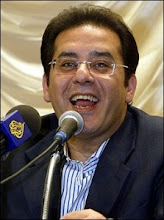
Egyptian Presidential Candidate Ayman Nour

Editor's Note: On February 18, 2009, Egypt's government released Ayman Nour, the most prominent of Egypt's jailed pro-democracy dissidents, after for than three years in prison in what was widely regarded as an effort to improve relations with the new administration of President Barack Obama. Nour told the AP that he had no warning about his release, nor could he explain the timing. "Why they did this is unknown," the AP quoted him as saying.

Nour's case has been a staple of U.S.-Egyptian relations ever since his conviction in December 2005 on charges of forging signatures on behalf of his party's efforts to contend in the 2005 presidential elections. He was arrested before the election, but the arrest drew strong protests from U.S. Secretary of State Condoleezza Rice, and Nour was released and allowed to stand as presidential candidate of Al-Ghad (Tomorrow), a secular, liberal party opposed to the longtime rule of President Hosni Mubarak.

Official results of the September 2005 voting gave Mubarak 88 percent of the vote, but the election was strongly criticized by international observers. A 2006 report from the nonpartisan Congressional Research Service noted the elections were widely regarded as fraudulent. Still, even with official corruption, candidates affiliated with the banned Muslim Brotherhood won over 20 percent of the vote, and Nour's "Tomorrow" party won another seven percent.

Shortly before the election -- and just days before he was rearrested -- Nour spoke at his home in Cairo with Sharon Otterman of CFR.org about his hopes for democracy in Egypt and the wider Middle East:

You’ve just wrapped up your presidential campaign with an enthusiastic rally here inCairo. Looking back, what do feel you’ve been able to accomplish these past weeks?

The campaign was very short, only eighteen days. We accomplished part of our mission to communicate with a huge number people from various sectors of Egyptian society. We had twenty-three rallies and visited eleven governorates. We were the most attractive campaign to the Egyptian people, obviously, with huge numbers of people coming to our events. So we feel we accomplished a part of our goals. When the results are out, they will demonstrate whether the election was free and fair enough to reflect the support we know we have from the people.

What is your best guess as to the final results?

If the elections were free and fair, I believe that President Mubarak would not get a large number of votes. Wide sections of the Egyptian community see that twenty-four years [of Mubarak rule] is a very long length of time to go without results. But if the elections are rigged, anything is possible.

Will the election be rigged?

The election will be neither free nor fair.

Many aspects of this election have already been criticized by domestic and international observers. Despite this and your own concerns, do you think this election represents an important step forward for Egypt?

No doubt, it’s a step, but it’s a limited step. There has already been a democratic system in Egypt, from 1923 to 1952. It is not enough for Egypt to have this election, with all of its flaws. There must be more reform.

When do you believe Egypt could emerge as a fully functioning democracy?

It could happen tomorrow in Egypt. Egypt is ready.

A number of opposition groups, including the Kifaya (Enough!) movement, are calling on Egyptians to boycott the election. They believe it is useless to participate because the election will not be fair. Do you think their stance is counterproductive?

It is their right to choose this option, and I respect their point of view. But I believe that boycotting is not the appropriate answer in response to a ruler determined to stay in power no matter what. I believe we need to participate to bring change.

What role do you think the Muslim Brotherhood play in this election? They have called on their many followers to vote, but have not specified a candidate.

Until now, their stance is still unclear, and I can’t speculate on it. As far as my campaign is concerned, however, it was not my goal to win the support of the Brotherhood or any other group. My goal is to gain constitutional rights for everyone, and to make sure all parties can run for office without restrictions. For their part, the members of the Muslim Brotherhood should participate in this election as any other Egyptian citizens.

Did you seek the endorsement of the Muslim Brotherhood in the course of this campaign?

I went to tell them about my election program. My goal was not more than that, to tell them about my program, to tell them as much as possible about everything I will do if elected. It is the same I would do for anyone else.

Your next challenge after this election will be facing the courts September 25 in the forgery case against you. Do you think the charges could be dismissed?

It is a fabricated case—I know that, and everyone knows that. I believe in justice, and I believe in Egypt’s judges. So I hope for the best.


http://www.cfr.org/publication/8829/interview_with_ayman_nour_on_egypts_elections.html

Wednesday, August 13, 2008

From Ayman Nour to Obama

Ayman Nour to Obama: I am Imprisoned in Egypt for the Charge of Threatening the Dream of the President's Successor


Former Ghad Party President Dr. Ayman Nour sent a message to Barack Obama, the democratic nominee to the American presidential elections.

Nour started his message by introducing himself from the oldest prison in Egypt and the Middle East. He was sentenced to five years in prison for forging powers of attorney required to establish Al-Ghad Party; a charge that he described as 'naïve'.

He said that the real charge is that he was a competitor to President Mubarak in last year's presidential elections. He threatened his dream to bequeath the presidential post to his son.

Nour indicated that a number of US officials have pressurized the Egyptian regime to release him yet to no avail. He stressed that the regime in Egypt is accustomed to such moral pressures and proved its ability to swap them with the regional interests, utilizing the seasonal nature of such pressures.

Nour expressed his support to Obama's stance as regards the situation in Iraq and the necessity to withdraw the American forces from there.

He added that Obama's references during his election tours about the risks of depending on dictator regimes do not correspond with the aspirations of Arab liberals.

He expressed his wish, being one of the generation of Obama, that January 20, 2009 be the date that the new American President will assume his post and that it would be a celebration for freedom and democracy in the whole world, repairing what was spoiled by supporting despotic rulers under the claim of preserving interests.

Wednesday, August 1, 2007

Campaign like Egypt

WOMEN'S LENS - Un coup d'oeil féminin

In the U.S., we are about 16 months away from our presidential elections, but they have already started campaigning...oh what fatigue it's going to be until it's over.

Unless we just do it Egypt's way. Practical, swift, costs little money but for the incarceration of the opposition. In 2005, when Ayman Nour dared to run against Mubarak for the presidency, he was jailed. Ok, it wasn't that simple, but they came up with some story about his having forged signatures on documents for his Al-Ghad Party. An absolutely great stunt! NO TV debates, no embarrassing UTube/CNN moments, not having to spend millions of dollars showing your face here and there. Conserving energy..Al Gore would be proud.


Mr. Nour apparently has a heart condition; geez people will just say anything these days to get out of jail, won't they?? His lawyer has made attempts to get him released (oh, add diabetes to that list of ailments, and possible police brutality), but to no avail.

Word has reached Washington who is positively ATWITTER about the situation, and is urging Nour's release. Why all this publicity, when Condy is going to Egypt bearing presents? She will be in Cairo to see the democratic process at work. How much criticism can Mubarak take?

The US just announced its Santa Claus tour of its Middle East allies the only way it knows how. But the purse strings have already been curtailed once against Egypt due to its unorthodox methods of quieting bloggers. What will they do now to help Nour? Did I mention that he had heart surgery while in jail?