Saturday, March 12, 2005

The Washington Post : Egypt Holds Candidate Despite Vow Of Reform

Egypt Holds Candidate Despite Vow Of Reform

By Daniel Williams
Washington Post Foreign Service
Saturday, March 12, 2005; Page A01

CAIRO, March 11 -- Two weeks after President Hosni Mubarak announced that Egypt would hold multi-candidate presidential elections, the first politician to say he would run was sitting in jail.

Inmate No. 1387 at Tora jail is Ayman Nour, a lawyer and member of parliament. His normal residence is a penthouse apartment decorated with bronze French Empire-style knickknacks, gigantic gilt mirrors and a plaster image of Marilyn Monroe with her skirt blowing upward.


Ayman Nour, right, a candidate for president of Egypt, is surrounded by police at a court appearance in late January. (Nasser Nouri -- AP)

Nour, whose small Tomorrow Party was legalized in October and holds six seats in Egypt's 454-member parliament, is only one of thousands of Egyptian political figures jailed during decades of authoritarian rule. Yet since his arrest Jan. 29 on suspicion of forging official documents, his fate has become intertwined with the destiny of political change in Egypt.

State Department and European Union officials, all pressing for democratic reform, have complained about his detention. Pro-government reformists who dispute Nour on the details and pace of change nonetheless express concern that his internment will discredit their own efforts. Government officials reject complaints that Nour is being persecuted and insist that his case is a domestic legal question and not the business of outsiders. And the people of Cairo, legendarily indifferent to politics, are debating the justice of his case.

The extent of Nour's popularity is difficult to gauge -- there have been no polls on prospective presidential candidates. Mustafa Kamel Sayed, a political science professor at Cairo University, said recently that Nour might be able to win 20 or even 30 percent of the vote in a race against Mubarak.

Regardless, his arrest exposes the uncertainty of a government that feels itself under siege, observers say. The Bush administration has singled out Egypt as overripe for reform. Political demonstrators are becoming increasingly loud and anti-Mubarak, even though they are still far outnumbered by phalanxes of police officers. The government appears reluctant to risk letting an independent politician run free.

"Fear makes for political mistakes. Everything is up in the air, and you will find cases like Nour's," said Hala Mustafa, editor in chief of the al-Ahram Democracy Review, part of a government-backed reform research group. She declined to comment on the merits of Nour's case.

Aida Seif Dawla, a longtime left-wing activist and human rights campaigner, said it was "an extremely weak moment for the government. It's not just Nour. Far from it. They pick up people handing out leaflets at the book fair. The government wants to give the appearance of making a new start, but it's not going to take any risks."

At first blush, Nour seems an unlikely political martyr. He campaigned for competitive presidential elections, but he is far from a revolutionary. In an interview two days before his arrest, he predicted that whatever the conditions, this year's election would simply extend Mubarak's 24-year reign for another six years. In October, he told a reporter, "We love and appreciate President Mubarak, but we love this nation as well and would like to develop it like other countries."

Said Gamila Ismail, Nour's wife and political aide: "Ayman was the most surprised of all about his arrest. He never gave it a second thought."

Nour had taken positions recently, however, that were daring by the standards of Egyptian political discourse. On the eve of a meeting between Egypt's ruling National Democratic Party and opposition groups, he sent a letter demanding that Mubarak attend the conference; otherwise, Nour said he would not. This assertion of equality irritated the president, party insiders said. Nour was jailed three days before the conference opened.

Nour's associates say he also had told them that he thought Mubarak's wife, Suzanne, was pressing her husband to arrange for their son Gamal to succeed him.

That kind of talk is risky, despite an easing of repression that has brought life to a political scene still restricted by quarter-century-old emergency laws. Security agents telephone foreign correspondents' Egyptian assistants to ask whom they are talking to and about what. This week, when the Tomorrow Party issued the first edition of its newspaper -- in which Nour announced his candidacy -- police held up distribution for a day to review the articles.

"Nour's problem is that he has been acting in excess of his real political influence," said Ali Abdel Fattah, an official of the Muslim Brotherhood. The Brotherhood, an Islamic-based organization once associated with violence in Egypt, is banned from politics but is regarded as the country's biggest opposition force.

On the morning of Jan. 29, Nour received notification that his immunity from prosecution as a member of parliament was being lifted. He rushed to the People's Assembly building and was told that police were investigating forgeries among documents he submitted last year to the government in his bid to have his party legalized. When legislators -- 85 percent of whom belong to Mubarak's party -- voted to expose Nour to prosecution, he responded heatedly: "I put myself in the hands of God and the Egyptian people. All know I am innocent." He turned to the head of parliament and labeled him "unjust." The legislature later struck the words from the record.

A few minutes after his arrest, police searched his apartment, while his wife and two children were present. The 15 agents went through computer disks, inspected his medicine cabinet and even took samples of pipe tobacco, Ismail said

Prosecutors and a court have until Tuesday to decide whether to press charges or release him. Late Thursday, prosecutors announced the release of one of Nour's associates, Ayman Barakat, who also was detained on forgery charges.

In effect, the stage is set for a test of Egypt's reform efforts and its relations with the United States, which provides the country $2 billion in annual aid. On Jan. 31, State Department spokesman Richard A. Boucher said, "The arrest, in our minds, raises questions about the outlook for democratic process in Egypt." Two weeks later, Secretary of State Condoleeza Rice told Foreign Minister Ahmed Aboul Gheit about the Bush administration's "strong concerns."

Although Egyptian officials are reluctant to publicly comment on the case, they insist that the allegations are valid. "The issue of Ayman Nour is an issue related to criminal accusations," Aboul Gheit said in an interview. "There are no political considerations. It remains with the attorney general to decide, without interference of outside powers."

The case hinges on the activities of a Tomorrow Party member who told police he forged numerous documents with signatures of people purporting to back the party's legalization bid -- all at Nour's request. Only 50 such papers are needed, but Nour provided more than 2,000. Prosecutors contend that more than 1,000 were forgeries.

Nour's attorney, Amir Salem, a human rights activist who has been jailed nine times, said Nour forged no documents and the informer was a plant. "I've never seen a frame-up prepared like this," he said.

Nour, 40, has been involved in politics since high school. His father was a pioneer member of the Wafd Party, a group that dates from the 1920s. "I remember seeing him 21 years ago get out of his late-model Mercedes and go right into student meetings to play politics," Mazen Mustafa, a Tomorrow Party member, said of the younger Nour. "He was different from others. He liked to let others speak."

Fifteen years ago, Nour published a book presenting liberalism as an alternative to Islamic politics. In 1994, he won a seat in parliament representing Cairo's Bab ash-Shariya district, a teeming neighborhood of butchers and farm supply shops. He broke with Wafd five years ago because he came to believe the party was too tame, ran again in Bab ash-Shariya and won. "He is ambitious, that is for sure," said Wael Nawara, another Tomorrow member.

In parliament, Nour carried out investigations of everything from bread prices to torture, endearing himself to his impoverished constituency, supporters say. He operated a charity office and community center in Bab ash-Shariya that provided medical advice, a hall for free weddings and school lessons for children.

On Wednesday, at a teahouse in Bab ash-Shariya, a laborer said Nour was guilty only of "trying to be president and be democratic. . . . He cares about this area. He paved sidewalks and planted trees."

A critic arrived and began to sing the praises of Mubarak: "He should stay in office forever. Ayman Nour must have done something wrong or he wouldn't be in jail."

"This is democracy?" countered the laborer. "Anyone who speaks up can end up in the same trouble."

That night, Nour's supporters held a candlelight vigil to demand his release. About 50 demonstrators and at least three times as many police officers showed up.

Reuters : Egyptian opposition leader Ayman Nour was ordered released on bail from prison

Egyptian opposition leader Ayman Nour was ordered released on bail from prison, a judicial official said Saturday, a detention that had caused tension with Washington.


Egypt released on bail on Saturday Ayman Nour, an opposition leader who has been in detention since the end of January, the public prosecutor said.

Maher Abdel-Wahed told a news conference Nour and five others had been freed on bail of 10,000 Egyptian pounds ($1,724) each in connection with the case involving allegations that Nour's Ghad (Tomorrow) party forged documents when it applied for recognition last year.

The prosecutor said the investigation was continuing.

The party has dismissed the allegations as politically motivated fabrications.
"They are in the process of getting him (Nour) out of the court room," Ghad party member Mazen Mostafa told Reuters after the announcement, adding that some procedural issues had to be completed before Nour could walk out.

Party members were preparing a greeting party later on Saturday at Ghad's offices in central Cairo, Mostafa said.

A close associate of Nour left jail on Friday after more than five weeks of detention for questioning about allegations against Nour.

Nour has been a vocal advocate of constitutional change and welcomed President Hosni Mubarak's proposal last month to change the constitution to allow multi-candidate elections to replace the existing single-candidate referendum.

He announced his intention to run for the presidency in the first edition of the party's newspaper that came out this week.

The proposal to amend the constitution is currently working its way through parliament.

The United States has said it has "very strong concerns" about the Nour case but Nour has said he has not asked for and does not want any foreign intervention.

Tuesday, March 8, 2005

Jailed Nour tests Egypt's democracy

By Malcolm Brabant
BBC News, Cairo

Ayman Nour
Ayman Nour has been held in an Egyptian jail since January
Supporters of Egypt's newest political party are calling on the government to free their leader, Ayman Nour, who is currently being detained on what they claim are trumped up charges.

Party of Tomorrow leader Mr Nour is regarded as a potential presidential candidate.

But his continued imprisonment is damaging his chances of running against President Hosni Mubarak later in 2005.

Mr Nour has been held in custody since the end of January.

He was arrested on allegations that he forged documents used to secure legal status for his Party of Tomorrow which was formed last autumn.

His wife Gamila Ismail believes the Egyptian authorities are trying to frame him.

Accusing him of forging petitions, this is just crazy, it is nonsense. He didn't have any reason to do this
Gamila Ismail, Nour's wife

"If these allegations stick, this is going to end his political career," she says.

Ms Ismail says that when security officers checked their penthouse in the expensive district of Zamalek, they were particularly interested in his tobacco boxes and medication.

"The lawyers explained to me later on that they were trying to find something illegal such as drugs."

International concern

The United States, which is trying to force the Arab world to become more democratic, has expressed deep concern about Mr Nour's continued detention.

Secretary of State Condoleezza Rice has told her Egyptian counterpart that she hopes "the issue is resolved soon".

Egyptian officials resent what they perceive as American interference in what they insist is a legal, not political matter.

Ayman Nour supporters holding a protest in Cairo
Nour supporters' main demand is greater democracy

Ibrahim Rafeir, a member of parliament with the ruling National Democratic Party says: "The case of Ayman Nour is in the hands of the Egyptian judicial system and the judicial system is just.

"Each and every one of us resists any foreign interference."

Last October the Nours and their supporters were celebrating the inauguration of their liberal, secular party.

Stagnation

The Party of Tomorrow's most important demand is for greater democracy.

Ayman Nour told me in October: "We love and appreciate President Mubarak, but we love this nation as well and would like it to develop like other countries."

Ayman Nour is really a very clever political animal. He might get 20% or 30% of the vote
Mustafa Kamel al-Sayed
Political scientist

Following a wave of angry demonstrations by pro-democracy campaigners defying a ban on street protests, as well as increasing pressure from the US, Mr Mubarak has agreed to allow challengers to contest the presidential election.

But 25 years of political stagnation have left the Egyptian opposition struggling to find a candidate of sufficient stature and charisma to stand against Mr Mubarak.

Some analysts believe that Ayman Nour, a former journalist, lawyer and publisher, possesses the necessary profile to make substantial inroads against the president.

Mustafa Kamel al-Sayed, a Professor of Political Science at Cairo University, says: "Ayman Nour is really a very clever political animal.

"He might get 20% or 30% of the vote. But it is this perception that he might be capable of getting a large number of votes that would get the government to try to deprive him of this opportunity of running as a presidential candidate."

Discredited

Rumours surface daily in Cairo that Mr Nour is going to be released soon.

Ayman Nour campaigner makes V-sign from a Cairo balcony
Could this signal the end of Egypt's 25 years of political stagnation?

And that he is being visited in jail by senior officials who keep demanding to know if he is going to declare his intention to run.

Ms Ibrahim fears that even if her husband is freed, he will be charged so that a trial hangs over his head and discredits him at election time.

"Accusing him of forging petitions, this is just crazy, it is nonsense. He didn't have any reason to do this," she says.

The case of Ayman Nour is being seen by many analysts as a true test of President Mubarak's commitment to greater democracy.

The challenge for Egypt is to protect its stability, while easing what Mr Mubarak's critics regard as some of the country's more authoritarian tendencies.


http://news.bbc.co.uk/2/hi/4328353.stm

BBC News - Jailed Nour tests Egypt's democracy


By Malcolm Brabant


Ayman Nour
Ayman Nour has been held in an Egyptian jail since January

Supporters of Egypt's newest political party are calling on the government to free their leader, Ayman Nour, who is currently being detained on what they claim are trumped up charges.

Party of Tomorrow leader Mr Nour is regarded as a potential presidential candidate.

But his continued imprisonment is damaging his chances of running against President Hosni Mubarak later in 2005.

Mr Nour has been held in custody since the end of January.

He was arrested on allegations that he forged documents used to secure legal status for his Party of Tomorrow which was formed last autumn.

His wife Gamila Ismail believes the Egyptian authorities are trying to frame him.

Accusing him of forging petitions, this is just crazy, it is nonsense. He didn't have any reason to do this
Gamila Ismail, Nour's wife
"If these allegations stick, this is going to end his political career," she says.

Ms Ismail says that when security officers checked their penthouse in the expensive district of Zamalek, they were particularly interested in his tobacco boxes and medication.

"The lawyers explained to me later on that they were trying to find something illegal such as drugs."

International concern

The United States, which is trying to force the Arab world to become more democratic, has expressed deep concern about Mr Nour's continued detention.

Secretary of State Condoleezza Rice has told her Egyptian counterpart that she hopes "the issue is resolved soon".

Egyptian officials resent what they perceive as American interference in what they insist is a legal, not political matter.

Ayman Nour supporters holding a protest in Cairo
Nour supporters' main demand is greater democracy
Ibrahim Rafeir, a member of parliament with the ruling National Democratic Party says: "The case of Ayman Nour is in the hands of the Egyptian judicial system and the judicial system is just.

"Each and every one of us resists any foreign interference."

Last October the Nours and their supporters were celebrating the inauguration of their liberal, secular party.

Stagnation

The Party of Tomorrow's most important demand is for greater democracy.


Ayman Nour told me in October: "We love and appreciate President Mubarak, but we love this nation as well and would like it to develop like other countries."

Ayman Nour is really a very clever political animal. He might get 20% or 30% of the vote
Mustafa Kamel al-Sayed
Political scientist

Following a wave of angry demonstrations by pro-democracy campaigners defying a ban on street protests, as well as increasing pressure from the US, Mr Mubarak has agreed to allow challengers to contest the presidential election.

But 25 years of political stagnation have left the Egyptian opposition struggling to find a candidate of sufficient stature and charisma to stand against Mr Mubarak.

Some analysts believe that Ayman Nour, a former journalist, lawyer and publisher, possesses the necessary profile to make substantial inroads against the president.

Mustafa Kamel al-Sayed, a Professor of Political Science at Cairo University, says: "Ayman Nour is really a very clever political animal.

"He might get 20% or 30% of the vote. But it is this perception that he might be capable of getting a large number of votes that would get the government to try to deprive him of this opportunity of running as a presidential candidate."

Discredited

Rumours surface daily in Cairo that Mr Nour is going to be released soon.

Ayman Nour campaigner makes V-sign from a Cairo balcony
Could this signal the end of Egypt's 25 years of political stagnation?
And that he is being visited in jail by senior officials who keep demanding to know if he is going to declare his intention to run.

Ms Ibrahim fears that even if her husband is freed, he will be charged so that a trial hangs over his head and discredits him at election time.

"Accusing him of forging petitions, this is just crazy, it is nonsense. He didn't have any reason to do this," she says.

The case of Ayman Nour is being seen by many analysts as a true test of President Mubarak's commitment to greater democracy.

The challenge for Egypt is to protect its stability, while easing what Mr Mubarak's critics regard as some of the country's more authoritarian tendencies.

Friday, February 11, 2005

"TOMORROW" IN LIMBO

"TOMORROW" IN LIMBO


Al-Ahram Weekly

The future looks far less certain for Al-Ghad Party in light of its leader Ayman Nour's continuing detention, reports Mona El-Nahhas

"Don't allow them to destroy our dream," jailed Al-Ghad (Tomorrow) Party Chairman Ayman Nour wrote his colleagues from his Tora prison cell. "Keep on the lookout for any attempts to split the party. Stand as one, because the situation is very critical."

Nour, a prominent opposition member of parliament, was arrested on 29 January on charges of forging 1433 of his party's membership applications, which were used during the official registering of the party last October.

Al-Ghad leaders, shocked by the sudden turn of events, said the case was politically motivated. "They imprisoned him as an example of [what could happen] to any other opposing voice that dares to call for reform," said Wael Nawara, the party chairman's assistant. "The ruling National Democratic Party (NDP) does not allow any other party to threaten it." Nawara said the NDP -- worried about Al-Ghad's potential to be a serious rival -- "started to fabricate a case to get rid of the party".

In an interview at Nour's Zamalek residence, the party chairman's wife, TV broadcaster Gamila Ismail, who also serves as Al-Ghad's assistant secretary-general, told Al-Ahram Weekly that Nour's case was "politically motivated", and that Nour himself was "afraid he would remain in detention until parliamentary elections take place".

Ismail said she was also worried about plans aimed at weakening and splitting the party. She said "security bodies" had made "contact with leading founders [to] convince them to run in elections for Nour's post. They also planted seeds of strife, by infiltrating the party ranks."
Party members have indeed begun to criticise the way the party's elections were staged.

"Leading posts were seized by businessmen and family acquaintances," said a party member who spoke on condition of anonymity. "People with extensive political experience were excluded."

The US's reaction to Nour's arrest has also rankled the party. The US State Department issued a statement "deploring [Nour's] arrest and calling on the government to re-examine the issue". A Washington Post editorial described him as being "the sort of future leader capable of winning broad support". According to the newspaper, it was "that, and not forgery, [which] landed him in jail".

Several leading party members reacted to the US stance by publicly voicing their rejection of any external interference in Nour's case. Forty party members from Al-Qalyubiya were provoked into submitting their resignations last Thursday. In a statement bearing their signatures, they criticised "Nour's dealings with the US at a time when he [himself] harshly criticised anyone who deals with the US".

One of the party's senior founders, Sherif Esmat Abdel-Meguid, son of the former Arab League secretary-general, also submitted his resignation.

The party's connection to the US became a hot topic of debate last December, when US ambassador to Cairo David Welch visited Nour at his residence. "As a liberal party, calling for an open relationship with the West and the US," Ismail said, "it was very natural to meet the US ambassador." She said it was Welch who asked to meet Nour to congratulate him on the formation of the party and find out more about its programme. "As a precautionary measure, Nour decided to notify Shura Council speaker Safwat El- Sherif about the Welch meeting in accordance with the political parties law," Ismail said.

Two days before his arrest, Nour met former US Secretary of State Madeline Albright. The meeting took place "at a reception to which we were invited along with several top state officials including presidential political adviser Osama El- Baz and senior NDP members. Nour talked with Albright for less than two minutes. They just shook hands," Ismail said. She said her husband's patriotism was above suspicion.

Meanwhile, the case against Nour does not look to have much legal ground on which to stand, according to Sameh Ashour, a member of Al-Ghad Party leader's defence team. "Nour does not have any legal responsibility for checking membership applications. It's not his business." The political parties law stipulates that party founders submit at least 50 membership applications to be eligible for a licence. "Why would Nour go to the trouble of forging such a huge number of applications?" Ashour asked. He said the names of the party's 2005 founders were published via paid advertising in newspapers.

Nour's arrest took place just a few hours after the People's Assembly stripped his parliamentary immunity. He was ordered on 31 January to be remanded in custody for 45 days pending investigations.

Nour sent parliamentary speaker Fathi Sorour a letter from his Tora prison cell last week complaining of having been subjected to inhumane treatment, and urging Sorour to take action. On Sunday the People's Assembly dispatched a delegation from its Human Rights Committee, headed by Mansour Amer, to examine Nour's complaint.

Following the visit, the committee recommended that Nour -- a diabetic with heart problems -- be hospitalised to get the medical care he needs. The committee's report will be submitted to the interior minister and the prosecutor-general.

The party's secretary general, Mona Makram Ebeid, is in charge until Nour's release. Ebeid attended the first session of the national dialogue with the NDP that took place two days after Nour's arrest, presenting the gathering with the party's reform plan.

Nearly three weeks before his arrest, Nour submitted a draft constitution to the People's Assembly, calling it Al-Ghad's alternative to the constitution currently in use, and simultaneously staging a campaign to get one million signatures in support of it. The draft calls for fully democratic presidential elections within a parliamentary republic, thereby curtailing the president's powers.

Although his parliamentary immunity has been revoked, Nour is still an MP. When the investigations are over, his MP status will be re- examined. Legal experts said that if he were found guilty, his membership would also be revoked upon the approval of two thirds of MPs. If he is found innocent, his immunity will be restored, and he will have the right to run in the coming parliamentary elections.

In another blow to the new party, the Shura Council-affiliated Supreme Press Council banned the party's weekly mouthpiece Al-Ghad on Tuesday just one day before it was set to appear on the newsstand.

The council's decision was based on a letter submitted by the party's Deputy Chairman Ragab Hemeida, in which he claimed that the party does not approve of Ibrahim Eissa being the mouthpiece's chief-editor.

During the party's first congress last November, Eissa was chosen as Al-Ghad 's chief-editor. Eissa was the chief- editor of Al-Destour newspaper, banned in 1998 after it published a dubious statement containing threats against three Coptic businessmen. The publication was accused of sensationalism.

High-ranking party members said that Hemeida acted against Eissa in an attempt to bolster Nour's case. These same members met on Tuesday to declare their opposition to Hemeida's stance. "We are not going to get rid of our people, even if it is in exchange for Nour's release," Ismail said. Although Hemeida was forced to withdraw his letter to the council, it remains unclear when the paper will actually appear.

Tuesday, February 1, 2005

Watson calls on Egypt to release Ayman Nour

11.21.14am GMT Tue 1st Feb 2005

On hearing of the arrest yesterday of Ayman Nour, member of the Egyptian parliament and leader of the liberal opposition party al-Ghad ("Tomorrow"), Graham Watson, leader of the European Liberal Democrat Group in the European Parliament called upon President Mubarak and the Egyptian authorities to respect both the letter and the spirit of the EU-Mediterranean Agreement.

"2005 marks the 10th anniversary of the Barcelona process and represents an opportunity for a new stimulus to EU-Mediterranean relations. This kind of politically-motivated arrest of the leader of the only real opposition movement in a country dominated by a single ruling party sends all the wrong signals - that Egypt still has far to go on the road to democracy," he said.

"Political legitimacy derives precisely from a free choice of the electorate from a range of political viewpoints and not from imposing one view on everyone. Approaching the end of his fourth term of office, Mubarak should seize the opportunity of going down in history for supporting constitutional reform and a multi-party democracy. The EU should not stand idly by in the face of blatant disregard for the rule of law in its relations with privileged partner states. If Ayman Nour is not released promptly, collective EU action should be considered. Parliament should address this matter in its next 'urgency debate' on Human Rights on the 24th February if the matter has not been resolved, " Mr. Watson added.
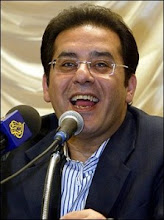
EMMA BONINO introduces an urgent written question to the European Commission and Council

ARREST OF EGYPTIAN MEMBER OF PARLIAMENT AYMAN NOUR : EMMA BONINO INTRODUCES AN URGENT WRITTEN QUESTION TO THE EUROPEAN COMMISSION AND COUNCIL


Bruxelles, 1st February 2005-02-01

Emma Bonino, Member of the European Parliament and former member of the European Commission, introduced an urgent written question to the European Commission and Council with regard to the arrest of the lawyer Ayman Nour, Egyptian Member of Parliament and President of the party Egypt Tomorrow (El Ghad), on 29 January 2005, in front of the Egyptian Parliament, immediately after it lifted his parliamentary immunity.

Emma Bonino underlined that Ayman Nour was subject to investigations by the Supreme State Security Office, one of the tribunals established under the emergency law in vigour since 1981.

Within the frame of the Euro-Mediterranean relations, the European Union signed bilateral association agreements with Egypt which entered into force on 1 June 2004, and is based on the respect of principles of democracy and respect of human rights.

In view of the lifting of Ayman Nour's parliamentary immunities which is a clear infringement of the internal regulations of the People's Assembly, Emma Bonino seeks the support of the European institutions and in particular stresses the strict application of Article 2 of the Association Agreement.